The Sibiu – Făgăraș highway takes shape. The sensitive point of the road at the foot of Făgăraș

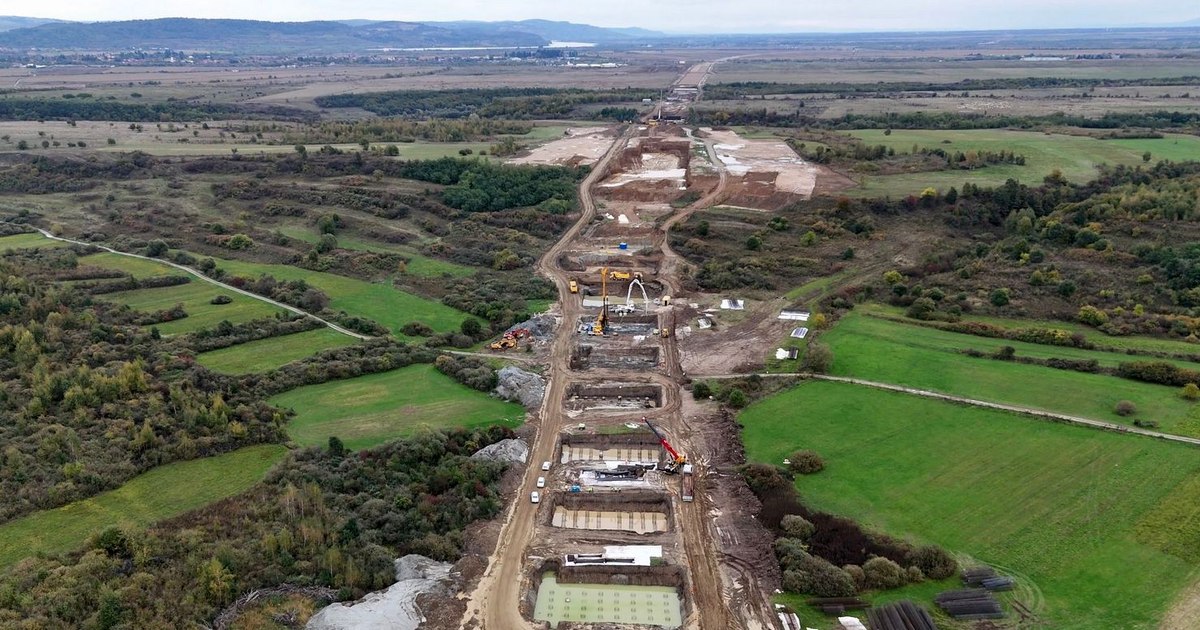
By the end of 2027, the cities of Sibiu and Făgăraș will be connected by a highway that will halve the duration of drivers on the route. The four segments of A13 are in the yard, and the locals at the foot of Făgăraș hope that it will also boost the area.
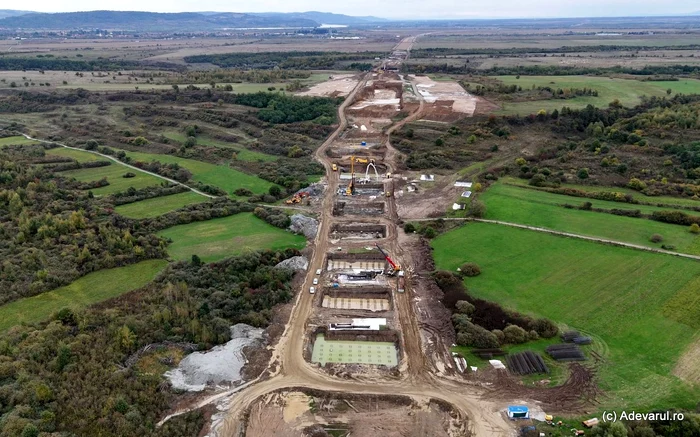
Sibiu – Făgăraș highway site. Photo: Daniel Guță. TRUTH
The works at the future Highway A13 Sibiu – Făgăraș started between 2024 – 2025 and have the end of the end of 2027. The four segments of the highway, which cross the Olt Valley, at the foot of the Făgăraș Mountains, are built by the same company – Makyol.
Advanced works on Lot 3 of the Sibiu – Făgăraș highway
The Turkish consortium won the contracts totaling about 6.5 billion lei (excluding VAT), in 2023, having 12 months for design and 36 months for the execution of each section.
The A13 Sibiu – Făgăraș highway starts from the town of Boița, about 20 kilometers from Sibiu, where it will be connected, through a road knot, with the A1 Sibiu – Pitești highway and DN7 (Valea Oltului). On most of the route, it crosses a portion of Ses, bordered by the Făgăraș Mountains and the Olt Valley, and at the end will be connected with DN1, at the exit from Făgăraș.
All his four segments are in the site, the most advanced works being on the 3rd section of Arpașu de Jos – Sâmbăta de Sus.
“Although the weather of the last period was not favorable to the works, the Turkish manufacturer on Lot 3 of the Sibiu – Făgăraș highway quickly. High technique, with a length of 820 meters. informed the Regional Directorate of Roads and Bridges Brașov.
The other three sections are: Lot 1 Boița – Avrig (14.2 kilometers, recently entered the site), Lot 2 Avrig – Arpașu de Jos (20 kilometers) and lot 4 Sâmbăta de Sus – Făgăraș (16 kilometers), to which is added a connecting road with DN1, of 5.6 kilometers.
The sensitive point of the Sibiu – Făgăraș highway
Currently, on the site of the highway, the builders dig and drill for the piles and the rods, as well as for their foundations.
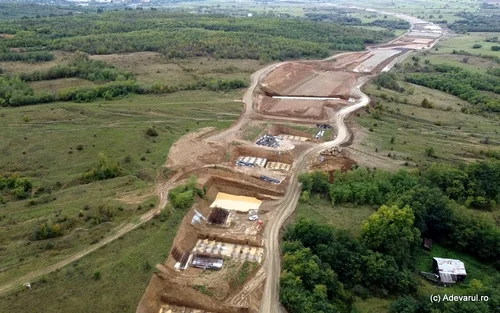
Image 1/23:
Sibiu Fagaras Highway Avrig Avigo Daniel Guță Adevărul (4) JPG
Although it crosses a portion of Ses, the Făgărașului highway passes through areas that require complex works, due to the numerous crossed streams, the groundwater but also of the soft soil. One of the most sensitive areas of the highway is at the beginning of it, where the Boița Road Node (video, Boița area) was designed.
“At the Sibiu – Făgăraș Highway, the area was analyzed by geological carriages, geotechnical drilling and field visits. Following the interpretation of all the available data, it can be concluded that in the area of the Boița node there is phenomena of instability in different stages of evolution. soils. shows the study of appropriate project evaluation.
The highway is in a hurry to travel to the Fagaras Mountains
The A13 motorway crosses the counties of Sibiu and Brașov, at the foot of the Făgăraș Mountains. In Sibiu county, on the first 38 kilometers, the route passes through Tălmaciu, Avrig and Boița, Turnu Rosu, Racovița, Porumbacu de Jos, Cârța and Arpașu de Jos. In Brașov county, the municipality of Făgăraș and the communes Ucea, Viștea, Drăguș, Voila, Beclean, Recea and Mândra are crossed.
The highway will have six road knots, in Boița, Avrig, Arpașu, Sâmbăta, Ileni and Făgăraș, and over 100 bridges and viaducts, the longest of them being in the Boița, Mârșa and Ucea areas. In the Arpașu area, tourists will be able to descend from the A13 highway to continue the trip on Transfagărășan (DN7C), one of the most spectacular mountain roads in Romania.
“The Făgăraș Mountains are one of the least anthropic areas in Romania. Here the natural and quasi -virgin natural forests appear in the landscape, secular forests in which a remarkable biological diversity develops. The habitats in this area are favorable for bear populations, wolf, laughter, black goat, deer etc. shows the study of appropriate project evaluation.
With the completion of the works, the distance of about 80 kilometers between the localities of Sibiu and Făgăraș, currently traveled in about an hour and a half, will be able to be crossed in less than an hour on the freeway.
Also, the road traffic on DN1 Sibiu – Brașov, one of the busiest national roads in Romania, will be diminished. Some of the locals of the settlements at the foot of Făgăraș say that the highway will first facilitate access to Sibiu, where they do the shuttle to go to work. On the other hand, the Făgăraș Mountains will become more accessible to tourists, at least until the villages at their foots.