The industry is coming back. The emphases of EU policies are changing. Let's not miss the competitiveness train!


The call was madefor whom he was attentive. The pendulum swings in the new direction. The European Union is turning its face to industry, to production, to business considerations, to the need to innovate, research and develop performance, to increasing its own production capacities and the dimensions at which we produce (industrial scaling), to the idea of economic sustainability.
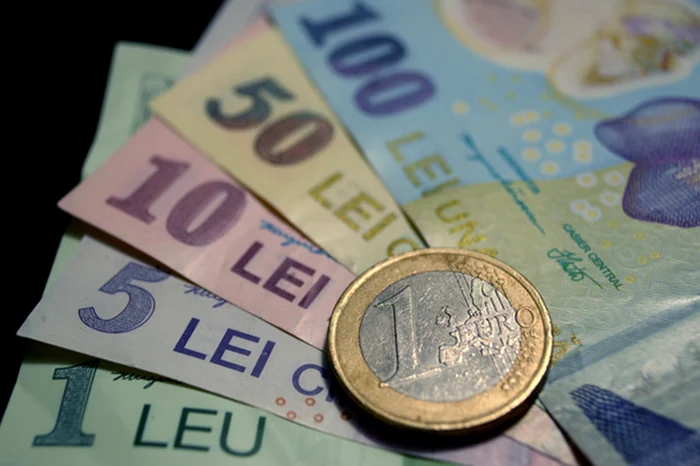
PHOTO Archive
The EU will work on bureaucratic simplification (deregulation, the abolition of the “10 terrible investment barriers”), on the complete unification of the European market and on the “28th regime” (the same legislative and tax provisions in all member states, for those who choose to open a “European company”), on the weakening of a certain ideological pressure on industry from the last decade, without giving up the ambitions of the green transition but also, above all, at competitiveness, the “queen” of the next decades.
Under the impact of the geopolitical, economic, technological and security shocks of these years, The EU is emerging from a long and costly bureaucratic inertia
and begins a series of systemic transformations, of technological and industrial modernization, of strategic autonomy and the securing of supply chains, but associated with trade openness of a major global actor (for example, the recent free trade agreements with Mercosur and India, plus others in preparation), of investments in its own capacities and tools. We are not even talking about the roadmap for defense training (Defense Readiness Roadmap 2030)
and the SAFE program of 150 billion EURO, already well known in our public space, from which Romania benefits from approved projects of 16.6 billion (the second largest funding in the EU) for increasing defense capacity, relaunching the military industry and dual-purpose infrastructure. Let's just stick to the purely economic topics.
The Draghi reports (The Future of European Competitiveness)
and Letta
(Much More Than a Market)
from 2024 see their seeds sprouting in early 2026 in a series of political meetings, summits and consultations converging on signaling the need for a fully unified internal market (One Europe, one market),
to solve the chronic problem of European fragmentation, as well as the need to relaunch a strong industry.
The “European Industry Summit” in Antwerp, followed by the coordination meeting of a group of member states initiated by Italy, Germany and Belgium (which also includes Romania) aimed at measures to stimulate industrial competitiveness and then the informal meeting of European leaders at the Alden-Biesen castle pushed the lumps of business expectations from the top of a smoldering tension on the slope of revisions of public policies with economic impact of the EU, measures that will soon gain speed and gain in scale.
2026-2027 years “the political construction site”
opened in Brusselsand especially the new 2028-2034 budget exercise, will benefit those who understand and can move quickly, innovate, work intelligently and productively, assimilate new technologies (and no, it's not only about artificial intelligence), take advantage of the huge opportunities and funds put on the Europeans' table these years (but, beware!, not directly in their pockets).
When things change and move in a new direction, ideally we should not only quickly understand what is happening but also have the skills and procedures in place to act promptly and effectively. Let's not complain later that we didn't know what was going on and that the train has already left. The stakes are high for Europe's sovereignty. Strategic is an understatement. Existential. And the member countries are called to formulate their interests, contributions and proposals to this broad “renovation” of economic policies. Romania has just expressed them publicly, at the highest level, through the voice of the President: the unification of the energy market and the decrease in electricity prices (we are waiting in the coming months for the evaluations of the European Commission regarding Electricity Market Design)expressing a serious interest in the revision of the ETS (Carbon Emissions Trading System) scheduled for this summer, as well as the introduction of a compensatory geographic criterion on the competitiveness dimension in the multiannual financial framework 2028-2034, which would avoid increasing the gaps between advanced and less competitive economies. Also, in 3-4 years, the President appreciates that Romania will meet the conditions to think again about an action plan for joining the Euro currency, but the latter obviously concerns us here in the country, not the policies from Brussels.
The EU will pump massive amounts of money in the coming years into instruments, funds and facilities to strengthen economic competitiveness. European Competitiveness Fund
it will have to be studied like an alphabet, in all economic branches that want to survive beyond the horizon of this decade.
The ability of a country or the Union as a whole to bear fruit on a new trend (be it economic, technological, strategic or geopolitical) is not resolved overnight, no matter how many admirable speeches European political leaders make. But these speeches, reflections and public interventions MATTERSbecause they signal and launch change and, if they do it correctly and convincingly enough and those who operate the levers of grassroots managers are responsible, political actions can inspire and generate transformations in specific systems in the economy and society. What is already happening in many European countries.
In intelligent societies, politics and the private economy collaborate in the responsible sense of developing public policies and strategies, they consult each other, they coordinate in times of profound reconfiguration, they dialogue, they try to understand what the other side says (because each has essential elements to convey for the interests of the other), both thus better fulfilling their role and functions within the citadel. Public policies become more realistic and economic activity begins to insert strategic considerations in the medium and long term. As surprising as it may seem to you, this beneficial collaboration for the public interest also started in Romaniaeven if it is not very noisy in the media (and perhaps it is better that way), and significant companies and institutions of executive power discover each other either in public events or in strategic consultations of an increasingly high level of quality, competence and responsibility, on both sides. However, adaptive speed and creativity will matter more and more (both for governments, and for companies and organizations) in the era of multipolarity of the international relations system, of accelerated dynamics, tough competition and advanced technology, an era in which we have already entered, and the key words will undoubtedly be:
competitiveness, technology, innovation, research and development, reindustrialization, scaling. The competitiveness race must be understood by us, here in Romania, on two levels, both essential from the perspective of the adopted measures: the external (global) one, in which the EU recalibrates and modernizes its policies to face the intense competition with the USA, China and other emerging economies, and the internal (European) plan, in which we must continue the process of convergence with the EU average.
The intricate machinery of an economy, its complex articulations with technology, resources, knowledge/labour market and managerial education/culture, the institutional and legislative fabric of the state, and the vocation of a society to constructively modernize, all are generally slowly reconfigured. We know how hard it is to rebuild a country's hope and confidence in its ability to succeed, especially after a difficult period of mistrust and deep divisions. But only when genuine discussions of substance begin, when real dialogue works, we discover how many serious, skilled and responsible people we still have in this country!
We know, it sometimes seems that we are a divided society, crushed by trust, hatred, a country without potential and without arguments in relation to the big ones. But it is not so. We are neither small in Europe, nor without resources or skills, nor without valuable and committed people. There are incredibly many people who want to get involved and help Romania catch this European train of reindustrialization, technological modernization and competitiveness. If our generation succeeded in the political project of the 90s and 2000s and we were able to take advantage (with a dose of luck, of course) of the strategic window of opportunity of Romania's accession to NATO and the EU, which changed our lives for the better, we will succeed now as well.
Let's trust that we will be able to get on this train of economic, technological and infrastructural modernization and will reap the benefits of the tools of reindustrialization, productivity and competitiveness available in these years, making Romania is a developed and reliable European country (both externally, for international partners and internally, for Romanian citizens),
probably the last great project of our generation, in passing the baton to the new generation. We must not miss the development of Romania on the new coordinates of competitiveness, an essential stake of the European budget exercise 2028-2034, for which we must prepare now.
The call rang in the European Union. There is goodwill, there are funds, there is access to resources, there are tools that we will be able to use, both directly economically and through government. Are we ready to act and change our economy for the highly competitive decades ahead? To answer realistically and lucidly, probably not fully at this pointbut the fact that here we are honestly and openly starting in Romania this consultation of society and the business environment and the debate on the relevant European themes of the moment, gives us at least
the chance to start as well
on the new road that the European Union entered.