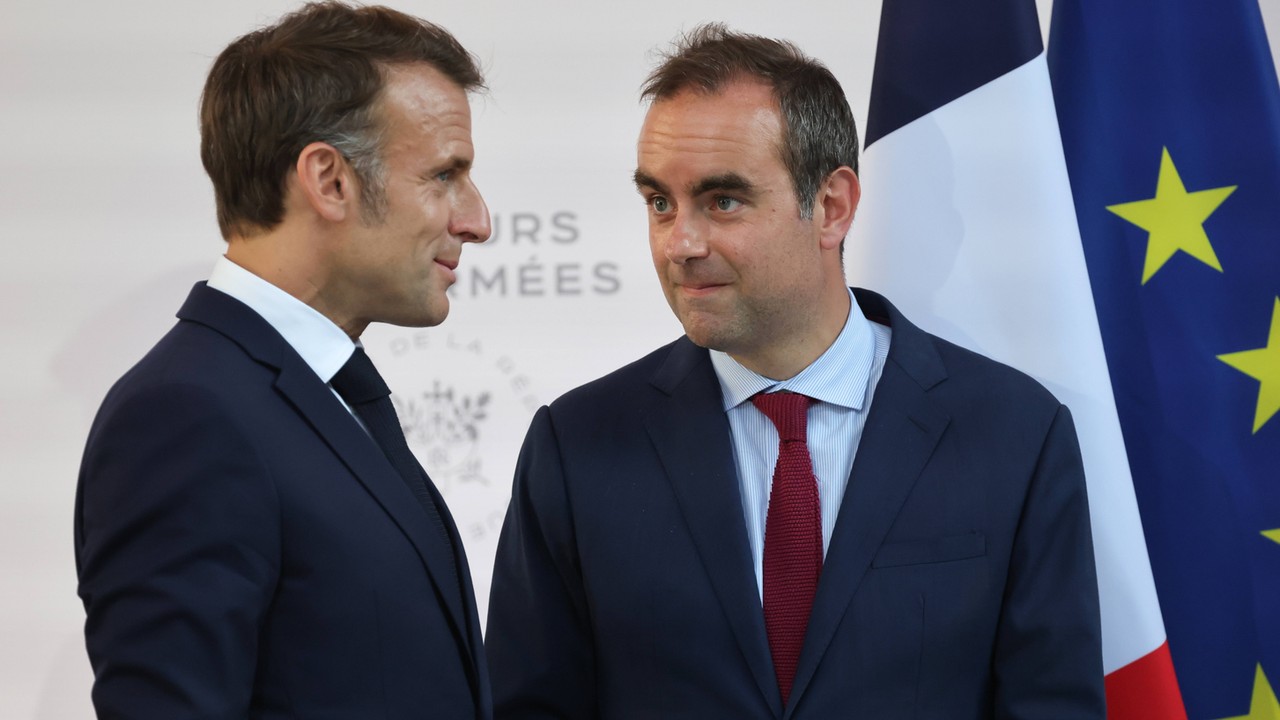
The AFP agency reported, citing the president's associates, that the head of state was giving Lecornu carte blanche (i.e. freedom of action).
Earlier on Friday, leaders of French political parties arrived at the Élysée Palace for a meeting with President Emmanuel Macron. The Elysee Palace briefly stated that the meeting “should be a moment of shared responsibility.” Two extreme parties were not invited to the talks: the right-wing National Rally (RN) and the left-wing France Untamed (LFI).
The opposition announces a vote of no confidence
Meanwhile, the National Union announced a vote of no confidence in the future government that will be formed by Lecornu. In turn, France Untamed announced that it would file an impeachment motion against President Emmanuel Macron.
The head of the Supervisory Board, Jordan Bardella, commenting on Lecornu's re-appointment as prime minister, stated that such a government is a “bad joke” and his party will vote for a vote of no confidence. LFI also announced a vote of no confidence.
The Socialist Party, on whose support Lecornu counted during his first attempt to form a government, stated that it had not concluded any agreement with Lecornu that it would refrain from a vote of no confidence in the future government.
The article continues below the video
Political deadlock in France. Emmanuel Macron named the prime minister
Macron was prompted to quickly appoint a prime minister after the earlier resignation of Sebastien Lecornu due to the budget adoption schedule. The French Constitution sets the deadlines and procedure for its adoption. Parliament must take a position on the budget within 70 days.
In accordance with this procedure, the bill should be presented to the Council of Ministers on Monday. Lecornu concluded on Wednesday that there was a chance for a compromise regarding the government precisely because – as he reported – the leaders of the political parties with which he negotiated agreed that there should be no risk that the deadline for adopting the budget will not be met.
France is not at risk of a “shutdown” like the US in the absence of a budget. It is possible for the Parliament to adopt a special act allowing the budget provisions from the previous year to be applied in the new year. However, this solution will have financial consequences. According to estimates given by the daily “Le Figaro”, this could increase the budget deficit to 6%. in 2026, compared to the current 5.4 percent
Moreover, the lack of a budget would be a repetition of the situation from 2024, after early parliamentary elections, which shows that political instability is continuing. At the same time, France urgently needs to put its public finances in order due to the high budget deficit and public debt. In recent months, borrowing costs for France have been rising on the markets and it has lost its previously very high ratings from international rating agencies.