Romania has registered the highest increase in road freight – increase by 69% in ten years, three times above the rhythm of the European Union – but the accelerated pace is insufficient in the absence of continuing in infrastructure, warns the specialists.
Experts say Romania should continue investing in infrastructure
Romania has registered the largest increase in the volume of freight transported from the European Union. In 2023, the transport and logistics companies reported almost 29 billion tonnes transported on the roads, 69% more than ten years ago, which represents the fastest rhythm in the EU and more than three times above the community average, according to Eurostat data quoted by Colliers. The strong growth can also be seen on the market for rented modern industrial spaces, which has expanded almost five times in the last ten years and will reach about 8 million square meters in 2025.
However, the lack of highways and modern railways remains a major obstacle to the development of logistics in Romania, I attract the attention of Colliers specialists, which underline the need to continue large investments in infrastructure.
“The level of almost 29 billion tons-kilometer transported on the roads is close to that of Hungary, but more than six times lower than Poland. In other words, even though Romania has registered the fastest increase in freight road transport in the European Union, the difference in savings in the region remains significant. If we take into account the population and the size of the economies, the volume transported by Romania should be at least double compared to Hungary and half of Poland. In order to reduce this gap over the next 10-15 years, it is necessary for Romania to continue the construction of highways and the modernization of the railway network, especially in the current context, in which the internal economy is under pressure. Such investments would also compensate for the weaknesses reported in other sectors of the economy and would prepare us for the next growth cycle ”explains Victor Coșconel, representative of Colliers.
Slower rhythm of construction in the next period
After the years with record deliveries of highways, the range 2025-2026 is announced with a much slower pace of constructions and inaugurations. This slowing down could brake the development of the market for logistics space and investments in industrial spaces, which have undergone a strong growth in recent years, draws Colliers. At the same time, Eurostat data shows that over 77% of the goods transported in Romania are internal deliveries, one of the largest weights in the European Union. This reflects, at least partially, the lower level of Romania's exports.
The analysis of the specialists shows that there is, however, an aspect that differentiates Romania in a positive way to many other European states. If we return to the overall look, only 54% of all freight transports are done on the roads, below the 78% European Union average, according to Eurostat data that include continental transport. In contrast, Romania has a high weight of waterway transport, especially on the Danube, where it reaches about 20% of the total and represents the second largest value in the EU. Colliers shows that this diversification of transport modes is an advantage, but cannot compensate for the lack of modern infrastructure in the country's key areas. Colliers consultants point out that this diversification of transport modes is an asset, but cannot replace the need for modern infrastructure in the country's key areas.
“We are close to the threshold of 8 million square meters of rentable industrial and logistics, a remarkable performance if we think that ten years ago the market was growing at a very slow pace. The spectacular evolution of the last five years shows that Romania is in an accelerated development cycle, benefiting from a very favorable moment, which should be the following, which should be the following, which should be, The perspective of financing, either of European funds ”concludes Victor Coșconel
The balance of highways and roads expressly inaugurated in 2025
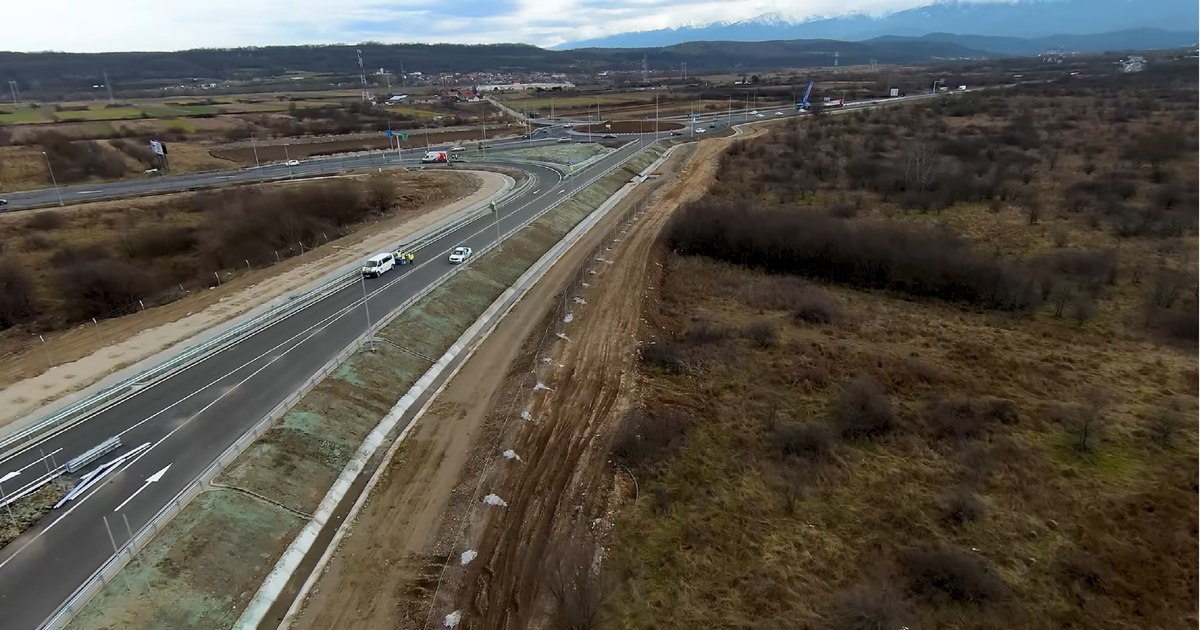
Romania has recently completed the most important road bus with highway segments and express roads, but the total length of the new high-speed roads inaugurated in 2025 only exceeds 50 kilometers.
After, in 2024, over 200 kilometers of highways and express roads in Romania were completed, the authorities had reasons for optimism.
Over 600 kilometers of high -speed roads were in the construction site at the beginning of 2025, and some associations that monitor the big infrastructure projects estimated that by the end of this year will be inaugurated almost 300 kilometers.
Until June, no new kilometer was inaugurated in Romania, but the coming of summer has changed things.
In the summer of this year, the network of highways and express roads was completed with just over 50 kilometers, and by the end of the year segments from the highways of Moldova (A7) and the capital (A0) and DEX6 Braila-Galați could be opened.
The first highway segment inaugurated in 2025 was about 15 kilometers of the A1 Sibiu -Pitești highway, on the section Curtea de Argeș – Băiculești. The opening of road traffic took place on June 11 and marked the complete completion of the Curtea de Argeș – Pitești section of A1.
On June 30, 2025 road traffic was opened on another important motorway section in Romania: Lot 3 of the Capital Highway (A0), with a length of 18 kilometers. The inauguration of this section completed the southern part of the A0 highway, with a length of 51 kilometers, and makes the traffic exclusively on the highway on the route Curtea de Argeș – Bucharest – Constanța (A1 – A0 – A2).
In July, the last segment was completed, 3.2 kilometers, on the A7 Buzau – Focșani highway, between Buzau and Vadu Pasii. It included a bridge of 1.4 kilometers over the Buzău river and the Buzău East road node.
On July 31, road traffic was opened on the last unfinished segment of the express road DEX12 Craiova -Pitesti, also known as “Oltenia Expres”.
The 12 -kilometer segment between Albota and Pitești, where the high -speed road was connected to the A1 highway, marked both the completion of the works at “Oltenia Expres” and the completion of a continuous route of almost 470 kilometers, consisting exclusively from the highway and express road, which starts from the exit from Craiova and reaches the Romanian coast.