Why the fate of the war in Gaza depends on the Hamas response. What consequences would a refusal of the peace proposed by Trump


A senior researcher at the Foundation for Democrats Defense and a former spokesman for Israel's defense forces (IDF), explains what the proposal of the US President Gaza, Israel and the Middle East region, reports Jerusalem Post.
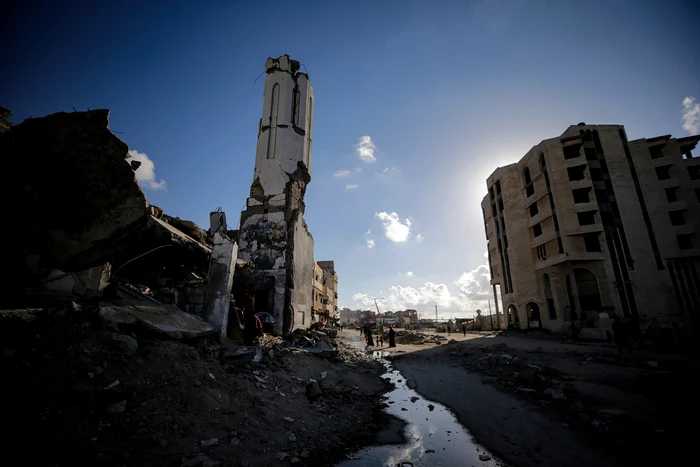
The world is waiting, while the Hamas Islamist group analyzes the peace plan in 20 points proposed by US President Donald Trump.
Accepted by Israel, approved by the Palestinian authority, Qatar and the United Arab Emirates and with caution by most international actors, the proposal hangs on the answer to the only question: will Hamas be accepted?
Jonathan Conricus, senior researcher at the Democracy Defense Foundation and former IDF's international spokesman is skeptical and warns of short -term and medium -term implications.
“Hamas is more concerned about his own survival than the interests of the Palestinian people or of the civilians in Gaza,” he told The Media Line, adding that “the chances are much older not to accept it.”
“I say this with great regret, because that means that it puts our hostages in a considerable danger. Of course, I would prefer our hostages to be released. But I think, as a whole, Hamas, unfortunately, will not agree,” he points out.
Conricus also explains what such a refusal would mean for the situation in the enclave, at least in the short term.
“As for the immediate military operations, this means that IDF will increase and intensify military operations in the city of Gaza, put more military pressure and do things that IDF has refrained with so far in terms of terrestrial hostilities in Gaza.”
The second immediate consequence directly looks at the fate of the hostages. “Israeli defense forces will try to carry out operations to issue hostages, based on the evaluation that Hamas is not going to accept an agreement. Therefore, the only way to remove the hostages will be the use of force. And I think there will be a greater probability that the government will order the Israeli defense forces, special forces, Shabak, etc. to take military measures to free the hostages, even if that means an additional risk to the hostages. ”
A third possible consequence, he argued, looks at the inhabitants of Gaza. “I hope, I think it is a reasonable consequence, that for the first time in two years of war there is an increased American pressure, but also global, but especially American pressure on Egypt to open the Rafah gates and allow the inhabitants of Gaza to run from the war area and to look for temporarily outside the Gaza strip. The result: the inclination of the balance and the change of the game regarding the war, because it will deprive Hamas from its main asset, or its secondary asset. The main asset are hostages. The secondary asset are the civilians in Gaza that Hamas uses as human shields and which they use to exert pressure on Israel. “
This scenario, he said, should already be coordinated with Washington. “I think this should be the central point of Israeli diplomatic efforts at this time, to prepare and have it ready, in coordination with the Trump administration, and a confirmation that if Hamas refuses an agreement, then Egypt is obliged to open the gates.”
Political dimension, in the foreground
“In the battle of narratives and global diplomacy, I think it will be a very revealing moment, a defining moment, when all the most important countries in the world have expressed their support for the plan. Israel supports the plan and clearly said, for the first time, that we are willing to put an end to the war if we recover the hostages. Reconstruction efforts and all important things.
In this context, the forecast for the next months is a bleak one. “The war will continue and await us for months, fights that will make victims. Of course, many Hamas combatants will be killed. I suppose they will be non-combatants killed in Gaza, and the suffering in Gaza will continue. All this will be the responsibility of Hamas.”
This responsibility, however, could extend beyond the borders of the gas. “At the regional level, I think a negative result could be a propagation effect on Judea and Samaria. It is already quite agitation there. There is a lot of instability and early signs of instability and intentions of the different organizations to destabilize the area. And it is possible that the Palestinian authority will let go and allow those terrorist organizations to attack more Israel. ”
The possible resulting regional frost would be of greater magnitude. “It is difficult to evaluate the agreement of Abraham, Saudi Arabia, Indonesia, all the other good things that will follow. I suppose the other countries will not feel comfortable enough to go further and conclude peace agreements with Israel while the fights are in progress and intensify in the Gaza strip. So, unfortunately, they will be suspended. ”
The role of Iranian influence
“I think they will try to do their best to destabilize the situation in Israel and the relationship with the Palestinians, to distract them from themselves and keep the Israel. Completely interpreted the situation in the availability of Europe to allow them to do it.
Asked about the public statement of Hamas that the plan “ignores Palestinian interests”, Conricus is of the opinion “that it is a false statement from Hamas. It is sad but this agreement really represents the Palestinian interests. It says, in non-Echivoci terms, that it opens the path to the Palestinian state and reflects the Palestinian interests, in the sense that Palestinian will not Started by Hamas and can free the Palestinians from Gaza de Hamas. ”
Naturally, the terms are not favorable for Hamas because they lose the war. But for Palestinian interests, I think there is a very strong positive representation, perhaps too strong, of the Palestinian interest in this agreement. ”
As for Qatar, the state that mediated between Washington, Israel and Hamas, Conricus says there are many in the game. “I think the Qatar, for the first time, really puts his skin in the game and I think he will lose his diplomatic status and credibility, given that President Trump has played his personal political prestige in this situation. I think he did this on the basis of the assessment that the Qatareti could influence Hamas and he could determine him. They, that they really have this influence, then believe that a refusal will diminish their status in Trump's eyes and in the eyes of the world, as a country that makes promises, but does not fulfill its obligations. “