
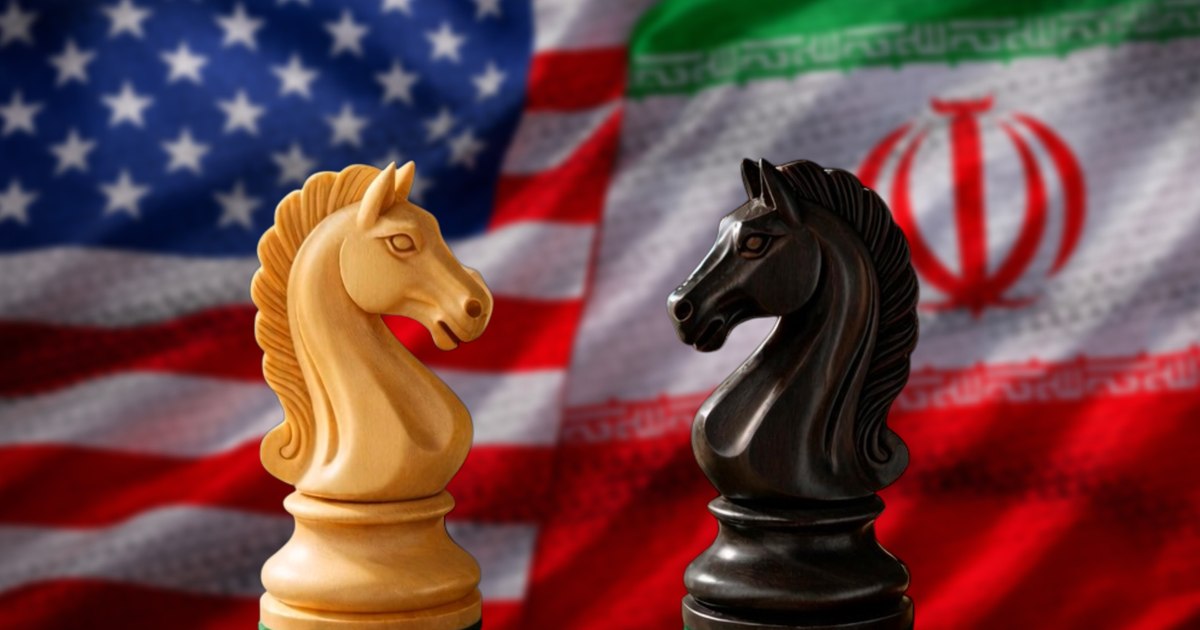
An analysis signed by the renowned American political scientist Robert Kagan in The Atlantic raises an unprecedented alarm signal: unlike the failures in Vietnam or Afghanistan, a possible failure in the current conflict with Iran will be neither compensable nor ignored. For Washington, the stake is not only regional stability, but the very survival of America as the guarantor of global order, at a time when the Strait of Hormuz risks becoming a “property” of Tehran.
US-Iran conflict/PHOTO: Shutterstock
The military history of the United States is marked by critical moments, but rarely by total defeat. Even after the disaster at Pearl Harbor, America found the resources to triumph. Vietnam and Afghanistan, though expensive and painful, were peripheral conflicts that did not shake the foundation of American power. But the current standoff in the Middle East has a different specific gravity.
“The Point of No Return”
If Iran manages to retain control of the Strait of Hormuz, the old status-quo disappears for good. Robert Kagan warns that there will be no final triumph to repair the damage. Once Tehran becomes the “master of the keys” in the world's most important energy transit point, the role of Russia and China as Iran's allies will strengthen exponentially, while Washington's influence will fade dangerously.
The conflict did not demonstrate America's strength, as the hardliners hoped, but quite the opposite: it showed an uncertain power, unable to finish what it started. The domino effect will be felt globally, as allies and adversaries alike begin to adapt to a world where the “American umbrella” is hollowed out.
Trump's dilemma
Donald Trump, a president who excels at speeches about who holds the “winning cards”, seems to have run out of real options. Although the US-Israeli attacks have weakened Iran's military capabilities during the 37 days of conflict, the regime in Tehran has not taken a step back.
The Trump administration is now betting on a blockade of Iranian ports, hoping that economic pressure will succeed where brute force has failed. But it's a risky calculation: a regime that has survived five weeks under intense bombardment is unlikely to succumb to hunger alone, especially when it doesn't fear its own population.
Moreover, any further escalation would push Iran to attack the oil and gas infrastructure of neighboring Gulf states, crippling the world economy for decades. It's the risk that made Trump stop the bombing a month ago and that remains the “sword of Damocles” over the White House.
Iran as an arbiter of the world energy market
Kagan points out that the hope for a collapse of the ayatollah regime is not a strategy, but a pious wish. Trump needs a quick fix amid skyrocketing inflation and a global food crisis. But any solution that does not mean the capitulation of Tehran involves enormous risks:
-An Iran emerging from the crisis stronger, turning control of the strait into a more formidable weapon than its nuclear program.
-A world where the resource-dependent countries of the Gulf will be forced to negotiate directly with Iran, under the helpless eyes of the US fleet.
-A naval arms race, in which Europe and Asia will try to build their own defense forces, no longer trusting the ability of the US to maintain order.
The message for Moscow and Beijing
Defeat in the Persian Gulf will reverberate far beyond the Iranian deserts. The weakening of American weapons stockpiles and Washington's hesitation could be interpreted by Xi Jinping as a “green light” for action on Taiwan, or by Vladimir Putin as a confirmation of European fragility.
America is facing an endurance test that it could lose. And a retreat disguised as a “declared victory” won't fool anyone. At stake is not just the price of gasoline at the pumps in Florida, but the security architecture that has prevented a third world war for the past 80 years.


