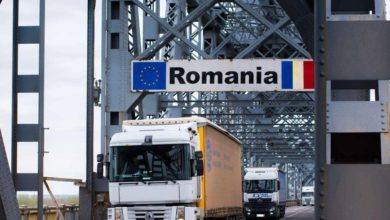
Do you want to buy a car in the second hand? Attention to those brought from Germany, Belgium, the Netherlands and Italy


The second-hand car market in Europe reached 2024 a value of 635 billion euros, but it remains marked by fraud: almost 5% of the cars for sale had the modified mileage, and 40% had hidden damages, according to car experts.

Photo archive
Seven years ago, the European Parliament estimated that fraud that involve modifying the mileage can cause losses between 1.31 and 8.77 billion euros annually. More recent studies suggest losses of about 5.3 billion euros per year, many cases remaining undetected.
In addition to the financial losses, the hidden historian of vehicles damage presents real security risks for used vehicles market.
There are already solutions to combat fraud, but cleaning the used vehicle market will require cooperation between the business environment and the Public Sector within the EU, says car expert Rokas Medonis.
The European GDPR approach, exploited and by scams
The scammers operating on the used vehicle market benefit in some EU Member States, unintentionally, by the European Privacy Norms.
This is due to the fact that the GDPR defines the personal data very wide, which makes it difficult to share information for companies working with car data, even when the risks to the violation of the right to have a private life are low.
“Europe can find a better balance between protecting personal data and providing real tools for us, increasing European companies, so that we can expand and become a global competitive. Money is not the only response – the EU must also liberalize access to data and use, approaching the asymmetry of information that appears when active as cars change their owner. When a car changes its owner, the vehicle information starts to stay behind the physical asset, but the legitimate interest of consumers for such information does not disappear – the information must reach the latter. This requires approach to broader problems such as fragmentation of data and assurance that data can track assets with the owner changes”, Points Rokas Medonis, CEO of Cartical.
According to him, it is currently extremely difficult to combat fraud on the used vehicle market. “Countries do not always exchange data about vehicles, many records of mileage or damage are never digitized. Moreover, there is no harmonized approach to tracking car sales, which makes frauds easy to hide. This harms both consumers and companies and only benefits.”says the expert.
Second-Hand car importing countries are vulnerable due
Germany, Italy, Belgium and the Netherlands are members of EUCARIS (the European system of information on cars and driving permits) and have a very good tracking of car data internally. However, these countries are still restricting the sharing of data about the vehicle history for exported cars.
Germany, the largest used car exporter in the EU, exports almost 2 million cars annually, but the official data on trade reports six times smaller. This is because Germany provides limited information, invoking concerns about GDPR. Kraftfahrt-Bordesamt (KBA) operates sophisticated vehicle registration systems that allow detailed tracking of car history, but complete access to data remains restricted and is not used to protect public interest.
Belgium and the Netherlands act in a similar way – they have sophisticated internal tracking systems such as “Car-Pass ”, “National Auto Pas” or RDW (Dutch authority for vehicles), which have drastically reduced the frauds that involve the manipulation of the odometer. In contrast, these countries restrict the comprehensive sharing of data for exported cars, leaving buyers from other vulnerable EU Member States.
Nor does Italy share with other EU countries regular data on used cars.
This approach to “prioritization of the internal market” present in some European countries compromise consumer protection at the EU level and the larger objectives of the unique market. In particular, this lack of accessibility endangers customers from other countries, especially from Eastern Europe.
Transparency and confidentiality can coexist. The northern example
There are also good practices within the EU, in which transparency and confidentiality can coexist, where the Union can learn.
Sweden and Finland have managed to find a balance between confidentiality and sharing data on cars run, protecting not only the interests of local consumers but also those of drivers from other countries once the cars are sold across the borders.
Within the transport agency in Sweden and traffic in Finland, car buyers can easily get the vehicle history. It includes information about mileage, former owners and previous inspections. To ensure transparency it is essential that this type of information is available with the car number when vehicles leave the country, both countries providing this.
The United Kingdom also provides free access to vehicles, supporting a strong inspection industry that helps buyers avoid fraud. Although the market for the UK -ruled cars addresses largely to the internal consumers, its data sharing model is a good example of the possibility of finding a balance between confidentiality and transparency.
Data access is needed in all European Union states
In order to protect people, the EU must define and harmonize the interaction between the data on data protection, the Directive on the Open Data and RGPD (GDPR). A transparent framework at the level of the entire European Union for access to vehicles would contribute to reducing fraud, restoring confidence and supporting the objectives of equitable digital economy.
“Clear norms and better data sharing will protect the buyers, support honest companies and strengthen Europe's digital economy,” Rokas Medonis claims, asking what is most important, “to protect the data that does not reveal personal information but that helps buyers to understand sthe real country of a caror protect the sellers who want to hide important details from the car history”.