
“It was also a small dose of unconsciousness.” Blind, on Via Transilvanica. The story of Sorin Ilie Țața, the man who struggles to make Romania more accessible


“Unseen, unconscious person, wants to make a piece of Via Transilvanica, I have a tandem bike, who gets?”. It is the announcement that Sorin Ilie Țața posted on a Facebook group. He found a partner and went on an adventure. It was just one of them. The 35 -year -old man is considered an active person. However, it has almost daily challenges, but also adaptations.
- “We have about 1,000,000 people with disabilities in Romania, about 850,000 adults and somewhere at 70-80,000 of them are employed. So far, most were refused from the beginning.”
- In Romania, the biggest problem is “the lack of accessibility as a whole”. “I am addicted to ride-sharing for the simple reason that I have no audio traffic lights, to do” bing, bing, bing “when it is green, which means I will go to guess. I do not want to risk my life just to cross the street,” he says.
“I have 2000 ride-sharing races.
The man moves with a white stick and certainly self. “Look how we will do. I'll take you by the right arm and go to take a coffee,” he continues, as he opens the road.
Sorin Ilie Țața has lost his sight at 15, due to a genetic condition. All the childhood was caught between operations, but he knew what was going to happen. So he decided that he should not wait for “a wonderful solution”, as he himself calls it, to play his sight, but he must explore and enjoy everything he can. Say that now, at 35.
“I always liked to go beyond my limits”
But the same thought did, a year ago, to leave Via Transilvanica, a spectacular 1,400 km route from Romania that unites areas such as Drobeta Turnu-Severin and Reșița, reaching Putna.
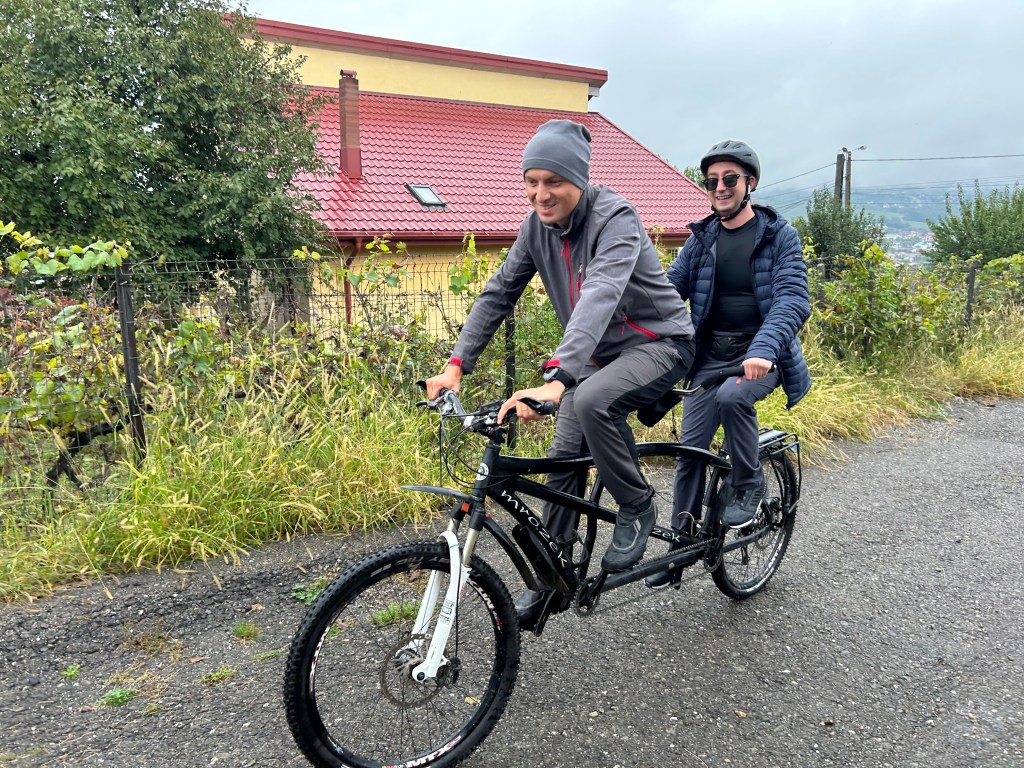
He wanted to make this route with a tandem bicycle, with two places – which is driven by a “pilot”, and in the back he has a passenger.
“I come from a family of athletes, my father played rugby. In our family, sport is very loved in general. I like to swim and run. In addition, there was a small dose of unconsciousness. I always liked to go beyond my limits. It was a time when I felt the need to do something extraordinary and I simply came up with the idea, ”says Sorin Ilie Țața.
He then takes his phone and, with the help of a special software, arrives in the gallery to show pictures from his adventure. “Here it should be,” he says.
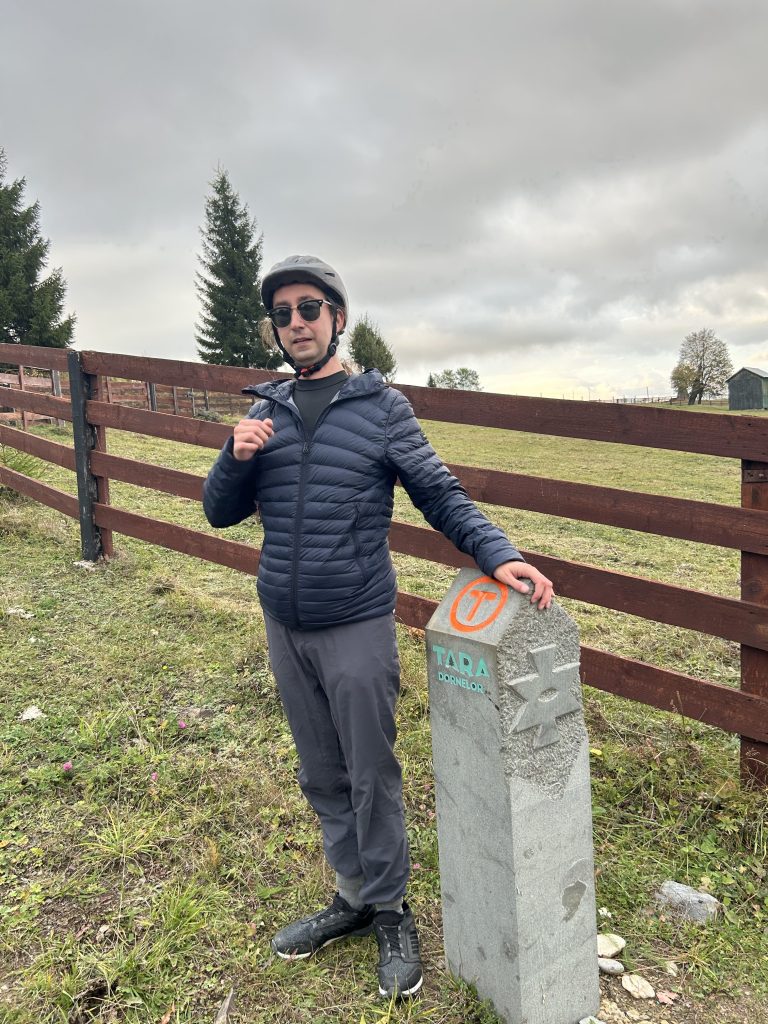
After making a message on the Facebook group dedicated to the route, he met his pilot at Vatra Dornei, and then he was going to Bistrița.
“It was October, cold, rain and sludge”
He had set out to travel 350 kilometers of the route, but at the pilot's advice, who knew that 95% of the Transylvanian via is off-road, on the mountain, through slats, through the forest and through the sheep, reduced the distance to 250 kilometers in seven days.
“I chose a very inappropriate time,” he admits now. “It was October, cold, rain and mud.” The off-road land represents, each time, a challenge for Sorin Ilie Ţața, no matter where it is.
“I step on even greater caution, because I don't know exactly what awaits me at the next step.” At one point, the land had become so problematic that they had to push the bicycle, because the wheels were simply no longer turning.
He managed to travel 120 kilometers, before he had to put an end to the adventure, because of a knee injury. In addition to the injury, he also had other intense moments.
“I have to admit that after I returned home, after meeting the dogs from the sheep-I did not meet, although I was very afraid not to meet him too-I realized that I did a very unconscious thing, yet I have a child.
He thinks of his wife and six -year -old boy, but at the same time plans a comeback. He wants to go through a larger portion, but also in a larger group.
“And people with disabilities can do extraordinary things”
Asked if his “unconscious” adventure had the purpose and draw attention to the blind, Sorin Ilie Ţața says directly: “Yes!”
“This had to be a test. I said we need visibility, we need awareness. Before I start a whole campaign, I would like to see if it is feasible. In the long term, this was the purpose, to make a wider campaign to show that you look, and people with disabilities can do extraordinary things.”
He reminds several blind people who managed to do what the society would not expect. The first examples that come to mind to Sorin Ilie ița are the blind who conquered Kilimanjaro.
He then points out that people with disabilities should not be placed in camps – neither in the “super heroes” or in the powerless people.
“The truth is somewhere in the middle,” he says.
Accessibility is vital to people with disabilities
Therefore, he puts a lot of emphasis on the idea of accessibility. “To give a very small example, if there was no tandem bike, I couldn't ride the mountain bike. If there are no ramps, the rolling chair users can not go home, then how can they reach their maximum potential?” He asks.
In fact, the man gets involved, from high school, in help to blind people, being a member of several associations.
“I received a lot of questions from people in the community, who asked me” How do you do that computer thing? “, Because you can't tell an blind man to click with the mouse on the right side of the screen, where he has an icon with a red question. Solution so you can do this task.
“They told me I wouldn't handle it”
Now he is employed to do this. But he encountered more problems in finding a job.
“We have about 1,000,000 people with disabilities in Romania, about 850,000 adults and somewhere at 70-80,000 of them are employed. Not because others do not want, but because until now, they were refused from the beginning,” he says.
Then he offers the personal example: “I wanted to hire immediately when I finished college. I finished the Faculty of Communication and Public Relations, I wanted to hire, I passed all the telephone evidence, including the foreign and technical language, and when I went to the actual interview and saw me there, when I happened in 2011,” I would not tell me. ”
Accessibility in Romania, another topic overlooked
He is now accessibility manager at BCR, a topic that society is not yet concerned about.
“I like to say that I am a supporting role and an internal consultant. On this accessibility area we have a long time. Since 2006 we have Law 448/2006 (no-on the protection and promotion of the rights of persons with disabilities), and more recently we also have European transposed directives, national law he explains.
He says he has noticed in recent years how companies are beginning to be more and more aware and eager to support people with disabilities.
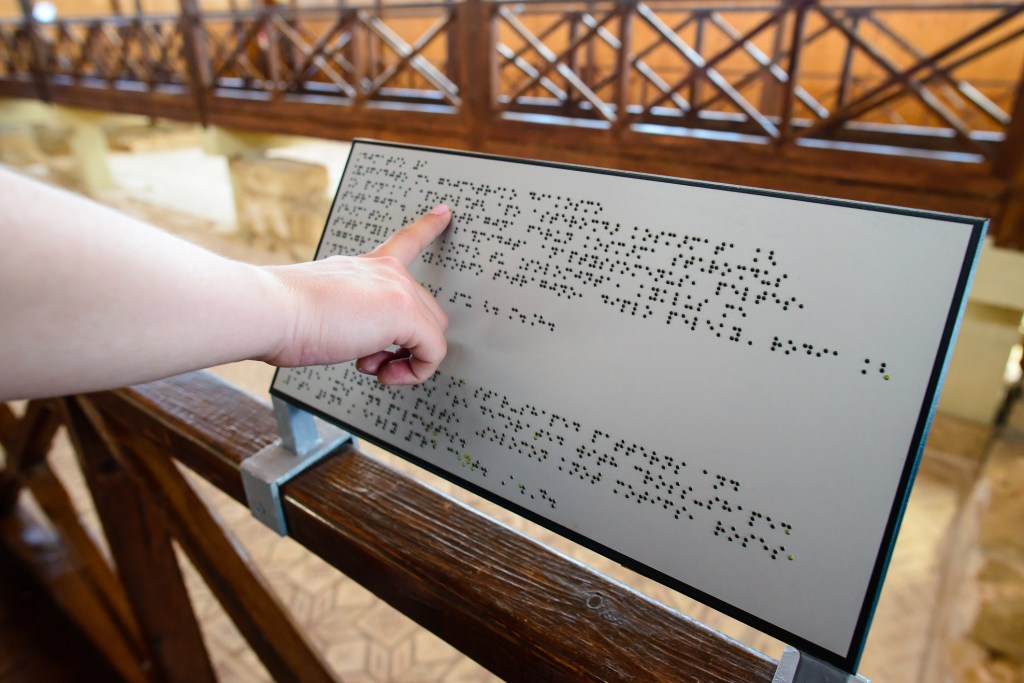
“When you hear about accessibility, things seem very complicated and up to a certain point, because many technical requirements in the middle. For example, you cannot simply build a ramp, because you have to respect some design principles, a inclination, a width. Another example: Small.
“There is a difference between being in compliance and helping the man truly”
Thus, he comes to check if the means of accessibility are legal in terms, but at the same time, “I make sure that the solutions we think are really useful.”
“There is a difference between being in compliance and helping the man really. This is very much seen in the digital area, for example, where there are all kinds of accessibility.
“I have no audio traffic lights and I do not know which bus that comes to the station”
In his opinion, in Romania, the biggest problem is “the lack of accessibility as a whole”.
“For example, audio traffic lights. I am addicted to ride-sharing for the simple reason that I have no audio traffic lights. And because I do not have an audio traffic light to do” bing, bing “when it is green, I have no way of knowing it is green, which means I will go to gestures. I do not want to risk my life,” he says. Such traffic lights are found in European countries, such as Spain.
In addition, he continues, “I do not know what the bus that comes to the station.” So he is forced to resort to the people in the station, although, he emphasizes, the door number and destination are heard from the door opening.
“In fact, people with disabilities need many support services”
Even the relationship with the state institutions is not pink, the country shows. “Every time I go to an institution, a form that I can not complete. Then you hit a lot of bureaucratic problems with a companion, wife, mother, a reliable person to help you complete”,
“So far I have worked a lot on a model … let's call it a socialist-communist, in which the authorities understood that support for people with disabilities means a disability allowance. Each time people with disabilities were dissatisfied or made some budget grip. With other disabilities, there are many support services ”, adds the country.
Can Romania become more accessible?
In Romania, the disability allowance varies from 80 lei per month to 728 lei, depending on gravity.
He also emphasizes that the tools need to be unseen to be independent are expensive. The most handy example it offers is the laptop that has a special program installed. The program license costs 1000-1500 dollars. A Braille display that connects to the computer starts at $ 3500, he says.
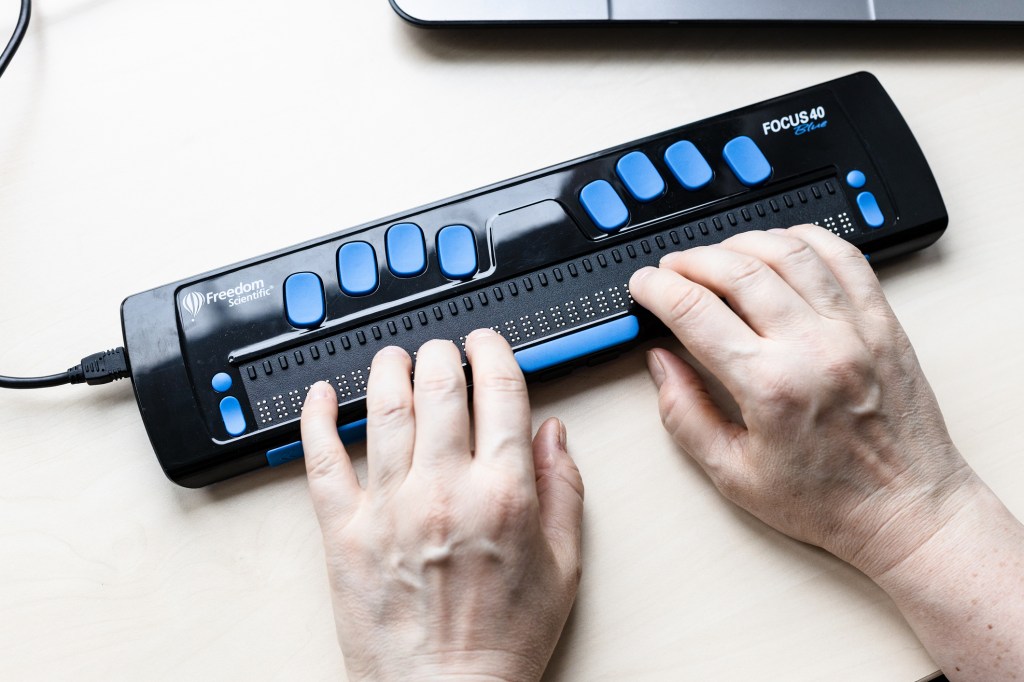
“These things are not settled in Romania,” he says.
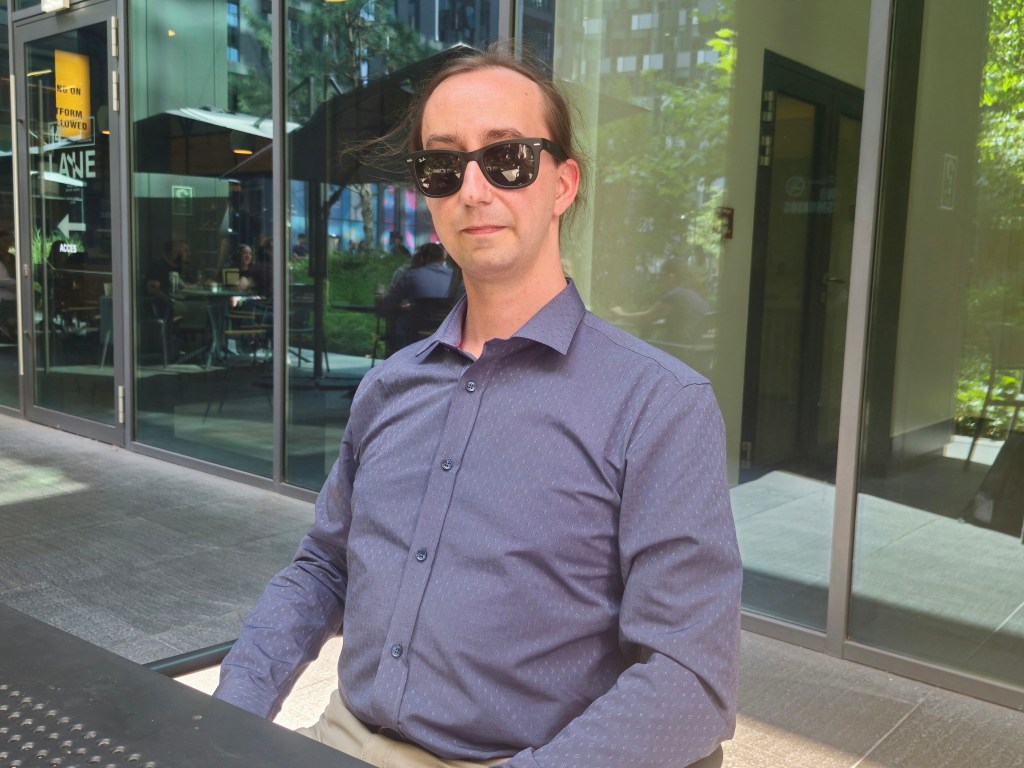
Sorin Ilie Ţața says that a time horizon when there will be accessibility for people with disabilities in Romania can mean two years, if things start now, or, pessimistic, change may never come.


