The new digital identity document, mandatory for those who want to work in the UK. A petition against the Laburiști project was signed by a million people


Digital identification will be mandatory to work in the UK, as part of illegal migration control plans.
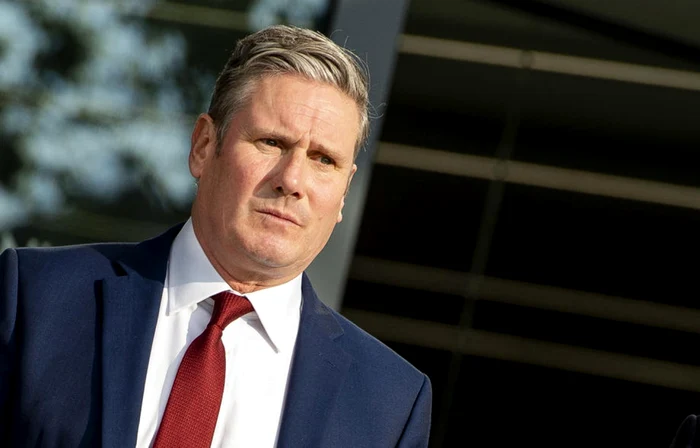
Keir Starmer, Britain's Great Prime Minister: EPA EFE
Prime Minister Keir Starmer said the new digital identification system will make it difficult to make illegal work in the UK and offer “countless benefits ”
Citizens, while minister Darren Jones said it could be “the foundation of the modern state ”.
However, opposition parties have claimed that proposals will not prevent people from crossing the sleeve channel in small boats, writes BBC.
The prime minister presented his plans in a broad speech addressed to a meeting made up of world leaders, in which he stated that he was “too easy” For people to work illegally in the UK, because the Stânga Center was “too sensitive“To say things that were “Clearly true.”
At the Global Conference for Progressive Action in London, attended by politicians such as Australian Prime Minister Anthony Albanese and Canadian Prime Minister Mark Carry, the prime minister said it is time “Let's look in the mirror and admit that we allowed our parties to move away from people's concerns. ”
“It is not a compassionate left -handed policy to rely on the workforce that exploit foreign workers and undermine fair salaries“He said.
“The truth is that each nation must have control over its borders. We must know who is in our country.”
In a conversation that followed his speech, Keir Starmer said he wants the following choices to be a “openly fight“Between the Labor Party and Reform UK.
In response to Prime Minister's speech, Reform UK said the public “He begins to be aware that Starmer only continues the inheritance of high tax conservatives and mass immigration.”
Although he has only five deputies, Nigel Farage's Reform UK party leads to opinion polls for several months.
The Prime Minister suggested that the challenge represented by Reform will be an important topic in the speech he will hold in front of the party members at the Labor Party Conference next week.
Sir Keir's government was under pressure to address the problem of illegal migration, given that over 50,000 migrants arrived with small boats since the Labor Party came to power.
By announcing his plans for the new digital identity acts, the prime minister said that this system “It will make the illegal work difficult in this country, increasing the security of our borders ”.
He added: “It will also provide ordinary countries countless benefits, such as the opportunity to prove their identity to quickly access essential services, instead of looking for an old utility bill. ”
Jones, the Chief Secretary of the Prime Minister, said: “If we manage to put this digital identification system into operation and the public will support us, it will be the foundation of the modern state and allow a truly interesting reform of public services.”
Another Labor Prime Minister Tony Blair tried to introduce mandatory identity cards, but the idea was abandoned by the Conservative-Liberal-Democratic Coalition in 2010.
However, the current British prime minister recently stated that, in his opinion, the debate
“It has evolved over the past 20 years“, Because “We all have much more digital identities now than we had before.”
The Labor Party believes that its new proposal benefits from the public's support, although over one million people have signed a petition against this idea.
Conservative leader Kemi Badenoch said the plan “will do nothing to stop the boats”, but “It will be used against citizens who respect the law, while the criminals will remain in freedom. ”
She also expressed her concern about data security, stating that she would be risky to store the information “Îin a single database ”.
Liberal Democrat leader Sir Ed Davey said his party will “fight with fierceness” against this plan, which “Taxes and bureaucracy would increase, without doing almost anything to combat the channel.”
Some campaign groups also opposed the plan, Liberty arguing that it raises “major concerns“On mass surveillance, while Big Brother Watch said he would do the country “Less free”.
The government said he wants to make sure the system works for those who cannot use a smartphone and will launch a consultation on how the service will be provided this year.
The consultation is expected to last three months, and the legislation will be presented to Parliament at the beginning of next year.
What is Britcard
Individuals will not be obliged to carry on their identity card and will not be asked to present it, Downing Street said.
However, the digital identity document will be mandatory as a means of proving the right to work in the United Kingdom until the end of the Parliament, which is expected to be at the latest in 2029.
The new digital identity card will be stored on people's phones, similar to contact cards or NHS application.
It is expected that it will include the name of the person, the date of birth, the nationality or the resident status and a photo.
The consultation will also consider the inclusion of additional information, such as the address.
Employers are already obliged to verify potential candidates.
However, it is understood that officials have analyzed whether a digital identification system could reduce the use of false documents and would provide a more consistent approach in verifying the identity of workers.
The government said that the implementation of this system will eventually simplify the request for services such as driving licenses, children's care and social assistance, as well as access to fiscal registrations.
A spokesman of Reform UK said that government plans are “a cynical maneuver to deceive the voters that something is done regarding illegal immigration. “
The Scottish government led by the SNP said that “It opposes the introduction of any identity card that is mandatory, which has to be carried on the person or that anyone can ask to see, including the digital one.”
Northern Ireland Prime Minister Michelle O'Neill qualified the proposal as “poorly thought out” and “an attack on the Agreement of Great Friday and the rights of Irish citizens in northern Ireland.”