Many Europeans today are increasingly vocal about security in the face of a possible US withdrawal. However, all proposed solutions must go hand in hand with real material resources and political will to act.
In a speech to the European Parliament on January 26, NATO Secretary General Mark Rutte presented an assessment of Europe's security without the mild rhetoric typical of diplomacy. He focused on specific capabilities that today constitute the foundation of European security, and on the conditions in which they could function without US support. He based his statement on issues of potential and dependency, and not – as is often the case – on the normative goals of European security policy.
He spoke like someone who observes the system's operation every day and knows its limitations perfectly.
At the center of his message was not politics, but operational capabilities – and this is a key difference. European capitals often treat security as an extension of political will. NATO, on the other hand, sees them as the sum of specific capabilities that either exist or do not exist. Rutte drew attention very clearly to this divergent approach.
It is often assumed that Europe's political weight automatically translates into its strategic weight. However, this is not the case.
Rutte stated that European defense, based solely on its own capabilities, would require expenditures many times higher than the current ones. He indicated a level of approximately 10%. GDP as an illustration of the scale of investment needed to build a full deterrence system – including the arms industry, logistics, and strategic capabilities that are largely provided by the United States today.
The transatlantic security system has shaped Europe for decades. This is not merely a political alliance, but a complex architecture in which American capabilities are embedded in almost every layer of collective defense.
Nuclear deterrence, strategic airlift, reconnaissance and intelligence, satellite surveillance and command and control systems – these are areas in which Europe participates but does not play a leadership role.
Rutte emphasized in Brussels that one political decision cannot be used as a substitute for these capabilities. Replacing them requires time, industrial resources, technology and political readiness to bear the ultimate risk. And this is where the European debate still gets stuck.
The return of the dream of independence
The idea of European defense without the participation of the United States returned during a period of intense threat. The war in Ukraine, instability in Northern Europe, Arctic and Greenland issues, and political changes in Washington have meant that U.S. support is no longer seen as something obvious. In such an atmosphere, slogans of independence gain emotional power. The problem begins when emotions replace cool analysis.
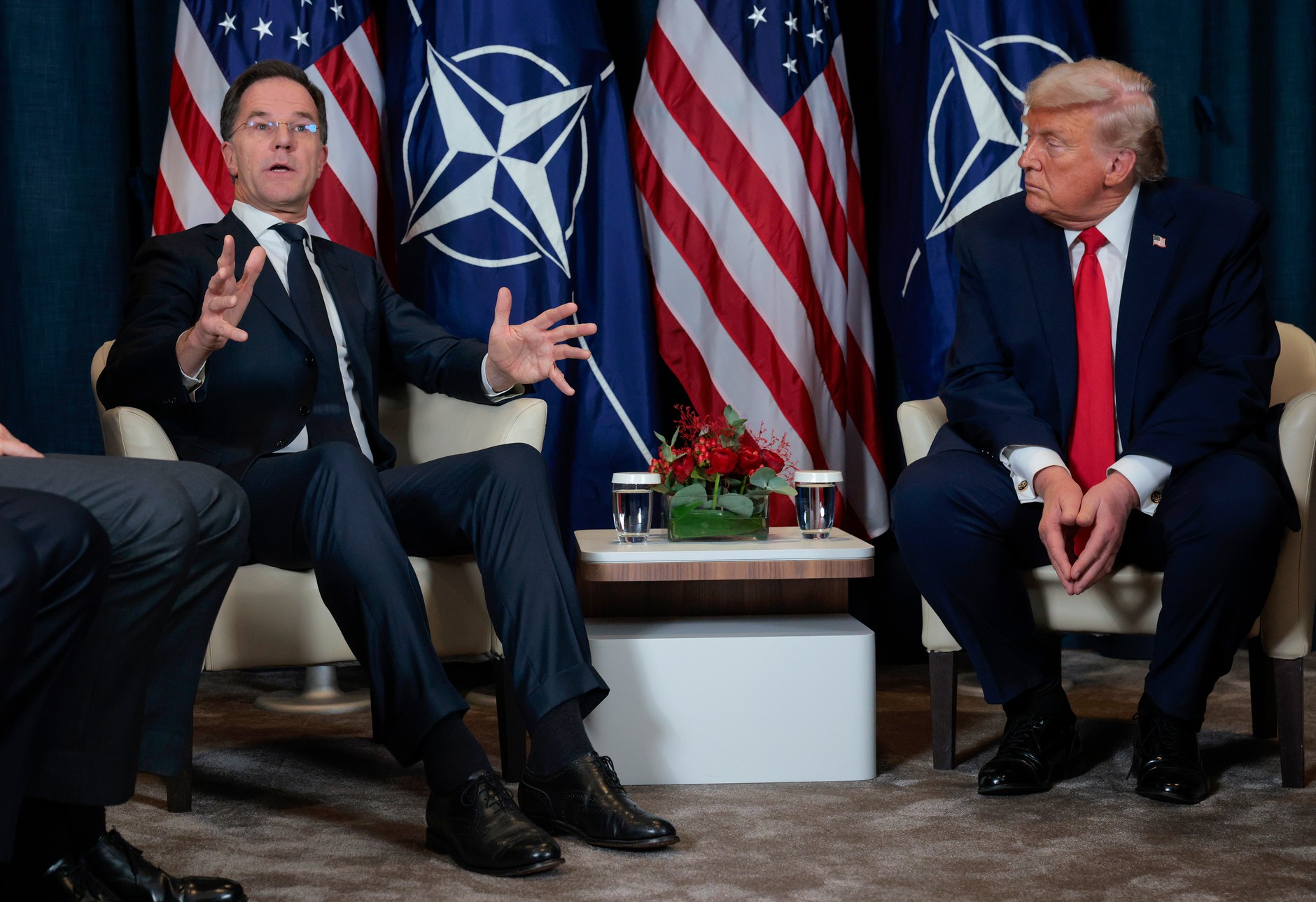
Mark Rutte and Donald Trump, Davos, Switzerland, January 21, 2026.Chip Somodevilla / Getty Images
Rutte placed his speech firmly in the current context. Ukraine continues to defend itself with a combination of European aid and American capabilities. Air defense systems, real-time intelligence, logistics and maintaining the pace of combat operations still largely depend on US involvement.
The European defense industry is growing, but its ability to meet the needs of the modern battlefield remains limited. Production lines do not run at the same rate as ammunition is consumed. This gap defines the real state of European security in 2026.
In this reality, Europe acts primarily as a large buyer of security. Budgets are growing, contracts are being signed, and governments are presenting spending data. But buying is not the same as producing. The buyer depends on the market, deadlines and political conditions of the supplier. The manufacturer, on the other hand, controls the pace, priorities and reserves for the time of crisis.
The backbone that Europe lacks
The difference between these roles is particularly evident in areas identified in military planning as key support capabilities. Without strategic air transport, there is no rapid transfer of troops. Without air refueling, it is impossible to maintain a constant air presence. Without an interview, there are no accurate and timely decisions. Without a reliable command and control system, there is no coordination of operations. In all these areas, Europe continues to rely on American capabilities.
Rutte argued in Brussels that it is this awareness that should set the limits of European ambitions. He did not oppose strengthening European defense, but warned against its fragmentation. Parallel structures, duplication of systems and competing industrial interests do not increase capacity – they waste time and resources.
If strategic autonomy is reduced to a political slogan without real operational content, Europe will waste years and resources without real progress.
Time is against Europe
There is another dimension of Rutte's speech, which largely went unnoticed, and it concerns the very nature of European power.
Over the last decades, Europe has built an extremely extensive normative and regulatory apparatus. In trade, climate policy, digital regulations and competition rules, the European Union has become a global standard setter. However, in the security sphere, rules alone do not guarantee stability. It is stability that allows rules to be defended when they are threatened. Rutte clearly distinguished a world in which Europe controls norms from a world in which power is determined by other methods.
The article continues below the video
In this respect, the European defense debate suffers from a structural misunderstanding. It is often assumed that Europe's political weight automatically translates into its strategic weight. However, this does not happen.
Strategic importance requires instruments capable of quick, coordinated action, without the need to obtain external approvals. As long as key elements of these instruments remain outside European control, Europe's political power is limited to times of peace or low-intensity crises.
Speaking from NATO's perspective, Rutte recalled something that is often overlooked in European discussions: time. Security systems are not built in the rhythm of political terms, but over decades. Each year of delay increases dependency because opponents do not stand still.
While Europe debates institutional models, others are testing boundaries, modifying tactics and investing in capabilities that bypass traditional military responses. In such an environment, indecision has its price.
In this context, Rutte emphasized that institutional formats alone do not create defense capabilities. Without production capacity, efficient logistics and a unified command system, European security remains dependent on external actors, regardless of the political agreements signed. And this is where Europe's fundamental dilemma lies for the coming years. Strengthening defense will not be spectacular. It won't score any quick political points. It will be a slow, technical and often invisible process to the public. Without him though any talk of autonomy will remain pure rhetoric.
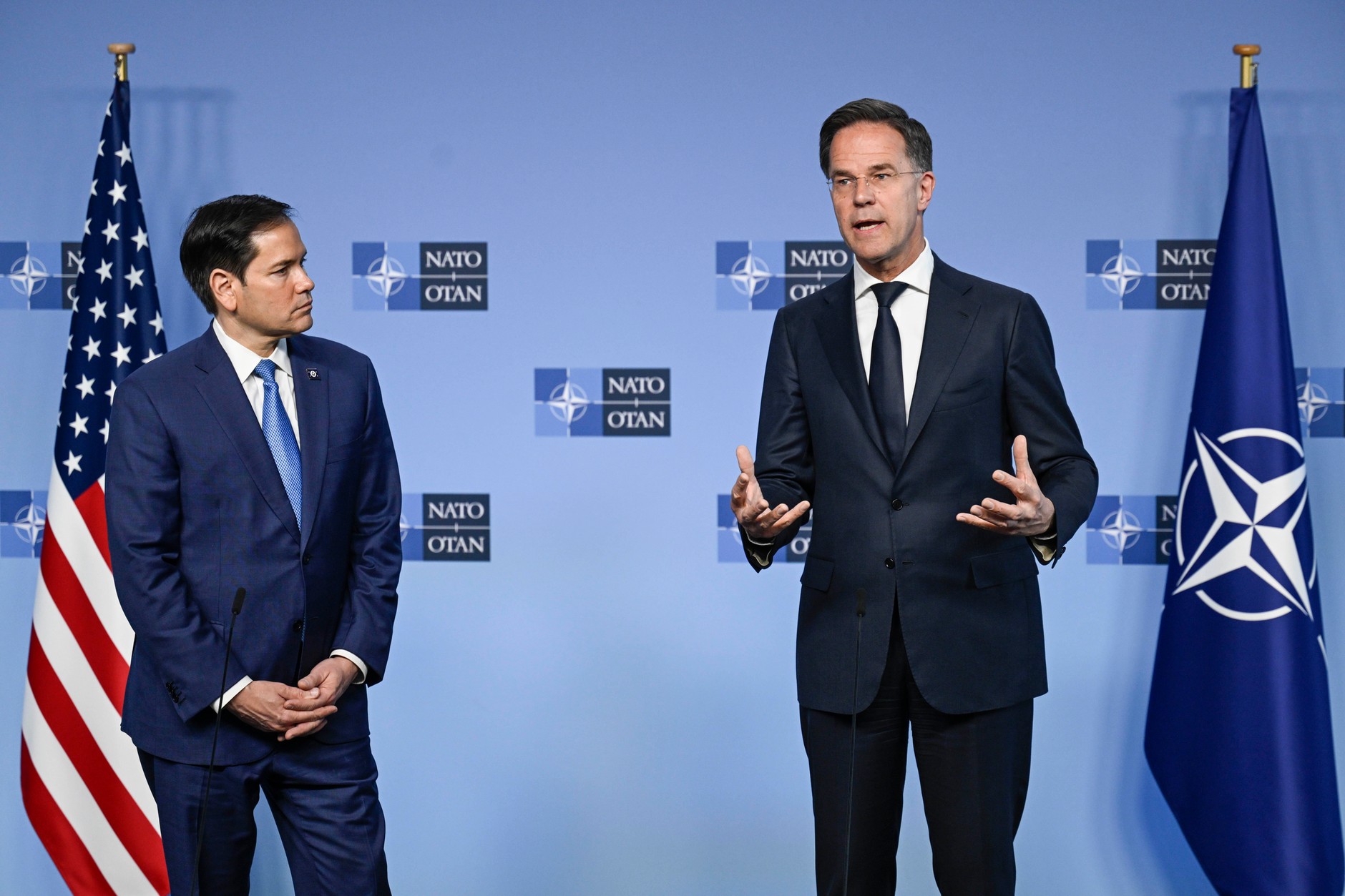
US Secretary of State Marco Rubio and NATO Secretary General Mark Rutte (stock photo)Wiktor Dąbkowski / PAP
Without illusions and without shortcuts
Rutte stressed that a clear strategic commitment is needed. European security policy must decide whether the goal is to strengthen Europe's role within NATO or to build separate defense capabilities – because both approaches are based on completely different assumptions.
In the latter case, security ceases to be a secondary policy and becomes a central element of industrial and fiscal strategy. This means shared production capacity, standardization, long-term contracts, political export control and a clear division of responsibilities. It also requires the readiness to transfer part of national sovereignty to the common level in an area that has so far remained almost exclusively the domain of nation states.
Rutte's speech was therefore more than a warning – it was a test of the maturity of the European debate. Europe can no longer afford to avoid difficult decisions, especially now when security is once again becoming a matter of fundamental survival. There is no quick path to independence without costs. It is also impossible to use the current system without serious investments.
The most realistic scenario for the coming years will be the hybrid model. Europe will continue to develop its own capabilities, but within NATO. The focus will shift to industry, joint purchasing and those areas of capability that are most lacking today. The US presence will not disappear, but it will become more conditional. Expectations towards European allies will be clearer and more demanding.
The greatest threat to Europe does not come from Washington, but from internal chaos. If strategic autonomy is reduced to a political slogan without real operational substance, Europe will waste years and resources without real progress.
However, if it is treated as a process of building a system with clearly defined priorities and realistic deadlines, it can strengthen both Europe and NATO.
Rutte did something rare in contemporary international politics in Brussels: he spoke like a system administrator, not a political mediator. His message was simple and uncomfortable – security is not a matter of intention, but of ability.
Europe must now decide whether it wants to buy or build these capabilities. This choice is not ideological – it is materialy. And the longer it is postponed, the higher its price will be.
I’m Ashley Davis as an editor, I’m committed to upholding the highest standards of integrity and accuracy in every piece we publish. My work is driven by curiosity, a passion for truth, and a belief that journalism plays a crucial role in shaping public discourse. I strive to tell stories that not only inform but also inspire action and conversation.