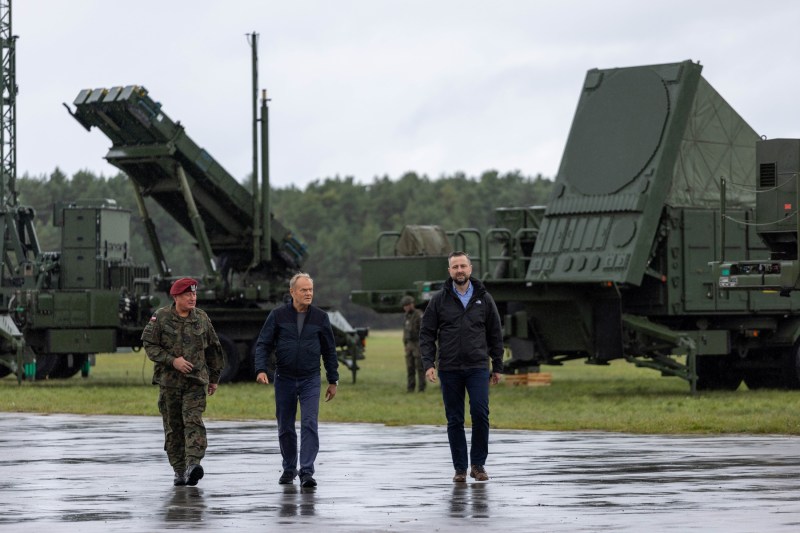
Polish Prime Minister Donald Tusk, accompanied by the Minister of Defense Władysław Kosiniak-Kamysz, is heading for a press conference after military information on “Iron Defender-25” exercises in Ustka, Pomerania, Poland, on September 16, 2025. / Profimedia
Polish Prime Minister Donald Tusk said on Monday that none of the drones that entered the Polish airspace on the night of September 10, according to the Polish press agency (Pap).
On September 10, Poland has mobilized its own air defense and NATO systems to bring about 20 drones in its airspace, after a Russian air attack on Ukraine.
“At present, there is no evidence that any of these drones would have been a direct threat. So far, none has been identified as a fighter drone capable of detonating or provoking damages,” said Tusk.
The process of searching and identifying the drone residues is ongoing, and the exact number of air -free air vehicles involved in the Poland Incursion has not yet been confirmed, according to Tusk.
“We are ready to take all the necessary measures to neutralize the objects that could represent a threat,” added Tusk, quoted by The Kyiv Independent.
In response to the Russian incursion with Drone, Poland invoked Article 4 of the Northern Atlantic Treaty, which provides for consultations when territorial integrity, political independence or security of a Member State are threatened.
After the violation of the Polish airspace, a Russian drone was detected above the territory of Romania, another NATO member, who did not bring it down.
The EU intends to discuss seven Member States and Ukraine on creating a so-called “drone wall” that intercepts the potential Russian aerial threats.
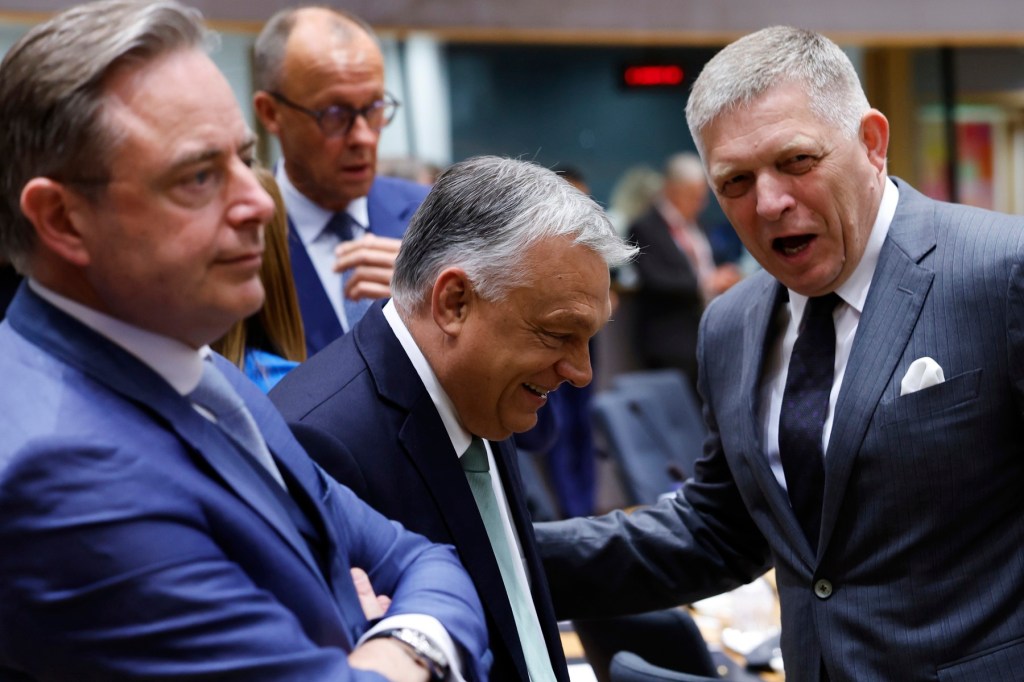 The two EU countries close to Moscow, excluded from the first discussions on the “Drones Wall” at the Eastern Border of the Union
Subsequently, last Friday, on September 19, two Russian fighter jets flew at low altitude above the Petrobaltic oil platform, owned by the Polish State Company Orlen, in the Baltic Sea.
The same day, three Russian MIG-31 fighter jets entered the Eston airspace, an incident that the Tallinn government described as an “unprecedented challenge” by Russia, which denies the entry of those airplanes of Estonia and accuses this country and its European allies to be resorted to such accusations.
Donald Tusk previously stated during Monday that his country is willing to make “any decision” for the breaking of air targets that could represent a threat, such as aircraft or Russian drones, but only in clear violation situations of the Polish air space and only if there is a UNANIM support from NATO.
Speaking at a press conference, the Polish Prime Minister admitted that a measure as drastic as the breaking of a Russian fighter aircraft could lead to a “very acute phase of the conflict”, which is why such a decision could only be taken after the absolute certainty that “we are not alone”.
“We will make the decision to bring down objects in flight when they violate our territory and fly Poland, there is absolutely no discussion about it,” said Donald Tusk.
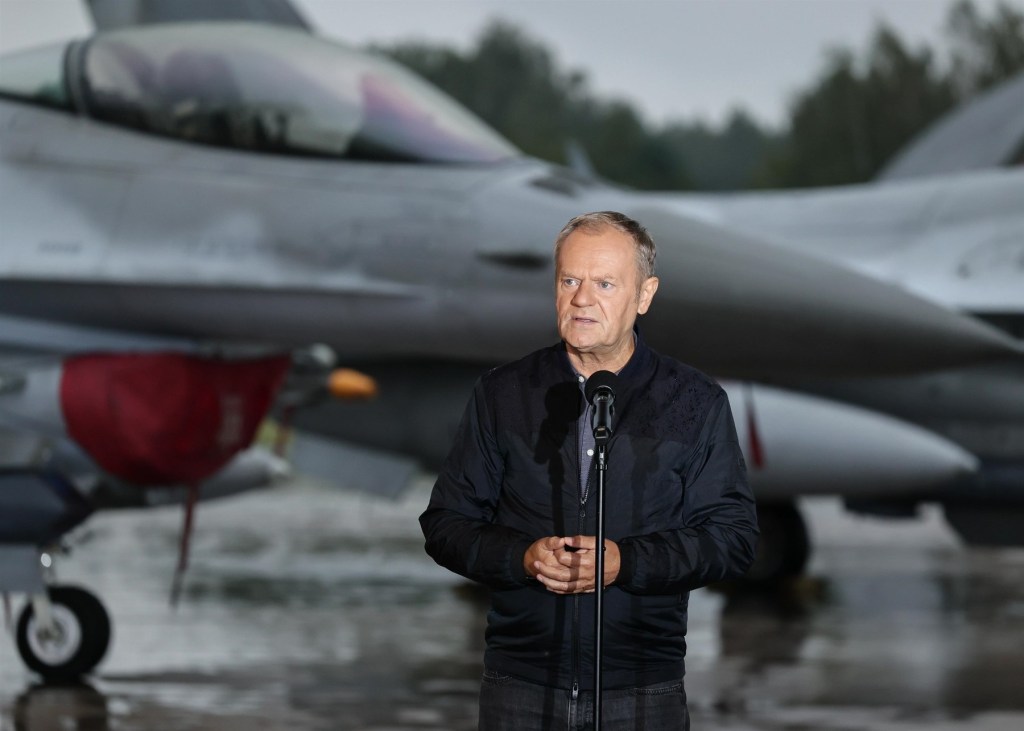 “I must be absolutely sure that all the allies will treat this just like us.” Polish prime minister, announcement after security incidents caused by Russia
But “when we are dealing with situations that are not fully clear-as was the recent flight of Russian fighter jets above the Petbaltic platform, but without having any violation, because there are not our territorial waters-we must think twice before deciding on some actions that could trigger a very acute phase.”
Also, “I have to be absolutely safe (…) that all the allies will treat this situation exactly as we do,” Tusk said, quoted by Agerpres.
Tusk's clarifications came in response to the statements of Czech President Petr Paul, a general who worked in NATO and suggested that the countries of this alliance be able to break Russian aircraft that would violate their airspace, claiming that Russia “will very soon realize that it has made a mistake” NATO.