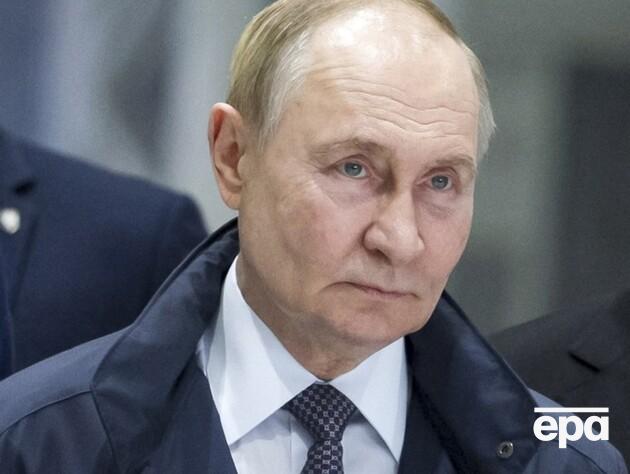
As an example of a reaction to the “threats”, he mentioned the Russian Federation’s refusal of the moratorium to deploy missiles of medium and lower range. Putin said that this was the Russian government reaction to US announcements about plans to place long -range weapons in Germany in 2026.
Putin said that he was confident “in the reliability and efficiency of” Russian “forces for holding.” At the same time, the Kremlin allegedly “is not interested in further buildup of tension and spurring the arms race,” he said.
Putin repeated the narratives of Russian propaganda that the West was taking “destructive actions” and applies “destabilizing doctrinal concepts” against the Russian Federation. At the same time, he announced that Moscow was ready to continue to adhere to “central quantitative restrictions” in accordance with the Agreement on the reduction of strategic offensive weapons within one year after its expiration of its validity on February 5, 2026.
“In the future, on the basis of the analysis of the situation, we will make a certain decision on the subsequent preservation of these voluntary self -restraints. We believe that this measure will become viable only for the condition that the United States will act similarly,” the head of the Kremlin summed up.
Context
In the fall of 2022, Putin announced his readiness to use nuclear weapons, and then changed his mind. According to media reports, then American intelligence evaluated the possibility of a Russian nuclear strike in Ukraine at 50%.
After that, Moscow has repeatedly returned to threats with nuclear weapons, including in the fall of 2024. President of Ukraine Volodymyr Zelensky replied that Putin should be afraid to use nuclear weapons, but “no one knows what is in his head.”
On January 3, 2025, the then US Secretary of State Anthony Blinken said that the States have reason to believe that China contacted Russia and said: “Do not do it.”
After on August 28, 2025, the new US President Donald Trump expressed disappointment with Putin’s actions and announced a reduction in a previously announced 50-day period to conclude a peace agreement between Moscow and Kiev up to 10 days, the deputy head of the Council of Ministers of the Russian Federation Dmitry Medvedev said that “each new ultimatum is a threat and a step towards war.” In response, Trump called Medvedev the “failed president” and ordered him to “follow his words.”
The ex-President of the Russian Federation, in turn, advised the head of the White House to recall the danger of a “dead hand”-the Soviet system of automated control of nuclear forces, developed for a guaranteed “impact of retaliation” even in case of damage to communication lines or destruction of command.
On August 1, the head of the White House stated that the states will place two atomic submarines “in the relevant regions” in response to “stupid and extremely provocative” statements of Medvedev. Axios noted that this was the first military step that Trump publicly took to restrain the Russian Federation. Trump later told reporters that he ordered to place two atomic submarines to “protect his people.”
On August 3, Trump said that the US nuclear submarines are already near the territory of Russia.