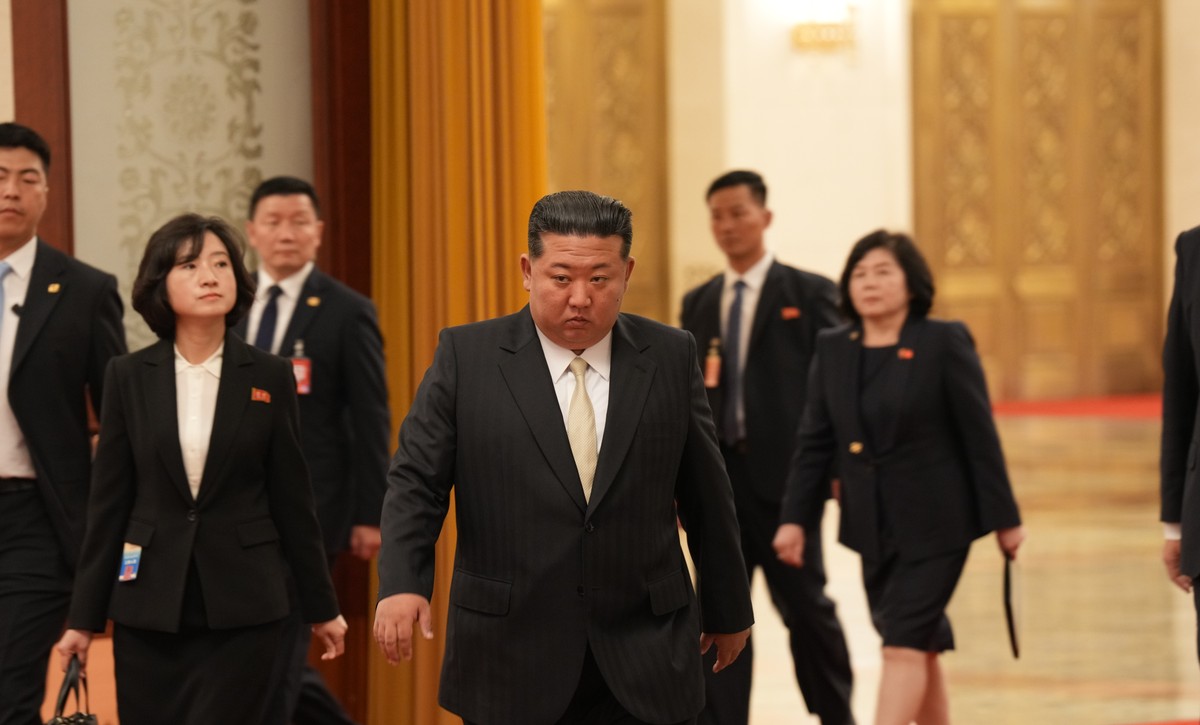
According to the Daily NK portal, three groups, numbering 50 people each, have already gone to work in China. They will be employed in seafood processing plants near Dandong and Donggang in the Chinese province of Liaoning. They are mostly young women aged 20 to 30, without prior experience in working abroad. They were recruited from small towns and then verified by the North Korean government. Although the employees were trained earlier, the decision to leave was to be sudden and surprising. She fell shortly after the visit of Kim Jong Una in Beijing and the meeting with XI Jinping – the leader of China.
See also: “The gift of great power”. Yes, Kim Jong Un is trying to improve his image
North Korea. Interest in working in China is falling
After a 60-day training, women were to wait for further instructions. After the return of Kim from China, they were transported almost immediately to their new workplace – to Chinese provinces, maintaining mainly from seafood processing. They will be there “unskilled working force” – emphasizes the source of Daily NK. According to the South Korean information service guide, “In cities, interest in working abroad has fallen due to stories about bad working conditions, unpaid salaries and sexual harassment, as well as political indoctrination and continuous surveillance. But people in the provinces have not heard of these problems and still perceive foreign missions as good possibilities.”
See also: Kim Jong Un commissioned increased checks in Russia. Sends special agents
The decision of Kim Jong Una to send another large group of employees to China may indicate an attempt to improve relations between two countries. Recently, as Daily NK writes, they were not the best. This is evidenced by the fact that China has shortened the periods of visual validity of the Koreans from the North and many of them had to return home earlier.
North Korea sends thousands of employees abroad. The most to Russia, where they fill the gap on the labor market, caused by the war in Ukraine and the outflow of Russian employees to the front. China is second, and the next, among others: Qatar, United Arab Emirates, Libya and Iran.