Something unusual is happening on the German borders. “Inhuman” method of migration limiting

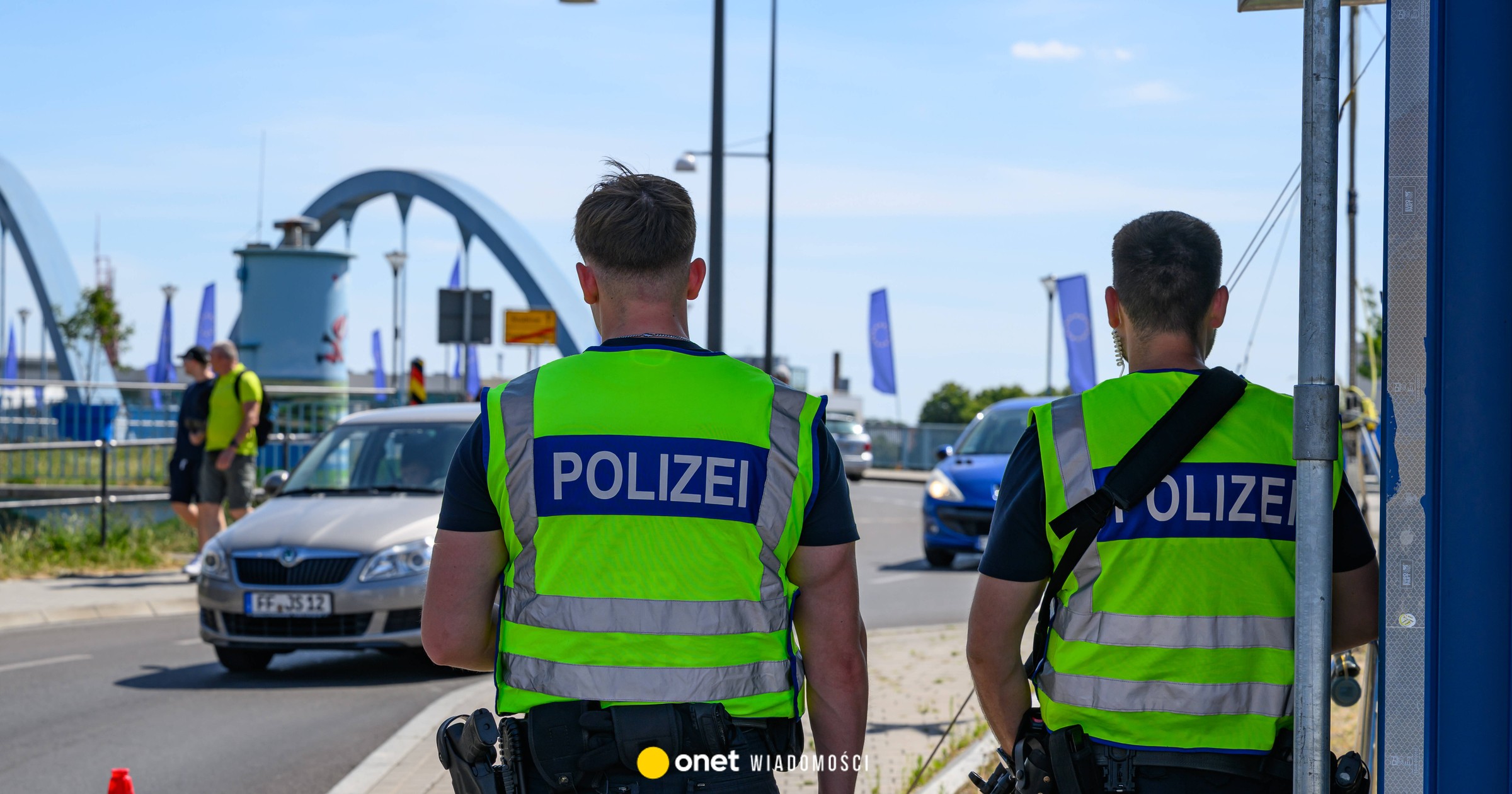
These are shocking according to German standards. Something unusual has been going on on the borders for several months: Policemen prevent entering Germany to people coming from other continents who want to immigrate without a visit. This happens even when these people declare that they apply for asylum.
Rejection of conclusions is the most controversial instrument of the new migration policy, with which Chancellor Friedrich Merz (CDU) and Interior Minister Alexander Dobrindt (CSU) want to introduce a declared change. But how certain is it that they can significantly reduce migration pressure?
The resistance is high. Even the moderate use of these procedures – during the first four months, this applies only to about 700 people applying for asylum, while about 8,000 new immigrants came to Germany for this purpose – it is considered by many politicians and citizens to be too strict, and by some even inhuman.
Even recognized experts on the situation, such as the former government adviser Gerald Knaus, They consider this type of protection to be protected within the EU as unlawful. In June 2025, the Administrative Court in Berlin said urgently that rejection of applications without considering the asylum application in accordance with Dublin regulations is unlawful.
At the request of the federal government, the European Court of Justice is to be resolved. If he repeals the rejection of conclusions, it is doubtful whether the Union and SPD will be able to gather the forces necessary to conduct a deep reform of EU law. In addition to border controls, which have already been adopted by the coalition government and which, in accordance with EU law, are permissible only in exceptional cases, The central element of migration management stands on shaky legs.
Over 100,000 migrants a year
Merz is right by announcing “60 % decrease in the number of people applying for asylum compared to August last year”-at least if you get a generously round the data. But it is equally true that also this year the number of immigrants applying for asylum will exceed 100,000. – For the 13th time in a row. According to the Federal Office for Migration and Refugees (BAMF), over 78,000 were submitted by the end of August. primary applications, and along with the conclusions supplementing the number of people applying for asylum is already 104 thousand.
In 2013, for the first time since the Balkan wars in the 1990s, the number of 100,000 was exceeded. At that time, however, countries fell in the middle of Europe. Mass immigration of people from other continents as “people seeking protection” is a new phenomenon that appeared in 2010. Before the escalation of the situation in 2015, the number of 100,000. It seemed to be a size that worried the then interior minister Thomas de Maiziere.
During the presentation of the balance sheet for 2013, the CDU politician warned that “the number of asylum applications again increased by more than 60 percent compared to the previous year.” “Higher numbers were recently recorded in 1999”. Today, 10 years after the largest illegal migration movement to Europe in the latest history, 100,000 Immigrants applying for asylum seems to many observers a relatively small number. There is no objective criterion that would determine what annual number is too high and what too low.
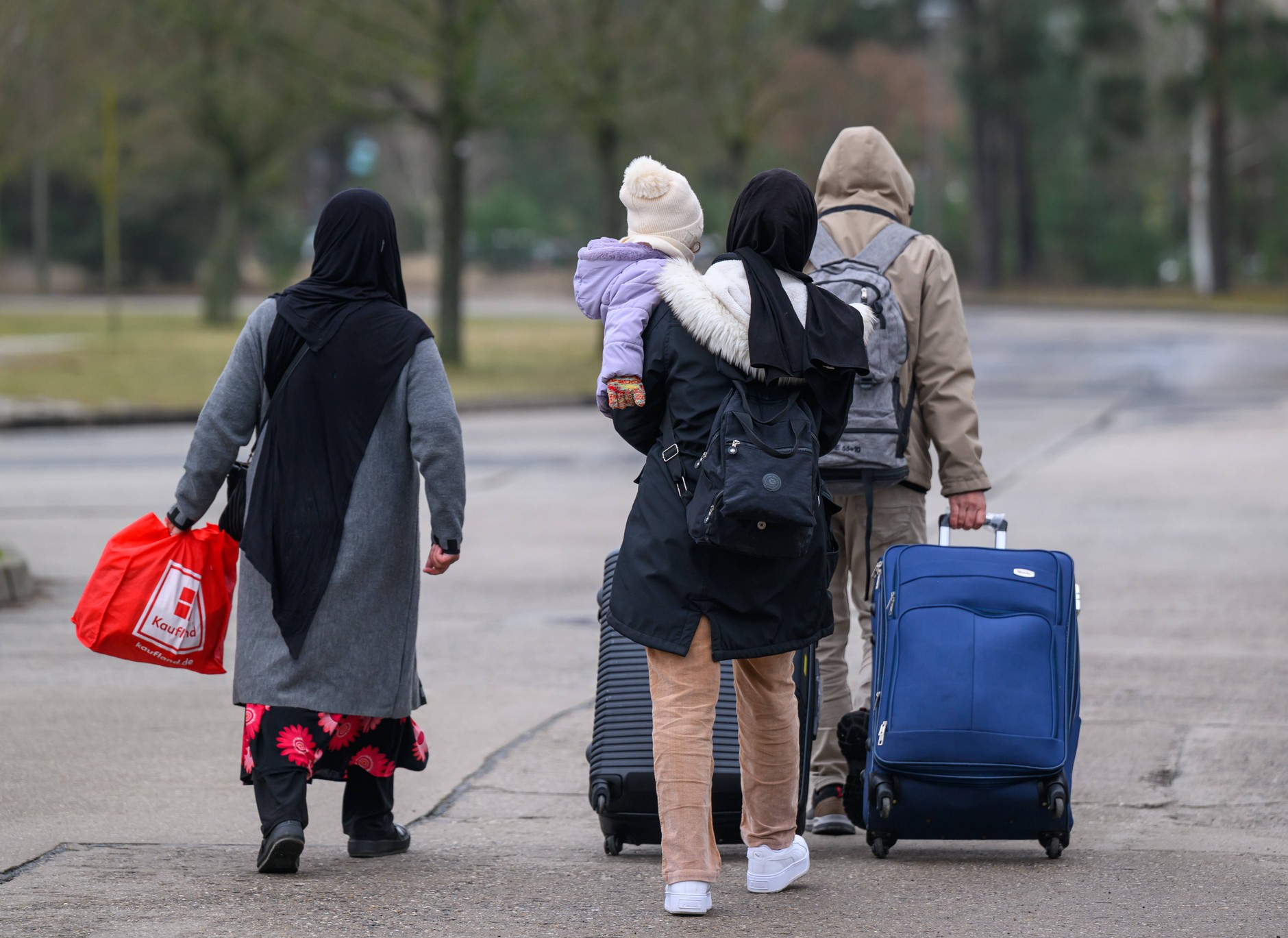
Migrants with luggage leaving the headquarters of the Central Imigration Office of Brandenburg, Eisenhuettenstadt, March 13, 2025.Patrick Pleul / PAP
For this part of the society, which for many decades and even generations, wants the existence of a nation -state in which citizens of German origin constitute the overwhelming majority, the current level is certainly too high. Similarly, those for whom immigration should take place primarily on the basis of selective criteria, such as performance or cultural similarity. News most often immigrate illegally, i.e. not meeting any criteria. And what is the position of the government itself? Interior Minister Alexander Dobrindt (CSU) recently answered the question whether the number 70,000 applications submitted by the end of July is acceptable: – It is still too high.
Controversial total families
To reduce migration pressure, Merz's government limited another immigration path: connecting families. In the case of persons entitled to the so -called supplementary protection – they are usually refugees from countries overwhelmed by civil war – this possibility has been suspended for two years. Earlier, 1,000 family members could arrive every month as part of this procedure. This restriction should cause a slight decrease in the number of people arriving as part of joining families, and some Syrians or Iraqis will rather consider returning to their homeland to his wife and children rather than bringing them to Germany.
A look at numbers gives an idea of the scale: in 2016, for the first time in Germany's history, over 100,000 Foreigners were legally immigrated only on the basis of family visas, and in 2023 a record number of over 130,000 was achieved. family visas. Last year, this number was slightly smaller (slightly below 124,000), and until August 13 this year there were 73 thousand. such cases. This is due to the Federal Government's response to the Skarjowy Paria alternative for Germany (AfD). This answer was made available only to the “Welt am Sonntag” newspaper.
Gottfried Curio, an AFD spokesman for internal policy in the Bundestag, criticizes: – In the case of connecting families, there is no change in migration. Suspension for “supplementary persons” [sprowadzanych członków rodzin] Reduces the number of family visas by only one tenth. AfD wants to stop connecting families in a group that most often uses this possibility, namely Syrian refugees. “They are no longer in danger of haunting by the Assad regime, which is why joining families can take place in Syria, not in Germany,” says Curio.
On the other hand, for the green parties, the already limited limitation of families of families violates “guaranteed by fundamental laws and human rights, the right of people interested in maintaining the unity of the family in accordance with Article 6 of the Basic Act and Article 8 of the European Convention on Human Rights”, as stated in the statement of the parliamentary fraction.
Filiz Polat, an expert on migration and parliamentary secretary of the Green Party, accused last week in the Union Bundestag, “that people are dying in the Mediterranean, because Europe is increasingly isolating, and suspending connecting families, especially women and children on dangerous refugee routes.”
Continued article under video material
(Not) effective measures
One of the key issues of German migration policy remains unresolved: (temporary) immigrants applying for asylum almost always become (permanent) immigrants. However, there are no prospects for the necessary increase in the number of deportations to countries of origin. It is only next year that it will turn out whether the hope is justified that thanks to the adopted EU asylum reform, many more people applying for double asylum, which illegally moved to Germany, will be transferred to the relevant countries.
In addition Due to the high constitutional obstacles, effective measures – such as almost complete exclusion from the social benefit system – seem difficult to implement in order to encourage immigrants obliged to leave the country to return to their homeland. Everyone who has been recognized as a person authorized to protect, soon exercises a number of rights to permanent residence, integration and quick granting of citizenship. This makes a return to the country of origin rare.
An important means for breaking the automatism of the transition from the entrance to the permanent settlement are the so -called Readmission and withdrawal checks. However, the progress is also small in this area. The Federal Migration and Refugee Office (BAMF) usually has only three years to check whether there is still a basis for granting protection, and and if necessary withdraw the status of migrants. Otherwise, they have the right to obtain the title of permanent residence, and after five years of citizenship.
To prevent a situation in which unjustly recognized immigrants and those whose protection is no longer necessary, e.g. due to the end of the civil war in their homeland, become permanent immigrants, Bamf was ordered to re -check all recognized asylum applications until 2022. However, the coalition government abolished this so -called regulatory control. Since then, it only takes place “if necessary”, that is, for example, when power authorities provide the Federal Office with information about the fabricated biographies of refugees.
Too complex
Data that is available only to Welt AM Sonntag show that only 16,000 were initiated from January to August this year. new appeal proceedings – in 2021 there were still 117 thousand. – And almost 34 thousand were completed Especially often this concerned Syrians, Afghans and Iraqis. In almost all cases (31,992) BAMF confirmed the protective status, and only 1823 times there was a withdrawal or withdrawal.
The office is not able to provide detailed reasons for initiating the proceedings. On the request, he replies that individual life stories of people applying for protection are too complex and multilayer to be classified. Therefore, BAMF does not even conduct statistics regarding whether traveling to the country of origin, crime or information from security authorities play a role in proceedings.
In particular, in the case of recognized asylum applicants who return to a country where they are threatened according to their statements, there is a suspicion that protection in Germany is no longer necessary. At least, this is what the Act according to the Federal Ministry of the Interior. However, whether the procedure will actually be initiated, BAMF checks individually, depending on the duration and circumstances of the stay.
There are no statistics about how often travel to their homeland led to the withdrawal of the protective title. Since the fall of the Bashar regime al-Assad, hundreds of thousands of Syrians returned to their homeland, for example from Turkey. Only 1,900 Syrians have left for the support program.
The CDU/CSU and SPD coalition began to change the migration policy. However, for it to be successful, Merza's government would have to take much more actions.