Zacusca, the delicacy of the Romanian chambers. The story of the appetizer and the recipes that made him famous as a Romanian preparation


Romanians have a long tradition in preparing winter supplies, and Zacusca is among the most appreciated. The tradition of her training has old origins in Romania, but for other people Zacusca means something other than the traditional preparation.
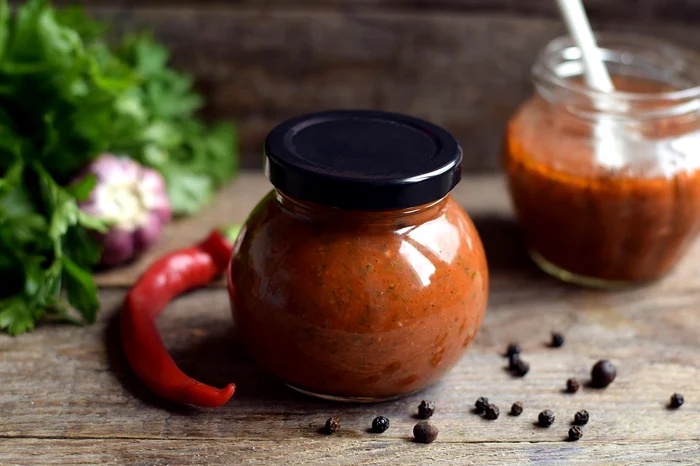
Zacuscă. Photo: pixabay.com
In the fall, the chambers of many households are filled with delicacies meant to be kept over winter. Even though supermarkets and agri -food markets offer a wide range of seasonal products, Zacusca, broth, pickles, compotes and sweets in the house remain an old tradition, which continues to arouse interest.
Zacusca, the Appetizer of the Russians
Zacusca, one of the traditional dishes prepared by Romanians as winter supplies, comes from the Slavic and Nordic peoples. For the Russians the name “Zakuska” represented an appetizer taken before the main meals after a ritual meant to increase their appetite.
The French moralist Just-Jean-Étienne Roy (1794-1871), in his volume Les Français en Russie, thus described this culinary habit.
“It is the custom in Russia and in the other Nordic countries – in Sweden, Norway, Denmark – that the main meal is preceded by a small snack, served in the salon, with a quarter of an hour before the world is placed at the table. This prelude, a kind of collation (no an easy snack) that holds the dinner, has a meal, has a meal, and has a meal, and has a meal, and has a meal,” Jje Roy reported, in his travel impressions in Russia, from the middle of the 19th century.
The author hosted in the residence of a local governor told that during “Zakuski”, the servants brought small plates, loaded with fresh caviar, with smoked fish, cheese, salted meat, sea biscuits and other sweet and salted pastries. In the nobility's rooms at that time were also served bitter liqueurs, vermouth, France rachis, London Porter beer, Hungary wine and a strong grass liqueur, called “drinkable gold” from Danzig.
“All this is eaten and drinking, standing, walking. In Russia, the meals in the good houses are eaten, but too much is made of chopping, filling, and meat or fish are prepared in” à l'allemande “,” à l'l Italian “or” “,” note the writer.
Zacusca, eaten in the feet
Helen Eggleston Haskell (1876–1942), American children's literature author, reported in the book “Katrinka: the story of a Russian child” (1913), about the importance that the Russians gave to the appetizers called Zacuscă, from the Tsar family, to the poorest families.
“The first way was served on a side table, and the Tsar, the children and their governance ate it standing. This way is called in Russia” Zakuska “and is considered very important. He was made up of cruel herring, placed next to the slices of lemon on an elegant plate, thin slices of bread with caviar, fresh radishes, green onions sprinkled with cayenne pepper, smoked salmon, salads, pickled mushrooms and various assortments of cheese ”, the author reports.
In Russia of the beginning of the 20th century, even the peasants began their tables with “Zakuska”, which was believed to wake up for the following foods.
“Zakuska poor people is, of course, very simple and often consists of only a few pieces of black bread, well sprinkled with vinegar and cumin seeds. But it is served on the most beautiful plate that the house has, and both in the houses of the rich and the poor,” note the American writer.
The Swedish buffet of Ukrainians
In Ukraine of the beginning of the 20th century, besides the habit of giving the guests a well -known honey liqueur, followed by the traditional plateau with appetizers known as “Zakuska”.
“Zakuska means” small mouthpiece “, but very often it turns into a mass in full. In the families of ordinary peasants, Zakuska plays a minor role, being reduced to one or two very simple snacks. But among the aristocracy and rich classes, Zakuska becomes an elaborate feast, similar to SMörgåsbord (Buffet) Swedish ”, Savella Stechhin, a Ukrainian publicist emigrated to Canada at the beginning of the 20th century, in the volume “Traditional Ukrainian cuisine” (1957)
According to the Ukrainian custom, reported by Savella Stechhin, the host placed on a table a variety of types of zakuska, attractive and tempting, along with plates, forks and napkins. The guests came and chose themselves from the appetizing selection.
“The lack of formality, the fact that they move freely and serve themselves from different dishes, makes the guests feel at ease and stimulates the conversation. This cheerful period before the dinner gives the guests to get to know each other better and to enjoy the event. And the host has the chance to talk to the guests, no one, Zakuski is one of pleasure and relaxation ”, The author note in the book for Ukrainian cuisine.
If the family is not poor, Zakuska usually included a variety of sausages, aspic or pickled fish, salads, pickles, sofas, pyroski, black and white bread or rolls.
“The greater the variety, the more the reputation of the hosts grows. However, the Ukrainians in Canada are moving away from this abundance and expense, limiting Zakuska to one or two types, or to an assortment of small slices of bread, pickles or raw and crunchy vegetables. note the author.
Zacusca, tasty stew of Romanians
Romanians and other populations in the Balkans gave “Zacuscai”, a completely different meaning from that of the “Swedish buffet” or the appetizers on the tables of the Russians and the Ukrainians. For Romanians, Zacusca is a kind of traditional stew, based on vegetables, which is served on slices of bread.
The recipes do not usually lack tomatoes, onions and peppers, and eggplants, mushrooms, beans and olives give them the special character. Here are some of the “grandparents' recipes”:
Eggplant zacusca
Five kilograms of thin broth are made. The onion (about a kilogram and a half) cut the fish and fry in a bowl with a glass of oil. The donuts (25-30 pieces) are cut faithfully and fry separately with another glass of oil.
The onion and fried donuts are poured over the broth. Add the baked eggplants (six -open pieces), cleaned and cut into strips. Then put the bay leaves, pepper and salt. Everything is boiling until it drops. The composition is hot in jars. The jars are tied with two to three rows of cellophane and boiled in a bowl for one hour, from the moment the water begins to boil. In the end, the jars are allowed to cool in the water in which they boiled.
In another variant, cut the eggplant into round slices, salt and leave to drain for an hour, then fry in oil on both sides. The donuts (at a bruise, four-five donuts) are washed, cut into quarters, shakes from seeds and scraped into vinegar, leaving them to stand for 10-15 minutes; Then remove and leave to drain.
Alternatively, in the jars, a row of fried eggplants and a row of donuts, until the jars are filled three quarters. Over them pour boiled and strained tomatoes, in which salt, a little sugar, a few peppercorns and jenibahar pissed, were added, taking care that each jar will remain empty about two fingers. The jars are covered with double cellophane, bind and boiled for 25 minutes. Allow to cool in the water in which they have boiled and kept in a dry and cool place.
Zacuscă from mushrooms
In a popular recipe in the past, mushroom zucchini, are used: one kilogram of mushrooms, 25 donuts, one kilogram of onion, two kilograms of tomatoes, one liter of oil, salt, pepper and bay leaves. Heat the chopped onion together with the mushrooms cut. It fits salt and pepper and add the bay leaves.
When the mushrooms have been softened, add the baked donuts separately and clean, without being put in water, well cleaned of bells and seeds. Add the scraped and peeled tomatoes, then let the zacusca boil slowly, over low heat. When it drops, it fits once more. Zacusca is hot in small, hot jars. The jars are connected with cellophane and left the next day in the hot, extinguished oven.
Zacuscă with olives
Use 10 eggplants, 15 donuts, one kilogram and two hundred grams of onion, half a kilogram of olives, one kilogram and a half tomatoes, three quarters of litter, four bay leaves, three tablespoons of honey, salt and pepper.
Bake the eggplant, clean and undo in strips. Bake the donuts and break into pieces. Chop the onion and heat in three quarters of liter of oil. Boil the olives and cut.
From the tomatoes is prepared a thick broth, in which the honey, salt and pepper are added. In the jars, eggplants, donuts, hot onion and olives are placed in the jars. Pour the tomato broth, add a little oil on top, place one – two bay leaves, bind the cells with cellophane and boil 10 minutes on the steam bath.
Zacusca of donuts
Use 40 large donuts, half a liter of oil, two tablespoons of honey or sugar, one tablespoon, two teaspoons of pepper and three -four bay leaves. Bake the donuts, clean and chop very well with a wooden satire. The obtained paste is boiled in a bowl, over low heat, adding the oil and spices.
After half an hour, the vessel is passed in the oven and let it boil slowly. When the zacusca has dropped and thickened, the honey or sugar is put, it is allowed to boil, then stop the heat. The preparation is hot in small jars, binds with cellophane and left until the next day to cool slowly.
In another recipe proposed in the past, by cooking magazines, they are used: one kilogram of mushrooms, 50 donuts, one kilogram of onion, two kilograms of tomatoes, one liter of oil, one lemon, three bay leaves, two teaspoons of pepper and salt. Bake the donuts and chop.
The onion is cut and put in a bowl with hot oil, along with the mushrooms washed and cut. When the mushrooms were hardened and the onion was browned (without burning), the tomatoes are added, passed through the seed and cooked separator until a thickened paste is obtained. It fits the salt, add the pepper, the slices from half a peeled lemon, then the zacusca is placed in small jars, which bind with double cellophane.
Moldovan zacusca
For the recipe for Moldovan zacusca, according to a variant, they are used: 25 donuts, 25 peppers, one kilogram of onion, 10 large eggplants, one kilogram of carrots, two kilograms of tomatoes and one liter of oil.
Bake the donuts, peppers and eggplants, then clean without watering the hands with water. The onion is chopped and slowly boiled, over low heat, in the whole amount of oil, until it becomes translucent. The donuts, peppers and eggplants are chopped separately.
The carrots are given on the small grater, put ten minutes to stifle in the hot oil and leave the vessel covered. All the vegetables are gathered in a larger vessel, preferably an enamelled saucepan, add the broth obtained from tomatoes and give the zacusca to the oven or on a fiery fire.
When it has dropped well, it fits the salt, put three to four bay leaves and a teaspoon of peppercorns. Zacusca is poured hot in small jars, binds with cellophane and left in the hot oven (but without fire) until the next day.