Featured

Russia's war in Europe can aim to collapse NATO

The war in Ukraine could only be the prelude to a larger scenario, in which the true stake for the Kremlin is not necessarily the winning of the territories, but the breaking of the internal cohesion of the North Atlantic Alliance. It is the conclusion of an article signed by the Ukrainian journalist Volodimir Kravcenko in Zerkalo Nedeli, who warns: if Ukraine falls, the following targets will not be chosen for their strategic value, but for their potential to fracture Western solidarity.
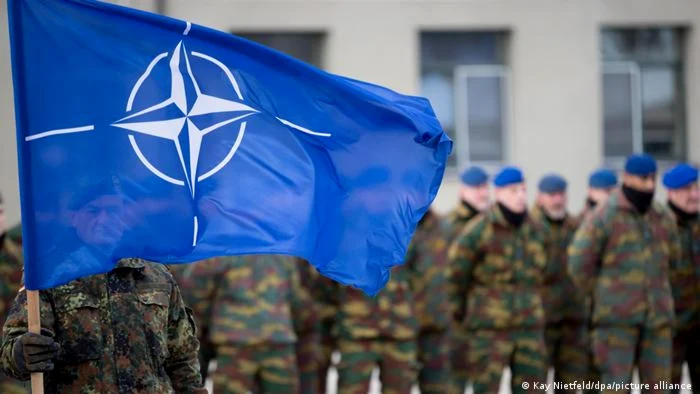
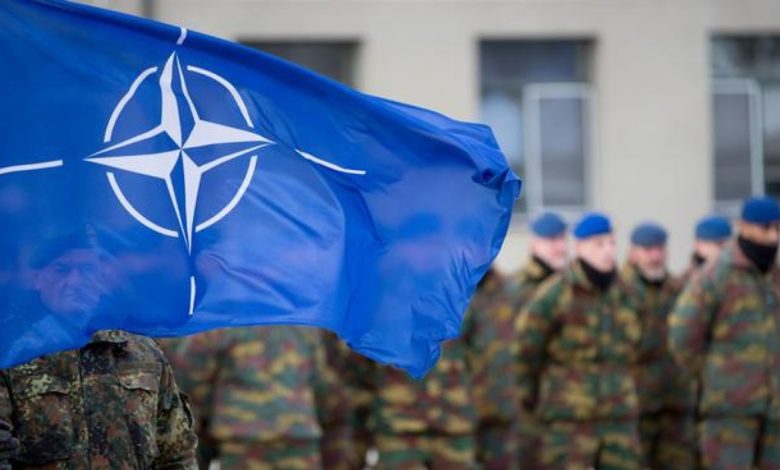
Russia could test NATO/photo cohesion> Archive” width=”1400″ height=”750″ loading=”eager” class=”svelte-h45upf”/></source></source></source></source></source></source></picture>
<p>Russia could test NATO/photo cohesion> Archive</p>
</div>
<h2>Moscow's hidden target: NATO collapse as an institution</h2>
<p><i>“For Russian leadership, a conflict with one of the Baltic or Scandinavian countries does not necessarily have to occupy the territory – but to challenge a real test of article 5, the NATO foundation. The Kremlin bets on the idea that the western will not have the courage to intervene in the case of an attack, for fear that this would lead to a nuclear.”</i>writes Kravcenko.</p>
<p>It is a frightening theory, but which takes shape against the background of the repeated hesitations of the West in relation to the Russian aggression. The position of the current Washington administration, considers the author, is not devoid of ambiguities. “<i>Signals were accumulated that question the US decision to act promptly by virtue of article 5 “</i>he adds, reminding the statements of Donald Trump, who publicly minimized the danger represented by the intensification of the Russian military activity near Finland and Norway.</p>
<h2>Northeast Europe countries are no longer waiting-they are already preparing</h2>
<p>Against this background, countries such as Poland, Baltic States and Nordic nations no longer concern the hypothesis of a conflict with Russia as a event, but as a delayed certainty. The estimates of the military intelligence services in Denmark indicate that, in the event that the Ukraine war ends, Russia would only need six months to regroup and launch an offensive against a country in the region – and about two years to face more states simultaneously. Over five years, the Danish analysts say, Russia could be prepared for a major conflict at the continental level, in the absence of US intervention.</p>
<h2>A political counter -offensive: Western leaders' messages</h2>
<p>In the face of these warnings, the reactions from the Western leaders are mixed. Bruno Kahl, the head of the German Foreign Intelligence Service, warns that “the faster the war in Ukraine ends, the earlier Russia will try to test the determination of the West and the validity of Article 5.”</p>
<p>In contrast, the new Secretary General of NATO, Mark Rutte, sends a force message: <i>“If the Russian Federation will attack a NATO member state, it will suffer a devastating defeat. The alliance's defense capacity cannot be questioned.”</i></p>
<h2> The test of strategic solidarity</h2>
<p>For many military analysts, the question is no longer whether Russia will try to attack the northern or Baltic flank of Europe, but when and how. In such a scenario, not only the military capacity of the Alliance will be subjected to an attempt, but also the mutual trust between the Allies-the true NATO cement.</p>
<p>And maybe here is the greatest vulnerability that Moscow is trying to exploit: not missiles, but hesitation. Not the armored, but the electoral calculation. And in this gray space, between words and facts, between doctrines and reality, it is decided whether European security remains a viable project or an illusion from another century.</p>
</p></div>


		</div><!-- .entry-content /-->

				<div id=

Ashley Davis

I’m Ashley Davis as an editor, I’m committed to upholding the highest standards of integrity and accuracy in every piece we publish. My work is driven by curiosity, a passion for truth, and a belief that journalism plays a crucial role in shaping public discourse. I strive to tell stories that not only inform but also inspire action and conversation.

Related Articles

Leave a Reply

Your email address will not be published. Required fields are marked *

Back to top button