A kingdom for Dacia. How the foreigners wanted to unite the Romanian Principalities and release them from the Ottomans


The unification of the Romanian Principalities was the dream of several adventurers who perished on the throne of Moldova. The peak, the many supporters of this project, were not of Romanian origin.
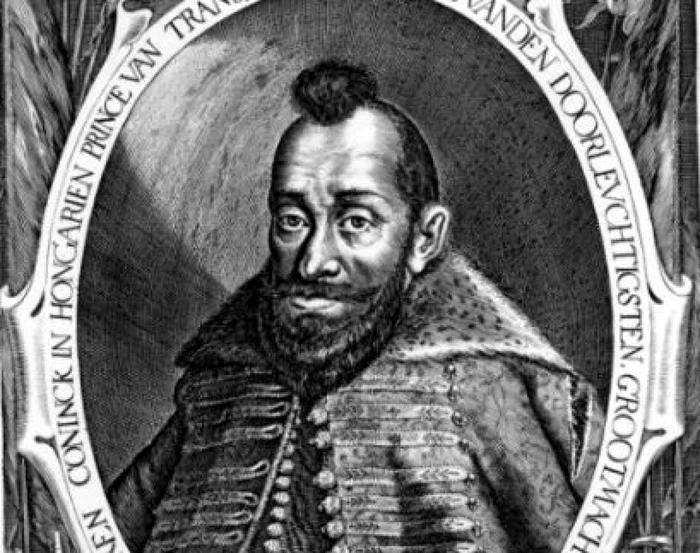
Gabriel Bethlen, Prince of Transylvania Photo Truth
On May 27, 1600, through a Hrisov, Mihai Viteazul assumed the title of “Lord of the Romanian Country, Transylvania and Moldova”, managing for the first time in history to unify all the territories with a majority Romanian population. It was an ephemeral union for only a few months. And this project was not only an exclusive initiative of Mihai Viteazul. He was also supported and dreamed of by rulers prior to the mountain voivode but later, after his death. Paradoxically, this idea of a “Dacian kingdom” that includes Transylvania, the Romanian Country and Moldova has been supported more by foreigners, including adventurers who have reached the throne of Moldova, in particular.
The son of a Greek sailor and the first “Dacian Plan”
The first ruler of a Romanian principality who thought to unite the Romanian Country, Transylvania and Moldova, paradoxically, was not Romanian. He was the son of a Greek sailor on the island of Samos and remained in history by the name of Jacob Ieraclid or Despot Vodă.
He was born in 1511 and being a poor child, he entered the service of the Samos Despot. He was very attached to Jacob, and not having a descendant he inherited. At the death of his protector, Jacob Ieraclid became rich overnight and over Despot de Samos and Paros. But Jacob was an innate adventurer. He didn't like to stay too long in a place. He haunted Europe. Specifically, he studied medicine in Montpellier, southern France, but also served as mercenary. He arrived in the service of King Henry II and also fought in the French army to regain the city of Metz. Thus he came to know the job of weapons very well. “Era A beautiful man in appearance, not a big state, hungry and hell in the body ”the historian Leonclavius confessed. Jacob Ieraclid enters a series of intrigues, changes camps and arrives in Carol Quintul's service. In 1555 he was invested in the rank of knight and Palatine Count.
He continued to wander through Europe, passing from the company of Protestants in Wittenberg through Denmark, Sweden, Prussia and finally Poland. From Poland he arrived at the court of Alexandru Lăpușneanul where he began to plot against the ruler of Moldova. It was released but fled. Only in 1561, helped by the Roman-German emperor, Jacob Ieraclid manages to defeat Lăpușneanu in the battle of Verbia and thus becomes a ruler of Moldova. He was a Greek adventurer arrived on the throne of Moldova. But he was a cult character, walking around the world and who tried to modernize Moldova. He raised the first humanist school, “Schola Latina” in Cotnari and tried to remove the country from the Ottoman influence, although Fățiș was subjected to the Sultan. His dream was the unification of Moldova, Wallachia and Transylvania in the same state, a “Dacian kingdom”. Moreover, as the documents show, Despot Voda used as an argument the Romanesque, common origin of the majority inhabitants of the three principalities.
“It is well known for historians that among the great plans of the Lord of Moldova there is also the organization of an anti-Ottoman war to regain the independence of the Romanian countries. According to the documents, in February 1562, a few months after taking the reign, Despot launches from Vaslui to Moldovans in which, by affirming their origin. The unbelievers and curses of Turks, together with you, destiny, descendants of the Roman valuables, who made the world tremble. “shows Adina Berciu in the work “An attempt to unify the three Romanian countries during Despot-Voda's reign (1561-1563)”.
He tried to join the Romanian Country, with the help of diplomacy and a sausage, and Transylvania wanted to invade her with “blessing” just from Sultan. His plans were in a row and became betrayed by the boyars. He was killed on the battlefield by the hatman Stefan Tomșa, the one who also took the throne.
A Hungarian prince and his Dacian ambitions
Another great supporter of a “Dacian kingdom” was the Prince of Transylvania, Gabriel Bethlen. He came from a family of Hungarian nobles being the child of Farkas Bethlen and Druzsiana Lazar. He was born in Ilia, but remained an orphan at 13 and was taken in custody by his uncle from Lazarea, Andras Lazar. He served at the court of Prince Sigismund Bathory, where he learned the weapon job. And even accompanied in the campaign in the Romanian Country, in support of Mihai Viteazul. He was involved in Transylvanian policy during several principles. Finally, in 1613 he rose against Prince Gabriel Bathory. The latter was killed by his own officers, and with the consent of the Turks, Gabriel Bethlen reaches the throne of Transylvania. The decision makes the Habsburgs dissatisfied, those who will remain the rivals of the Transylvanian Prince. However, in 1615, the Roman-German emperor Matia I recognizes him as prince of Transylvania, with a secret clause, to help him against the Ottomans. During the 16 years of reign, Bethlen brought a special glow to Transylvania.
He reigned as a moderate prince, without excesses and cruelty, developing trade, industry, raising new castles and buildings. He had one of the most sophisticated and impressive courtyards in Central Europe, being a perfect Mcene. He encouraged the development of Calvinist culture and faith, raised schools and sent many Transylvanian students abroad. He even forced the nobles to let the servants be educated and have access to education. From a military point of view, he constituted a strong army of mercenaries. Gabriel Bethlen had big ambitions. He fought for the crown of Hungary and dreamed of becoming king of Hungary, Poland and Bohemia. What interests us is the fact that the scholar's scholar of Transylvania dreamed of a Dacian kingdom that obviously encompasses Transylvania, Valahia and Moldova. “More important to us is the plan that Bethlen had to become a king of Dacia (” Rex Dacia e “), bringing together the Romanian countries under his mastery. A correspondence of December 1627 shows us that he was making steps at the gate. Approve the request.wrote Constantin C. Giurescu in “History of Romanians”.
Without forcing the note with the Ottomans, Gabriel Bethlen gives up the plan. He needed tranquility in the eastern flank as he had warned with the Habsburgs.
The Italian wanderer and his dreams from Moldova
Finally, another supporter of a “Dacian kingdom” according to the model of Mihai Viteazul was an Italian wanderer known in history as Gaspar Graziani. He was born in 1580, in Bihac year, a city of Bosnia and Herzegovina, a former possession of the Venetian Republic. It was said to be Italian. He has learned several foreign languages. The English diplomatic missions at the High Parts and then sent the Great Duke of Tuscany, Cosimo II but also of the Vicerege of Spain in Naples.
He was also a servant of the dogs of Venice. It had even reached double spy in the relationship of the Ottoman Empire-the Habsburg. It is certain that at one point he started to have dreams of enlargement. With the relationships he had but also with the beautiful wealth he held, Gaspar Graziani put his hand on the throne of Moldova in 1619. He removed Radu Mihnea and went to Orthodoxy (no – was a Catholic). But nevertheless Gaspar Graziani secretly dreamed of an anti -Ottoman crusade. He was even thinking of making a “kingdom of Dacia” by uniting Wallachia, Moldova and Transylvania.
To this end he ended the Alliance with Poland, with the Zolkiewski hatman, in Hotin, through which he had to escape the Turks. He was neither sympathetic to the people nor by the boyars and this brought him the collapse. While the Poles were scoured with the Ottomans and Tatars in the battle of Ţuțora of 1620, Gaspar Graziani passed on the Polish side. The boyars betrayed him, and the Italian wanderer fled from the battlefield. However, it was reached the last and beheaded by two Moldovan boyars.