Oncologists are worried about a rapid increase in cancer incidence among young people.
I was 35 when I was diagnosed with cancer at the beginning of 2023, I was diagnosed with colorectal cancer in stage III
– says Chris Rodriguez, who survived cancer.
I lay in bed and entered the symptoms I had. Every time it came out that I had stomach or large intestine cancer, and I thought: “It can't be me. It's something that my grandparents are worried”
– says JJ Singleton, who survived cancer.
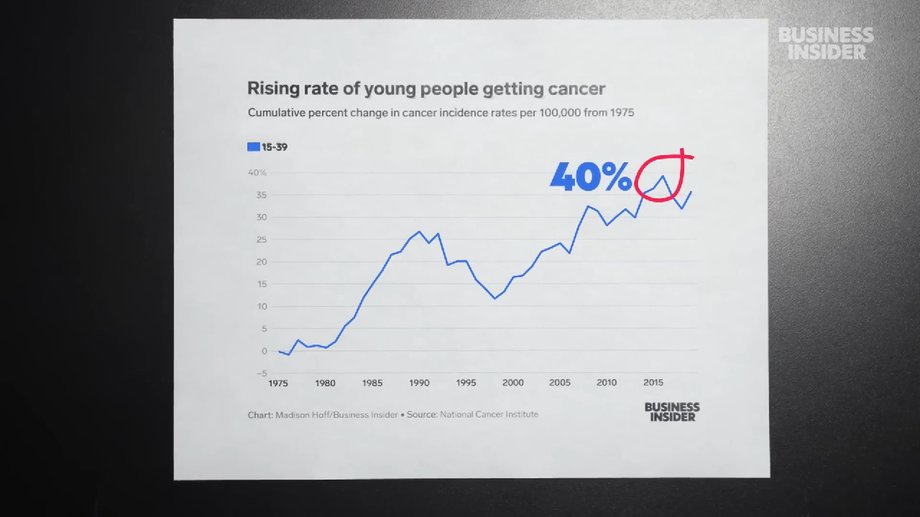
The risk of diagnosing cancer at a young age, i.e. between 15 and 39 years old, increased by 40 percent. from 1975 It is mysterious, disturbing and the whole community dealing with cancer tries to find a solution. Everyone realizes that this is a really serious matter.
Cancer incidence increases among young people
|
Business Insider
Cancer incidence indicators among young people are growing rapidly all over the worldbut especially in some countries where people live in a way called the Western lifestyle. These are countries like the USA, Canada, Great Britain, Australia, some European countries. These are places where more ultra -processed food is consumedwhich is easy, cheap and quick to get. In these places, people often drive everywhere by car or sleep worse.
Cancer incidence is getting higher among young people
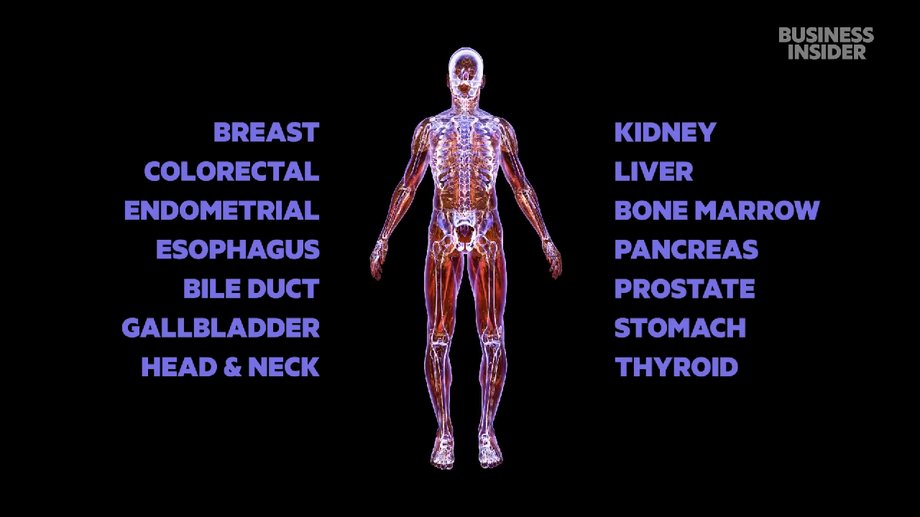
14 cancers are characterized by a rapid increase in the incidence among young people:
- breasts
- large intestine,
- endometrium,
- esophagus,
- bile duct,
- gallbladder,
- head and neck,
- kidneys,
- liver,
- bone marrow,
- pancreas,
- prostate,
- stomach and
- thyroid gland.
All these cancers are increasingly occurring in people under the age of 50.
14 cancers more and more popular among young people
|
Business Insider
I talked to oncologists who treat younger patients. Say that The vast majority of patients seem to be a specimen of health when they come to them. They can run marathons or lead an extremely healthy and active lifestyle, and yet they are diagnosed with cancer. I also talked to many young patients about how amazing it is to receive this kind of diagnosis at such a young age.
I was an avid enthusiast of crossfit and spent many years in my thirties, changing my diet and trying to be healthier. Being healthy and young age should make me not receive such a diagnosis for decades. It was incredibly shocking
– says Chris.
If you are a young person, you probably belong to the “sandwich” generation. It is possible that you look after older parents, start a family or try to save money to buy a home. Diagnosis of cancer at such a moment can extremely destabilize your life.
– I was diagnosed with cancer in September 2015. I was carried out a colonoscopy, and in a week I underwent surgery during which 80 percent were removed. colon. I started this crazy, long journey with colorectal cancer at the age of 27 – recalls JJ.
Colorectal cancer and more common
A person born in 1990 has a four times greater risk of diagnosing colorectal cancer than a person born in 1950. Until 2030, colorectal cancer will evaluate breast cancer and become the main cause of death due to cancer among young people.
The unfortunate matter related to the colorectal cancer is that it concerns part of our body, which as a society we consider to be embarrassing or about which we do not want to talk about
– admits Chris.
– Even in my city, people still do not associate colorectal cancer as something that can happen to young people. This is a huge mark that I try to fight with – admits JJ.
In the case of colorectal cancer, many people report in stage III or IV, i.e. very advancedand the tumors look more aggressive. The death of Chadwick Boseman caused a great discussion on this subject. He died of colorectal cancer, which was in stage III or IV at the time of detection. And this is something that we really observe in young people.
Experts alert: Cancer ceases to be an older disease
|
Business Insider
What causes cancer growth?
Researchers analyze many different factors that can cause an increase in cancer incidence among young people. The number of screening increased and they certainly helped us detect more cancer. However, this rapid increase in cancer in young people cannot be translated only by screening. If it resulted from screening, we would observe many cancers in the early stages, and this is not confirmed in the data.
We also observe a surprising increase in the number of young people with cancer at a later stage. One of the main factors is a diet, because eight of 14 cancers, the number of which increases among young people, is associated with the digestive tract.
Our diet has changed a lot in the last few decades. We know that the diet that we currently consume in the USA and other high -income countries is not very good for us. We eat more red meat, consume more sugar, drink more alcohol, and little water.
We also eat food with high calories and low fiber content. This may increase the risk of diabetes and affect how our body controls the level of insulin. All these factors are associated with cancer. Added to this lack of physical activity. If you lead a more sedentary lifestyle, you may not move so much, so you don't burn too many calories. You don't have a regular movement that balances inflammation in the body.
Key factors
Bad sleep is a really important factor. Every oncologist will gladly talk to you about the sleep schedule. Very often people do not sleep late at night, and then wake up very earlyto go to work. Many people work for a night shift, which did not happen before 1950.
Our environment is also one of the factors. It is of course microplastictoxins or pollution. We suspect that they play a role, but it is much more difficult to measure their influence.
Currently, children are exposed to chemicals, to which they would probably not be exposed in the 1950s. Therefore, we try to analyze whether there has been a change in terms of what children are currently exposed in the environment.
One of the factors that people talk about is the fact that people are becoming more and more. There seems to be some correlation. Along with a higher increase, the risk of cancer increases slightly. One theory is that having more cells in the body increases the risk of more cell divisions, which may increase the risk of developing cancer.
The way of birth is a really interesting potential factor. According to research, people born by caesarean section have an increased risk of developing cancer. Recently, a study was carried out in Sweden that caused great publicity and showed that women born by a imperial cut had an increased risk of colorectal cancer, being young adults. Other studies have shown that childbirth by caesarean section increases the risk of leukemia in a child. During natural delivery, the child is covered with microbes, which seems to strengthen the microbiome.
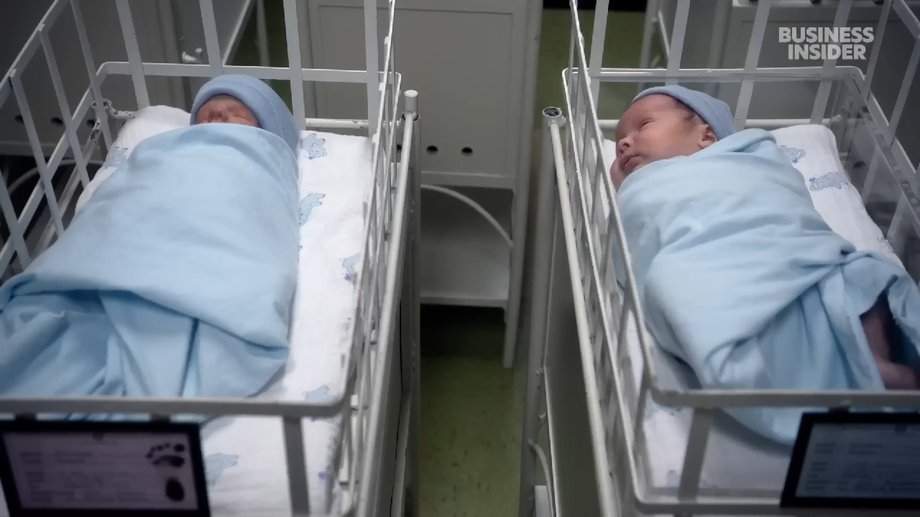
According to research, people born by caesarean section have an increased risk of developing cancer
|
Business Insider
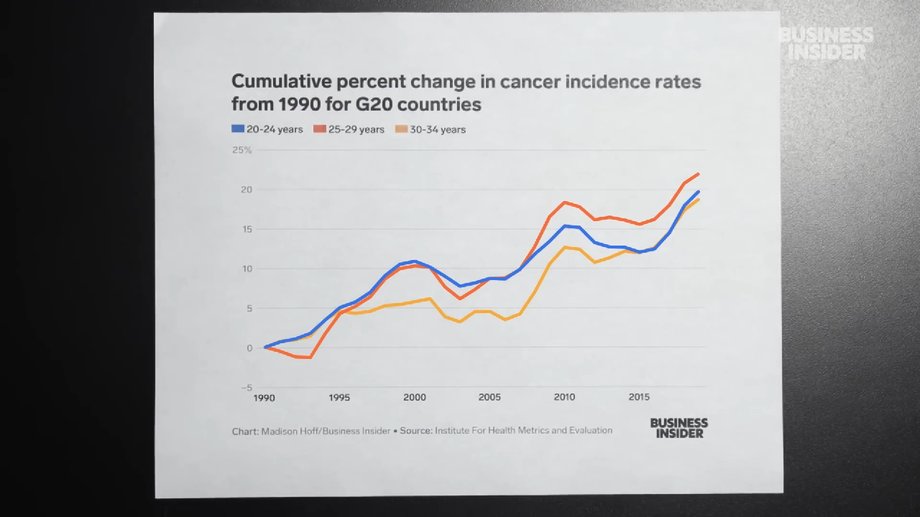
We have observed a rapid increase in cases from 1990 to the present. We don't know exactly what will happen next. Can we reverse this trend? Will it grow in a linear way? When it comes to reversing this trend, the most important are, of course, research. We need to better understand what the causes are, and until we understand them better, we cannot make social efforts to reverse this trend.
Cancer incidence. Can we do something every day?
A lot of attention is devoted to what each of us can do. Everyone talks about the diet and the fact that we should walk more, maintain social contacts, be part of the community, better sleep, drink less alcohol, not smoke, do not take drugs, and of course perform screening and go to the doctor.
However, if we really want to see a social change and reverse this trend, infrastructure is important. Can we make cities more friendly to pedestrians or facilitate access to fresh food? There are some positives of this situation. The mortality rate for cancer has dropped significantly. We have made great progress in the field of treatment.
We also prevent many cancers associated with alcohol consumption and smoking. Of course, this is disturbing, but the whole community dealing with cancer focuses on it, begins to invest and pay attention to find out what is happening. I think This impetus is a real reason for optimism.
Author: Mia de Graaf, Health Affairs Editor at Business Insider