America, on the knees. The killing of Charlie Kirk sheds a cruel light on a broken and radicalized policy – BBC analysis


Under the clear sky of a university campus in Utah, in a seemingly festive atmosphere, on Wednesday one of the most disturbing episodes of political violence in the recent history of the United States on Wednesday. Charlie Kirk, a prominent figure in the American right and leader of the Turning Point Usa organization, was shot dead while participating in a public debate for students. He was 31 years old.
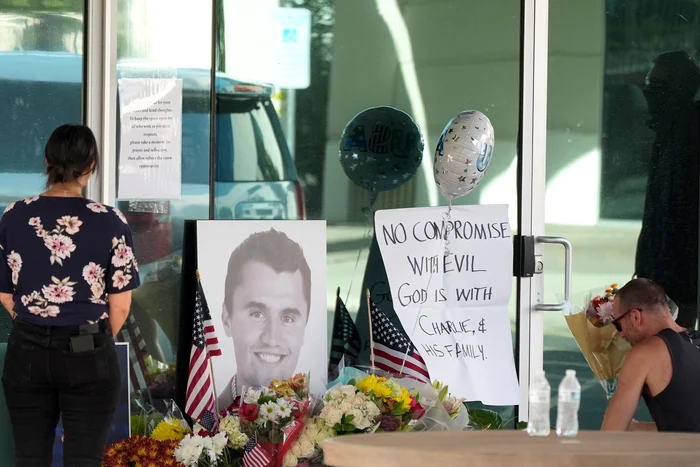
Charlie Kirk was shot dead while participating in a public/photo debate: Profimedia
A bullet reached in the neck area, and within seconds, the event turned into a chaos of screams and panic. The video recordings, transmitted in real time, surprised not only the moment of the attack, but also the reactions of those present – a young, polarized generation, trapped between admiration and revolt towards a controversial character.
Hero, martyr or product of polarization?
For thousands of conservative students, Charlie Kirk was a symbol. A skillful speaker, a vocal defender of the right to the port and a fervent supporter of Donald Trump, Kirk had become one of the most sound voices of the new American right in recent years. His speech, often aggressive, profoundly anti-prrogresist, attracted both devoted supporters and virulent critics.
Deliberately choosing the university campuses-where the public opinion tilts mostly to the left-to support their views, Kirk did not keep confrontation. Under the tent inscribed with the motto “Prove Me Wrong” (prove to me that I am wrong), he encouraged the debate, but also the antagonism. The attack on Wednesday seems to have been the peak of this accumulated tension, notes the BBC.
A repetitive scene in a degraded political landscape
Unfortunately, crime is not an isolated case. It is only the latest episode of an increasingly longer series of acts of political tint in the US. In the last 24 months, Democrats and Republicans alike were targets of attacks – some fatal, others missed at the last moment. The attempt to assassinate Donald Trump in Butler, Pennsylvania, was, in itself, an alarm signal ignored by many.
In 2017, the Republican Congressmen were targeted during a sports training. In 2022, an aggressor entered Nancy Pelosi's home, attacking her husband. And this year, two Democratic Legislators in Minnesota were shot in their own houses. The tendency is clear: American policy is no longer just polarized – it is infested with hatred, fear and weapons.
Beyond rhetoric – a nation in crisis
The reactions came promptly, but predictable. Donald Trump called the assassination “a dark moment for America”, accusing the “radical left” of the propagation of hatred that would have fueled the crime. His reaction was welcomed with applause in the conservative environment, where calls for a harsh action against left groups are already circulating.
Christopher Rufo, another influential voice in the conservative circles, asked X “infiltration, destruction, arrest and incarceration of those responsible for this chaos”-a formulation that reminds of counter-insurgency textbooks than liberal democracy.
But in Washington, immediately after the moment of silence organized in Congress in Kirk's memory, things degenerated into a new verbal confrontation. A symbol in itself: death no longer succeeds in uniting a political scene in ruin.
“Is this America that we celebrate?”
In Utah, governor Spencer Cox – known for his moderate positions – held a visibly affected press conference. On the threshold of the 250th anniversary of the establishment of the American nation, the question he launched was painful: “Is this the result of two and a half centuries?”
His answer – “I hope no” – came with a hesitation that says more than any campaign slogan. In a America in which no one seems safe in the public space, in which political leaders become victims or targets, the future of democracy seems rather a question than a certainty.
Policy in the era of fear
The real debate that is now profiling in the Conservative camp is a logistical one: How much security is needed to participate in a public event? But the deeper question, remaining in suspension, is another: can one still work in which ideas are greeted with bullets?
What seems clear is that violence becomes the dominant language in a political space already divided to the end. And if this spiral is not stopped, the consequences will be not only deadly, but maybe irreversible.