Work in the controversial “model 996”. A way to success or burn?

Work from 9.00 to 21.00 for six days a week – this is what “model 996” means. It began in the Chinese technology industry, and now the phenomenon is spread in American IT companies, according to the article in the wired magazine. Such a model also gains favor in Germany.
In terms of working hours, the Germans are in the lower half of the rate in the international table. Therefore, business organizations and politicians call to extend their working time. Are 72 hours of work possible in Germany? Experts warn that this is against the labor law, and also involves health threats. But they also say that hard work can contribute to success – at least for a limited time.
The example of China shows what all this is about. Although there is a 40-hour work week with a maximum of 36 overtime in a month, “Model 996” strengthened in the Chinese technology industry a few years ago. Many companies hoped that a 72-hour work week will improve performance or provide them with a competitive advantage on the international arena.
Predictions have worked so far. According to estimates, a statista employee Chinese sector of artificial intelligence will grow by almost 27 percent. annually. Jack Ma, a billionaire and founder of the Alibaba internet company, is also a great supporter 996. He described him as a “blessing”.
However, there is one limitation. Employees rebelled against this model. In 2021, protests continued in the industry, until – until the Chinese government took action against the principle of 996. On August 26, 2021, she was officially recognized as illegal. As a result, large corporations also gave it up – at least officially. Whether the majority of Chinese technology companies observe the ban today, remains doubtful.
Continued article under video material
Jack Forsdike, a British who worked for one of the greatest game creators in China in “Model 996” in 2022-2024, told Business Insider last year that his elongated working hours were not specified in the contract. However, they were understood as the norm. Other employees came to the office even on Sunday to deal with the burden of work.
Economic growth could be useful to Germany. Economic forecasts assume GDP stagnation, maybe even a slight drop. However, the demand for more time spent on work has a clear limit: 40 hours provided in the code.
“I hope that we will not follow this trend”
Melanie Faltmeier claims that in addition to recipes on the way to the introduction of this model in Germany, there are also cultural aspects. According to a business psychologist and founder of the Mental Health Agency “We Are Mental” German employees, unlike Chinese, attach great importance until free and statutory holidays.
Especially younger people are increasingly rejecting overwork and They are more likely to choose employers offering a sustainable work culture. In Germany, they are more likely to talk about shortening working time. “These cultural differences make the direct transfer of” model 996 “to Germany is unlikely,” says Faltmeier.
“Model 996” is associated with Melanie Wagner, a manager at HR Hibob, with “dark days of the world of work”. -What AI start-ups in China and the USA do with “model 996” is a great nonsense-he says. Criticizes the fact that such The work model puts an economic result over peopleand thus threatens the health of employees.
This assessment is also confirmed by Hanne Horvath, a psychologist and co -founder of the Hellobetter online therapeutic platform. It perceives the model as a “symbol of uncompromising motivation”, which is neither effective nor healthy. According to the expert, the fact that some American start-ups also rely on “model 996” is disturbing and shows how great uncertainty in economically tight times is.
The 72-hour work week would not increase productivity, but rather to exhaustion, susceptibility to errors and long -term absence. The World Health Organization has been warning about overtime health hazards for years. Studies from 2021 show that the risk of heart attack, stroke, burnout and depression increases from 50 hours a week. “That's why I hope that we won't follow this trend and give up the culture of the hustle and bustle of 2000 for good.” Says Horvath.
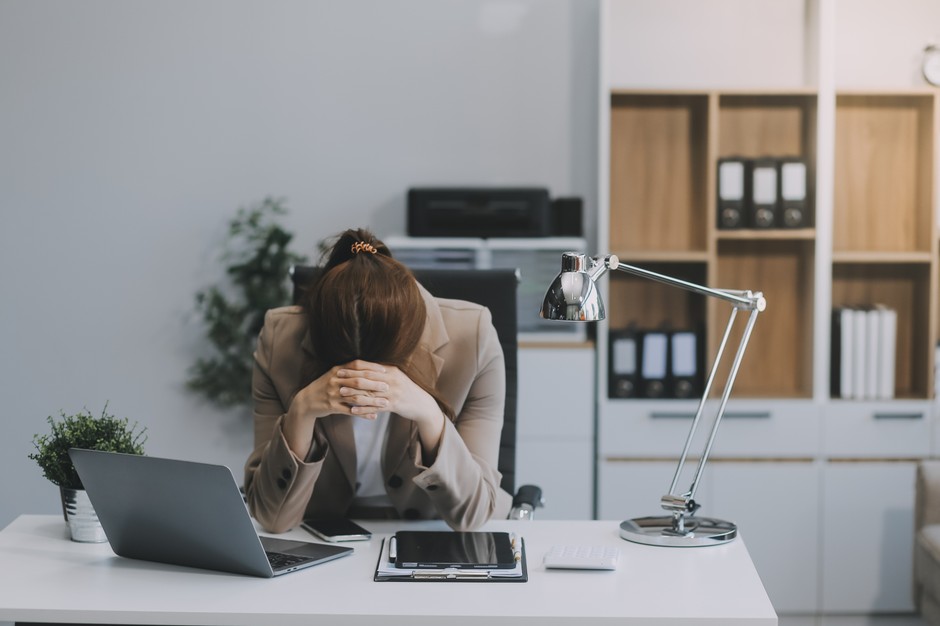
A tired woman at work. Illustrative photoRmmy Picca / Shutterstock
Perception of more work as a solution to economic problems is a mistake. A discussion about less work can be sensible. In a specialist article in the journal Nature Human Behavior, experts assume that a four -day work week with the same salary could reduce burnout indicators, improve mental health and increase work satisfaction – Even without losing productivity.
“Long days and weekends are sometimes inevitable”
Nevertheless, some conclusions can be drawn from “Model 996”. According to Melanie Faltmeier, Passion, commitment, high goals and hard work can contribute to success. -In conversations with some start-up founders, I was told that long days and weekends are sometimes inevitable, especially in the start phase to push the company forward-he says.
This may teach us that determination and hard work can be important factors of success, and ambitious projects sometimes require phases of intensive efforts and a certain “start-up noise”. – But It should be a phase with a perspective ending – says Faltmeier – not custom adjustable.
– At “Model 996” the company would not gain any productivity in the medium period, but rather ended with exhausted, inefficient employees – sums up the psychologist. Finally, the 72-hour work week is also problematic from the point of view of employee satisfaction and sustainable development.
Culture, which puts a job above all, demotivates many talented people, and sometimes even excludes some – such as people with family obligations, health restrictions or other life plans. Alleged benefits are paid for with long -term flaws. Experts agree: 72-hour work week as part of the 996 model A trend that companies in Germany should be avoided.