Soviet, Western and Ukrainian missiles in one ingenious system: The innovation that could change helps Ukraine's air defense

In the midst of war with Russia, one of the biggest vulnerabilities of Ukrainian air defense is not lack of equipment, but their incompatibility. Large stocks of surface-to-air missiles – Soviet, Ukrainian, Western – sit in storage because they cannot be quickly integrated with available launchers and radars.
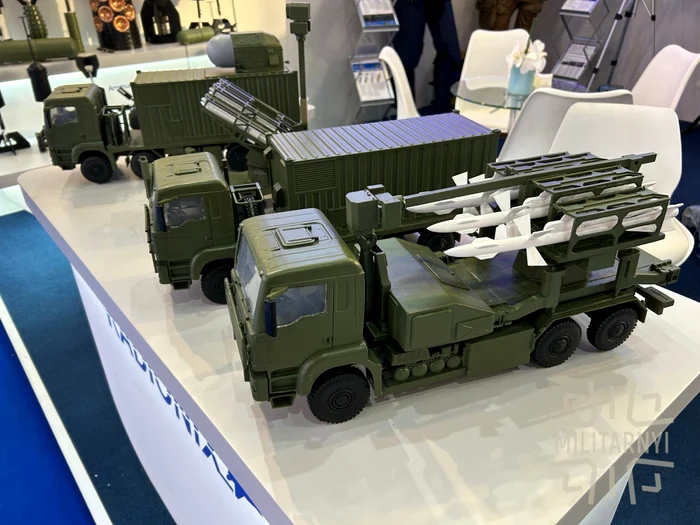
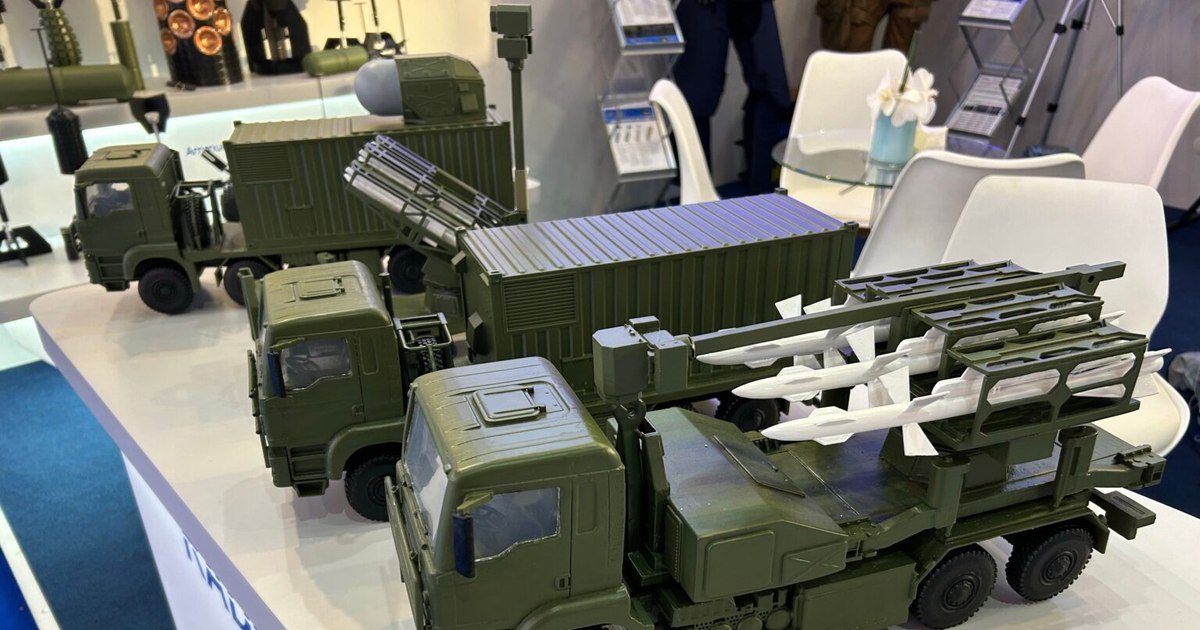
The Ukrainian anti-aircraft system Shershen, presented at an exhibition of rme in Saudi Arabia/PHOTO:X
From this technical fracture was born a project that could change the rules of the game: the Shershen anti-aircraft system.
A system that no longer depends on “who delivers”
Developed by the National Association of the Defense Industry of Ukraine, Shershen promises something that until now seemed difficult to achieve: cross compatibility. According to the publication Militarnyi, the system can – for now – work with five different types of missiles, coming from Soviet, Ukrainian and Western sources.
If it works as planned, Ukraine could turn “orphaned” missiles and unused radars into working anti-aircraft batteries without waiting months for external deliveries.
“It eliminates dependence on a single supplier“, said the director of NAUDI, Serhi Honciarov.
In a context where Western aid is often delayed and the pressure of Russian attacks remains constant, technological autonomy becomes a weapon in itself.
What Shershen can actually do
At an arms fair in Saudi Arabia, the Ukrainians presented a model of the system. Technical details suggest a modular system capable of launching both short- and medium-range missiles.
That means they could intercept: drones, fighter jets, cruise missiles.
Not heavy ballistic missiles – for these, Ukraine remains dependent on American Patriot batteries and European SAMP/T systems.
The mockup on display included IRIS-T or ASRAAM type infrared missiles, but the really interesting element was the integration of the R-27 missile.
R-27: a key missile produced in Ukraine
The R-27 is normally an air-to-air missile with radar or infrared guidance and a range of up to 100 km. It is used by aircraft such as the Sukhoi Su-27 and Mikoyan MiG-29 – both operated by the Ukrainian Air Force.
The fact that this missile can be adapted for surface-to-air defense is essential: Ukrainian industry can produce it domestically. In other words, Kiev is not completely dependent on imports for medium-range ammunition.
The radar shown alongside the system appears to be a version of the Esmeralda, produced by the Ukrainian company Radionix – normally an on-board radar for fighter jets.
From “FrankenSAM” to universal system
Shershen is basically the evolution of the Ukrainian concept informally called “FrankenSAM” – that is, improvised systems that combine different missiles, radars and launchers through hardware and software bridges. Each such integration required specific adaptations and intensive engineering work.
The new system goes further: it becomes a universal platform, capable of rapidly integrating multiple types of sensors and munitions.
Officially, compatibility is confirmed for five types of missiles. Unofficially, this would be just the beginning.
“Why five? Because five have been tested. If more are needed, we will adapt them,” Honciarov explained.
Strategic autonomy in a war of attrition
In a conflict where Russia is constantly attacking with drones and missiles, the ability to improvise becomes vital. Shershen is not just a new weapon system. It is a statement of technological independence.
Instead of waiting for external supplies, Ukraine is trying to turn its logistical chaos into an operational advantage.
In a war where every interception counts, perhaps the most important weapon is not the missile itself, but the system that knows how to use it – no matter where it comes from.