Lack of vitamin D, consequence and possible cause of depression. What is the required dose to maintain mental health

The sadness that settles for no apparent reason, fatigue that does not pass after good hours of sleep, decreased interest in activities that once brought pleasure, can sometimes be signs of vitamin D. The researchers they found that this fat -soluble nutrient has receptors in the brain areas responsible for mood. How to explain the connection and what doses of this vitamins is recommended for maintaining mental health.
The process by which vitamin D influences the mental state involves a cascade of chemical reactions and begins when the skin exposed to the sun produces vitamin D3 in an inactive form. This is subsequently processed by the liver and kidney to calcitriol, the active form that influences the synthesis of serotonin and dopamine, known as the hormones of happiness.
But what happens when this process is disturbed? Studies have revealed that vitamin D deficiency can lead to deficient modulation of the hypothalamo-hypophizo-adrenal axis, the system that regulates the response to stress and hormone production. The consequence is a decrease in serotonin, associated with the depressive mood, and dopamine, which reduces the motivation and ability to feel pleasure.
Connection between vitamin D and depression
The connection between vitamin D deficiency and depression is bidirectional. Depressive people tend to spend less time outside, to isolate themselves, to neglect nutrition, factors that reduce the level of vitamin D. The deficit then aggravates the depressive state, and the mechanism is maintained by itself, in the absence of treatment.
However, the opinions of the specialists differ in the efficiency of vitamin D supplementation in the treatment of depression. A large study, published in 2023, watched thousands of participants and found an important association between the low level of vitamin D and depressive symptoms. People with the lowest serum concentrations of 25-hydroxytitamin D had a 31% higher risk of developing depression compared to those with adequate levels.
The results of the direct interventions, however, were heterogeneous. Administration of vitamin D supplements has visibly improved the condition of patients, but has not produced important effects in other cases. Data indicates a complex relationship, in which vitamin D influences depression, but does not act as a unique and direct factor.
A meta-analysis that included over 31,000 participants concluded that vitamin D deficiency doubles the risk of depression (risk ratio 2.17). However, when only the additional studies were analyzed, the observed effects were much lower. The general conclusion was that vitamin D can be an indicator of the general health, rather than a direct cause of depression.
Symptoms of vitamin D deficiency and depression
Vitamin D deficiency and depression are different conditions, each with specific manifestations. However, they can appear simultaneously.
Possible symptoms of vitamin D deficiency include:
- persistent bone pain;
- accentuated fatigue or drowsiness;
- muscle weakness and joint pain.
The characteristic signs of depression include:
- deep sadness, sensation of lack of hope or powerlessness;
- the loss of interest for activities that once brought pleasure;
- involuntary changes in body weight;
- sleep disorders and constant fatigue.
The required dose of vitamin D to maintain mental health
Regarding the optimal dose of vitamin D, official guides recommend between 600 and 800 international units per day for adults, but many specialists in psychiatry and nutrition believe that these values can be too low in people with depression. Some clinicians prescribe doses of up to 5,000 IU daily for their patients with depressive symptoms, carefully monitoring serum levels.
The values considered normal in the blood are between 30 and 50 nanograms per milliliter. Under 20 ng/ml the deficit is diagnosed, and between 20 and 30 ng/ml insufficiency. Over the threshold of 50 ng/ml no additional benefits were observed, and the exceedance of 150 ng/ml is associated with toxicity.
Vitamin D toxicity is rare, but it can be severe. Symptoms include nausea, vomiting, muscle weakness and, in extreme cases, kidney or heart damage. These situations appear almost exclusively as a result of excessive supplementation, not by exposure to the sun or nutrition. The body naturally regulates the production of vitamin D from solar light, but has no similar mechanisms for the doses ingested in the form of supplements.
Natural sources
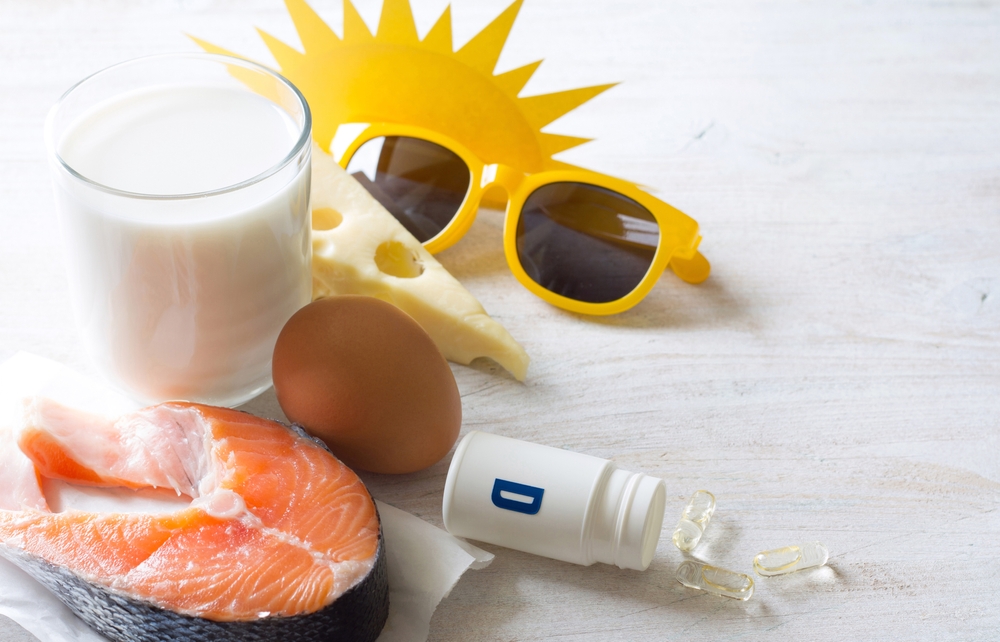
Fat fish is the main food source of vitamin D. A portion of wild salmon can offer up to 600 IU, almost the entire daily recommended dose. Sardines, mackerel and tone complete the list of high content.
For vegetarians there are alternatives. Mushrooms exposed to UV light before packaging may contain considerable amounts of vitamin D, up to 400 times higher than ordinary fungi. The egg yolk provides about 40 IU, and the fortified milk and cereals become important sources in some countries, although the level of fortification differs quite a lot from one producer to another. Code liver oil remains among the most concentrated sources, even if the taste limits consumption.
Sun exposure continues to be the natural and effective method of producing vitamin D. In people with open skin, 15–20 minutes of exposure of the face and arms, three times a week, generally ensures appropriate levels. People with darker skin need longer periods, sometimes up to six times more, to achieve the same effect.
Vulnerable groups and risk factors
The elderly is one of the most affected groups by vitamin D deficiency. Their skin produces 75% less vitamin D than that of young people at the same solar exposure. In combination with reduced mobility and predominantly time, it is explained why over half of the institutionalized ones have severe deficit.
Obesity is another important risk factor. Vitamin D, being fat soluble, accumulates in adipose tissue and becomes less available for the body. According to studies, obese people need doses two to three times higher to reach levels comparable to those of people with normal weight.
Certain treatments may reduce the availability of vitamin D. Anticonvulsants, corticosteroids, some drugs for lowering or weight loss influence its metabolism. Inflammatory intestinal diseases, such as Crohn's disease or ulcerative colitis, but also cystic fibrosis, limit the absorption of vitamin and supplements.
Other factors associated with deficit are smoking, excessive alcohol consumption, night shifts, sedentary lifestyle and low sun exposure in highly polluted urban areas.
Complex approach in managing vitamin D deficiency and depression
Supplements are only part of the solution. Constant exposure to natural light maintains an adequate level of vitamin D, including in the days with clouds, when diffuse radiation has an effect.
Outdoor physical activity has a double role: it increases the production of vitamin D and regulates the mood by release of endorphins. Even a half -hour walk can have important benefits.
Food plays a complementary role. In addition to direct vitamin D sources, nutrients such as magnesium, vitamin K2 and omega-3 fatty acids are required for vitamin absorption and use. The deficit of one of these factors can reduce the efficiency of the supplement.
Quality sleep supports the whole process. Sleep deprivation disrupts the metabolism of vitamin D and aggravates depressive symptoms. The regular program, limiting the exposure to the evening screens and a comfortable sleeping environment favors both the quality of sleep and the emotional balance.