Trump and Zelenski have similar personalities. The kind of motivation that approaches the two leaders, analyzed in The Hill

President Donald Trump has vehemently accused Beijing, Moscow and North Korea of acting concerts to undermine American interests globally. His statement came on the occasion of China's mark of Victoria's Day, celebrated 80 years after the end of World War II in the Indo-Pacific region.
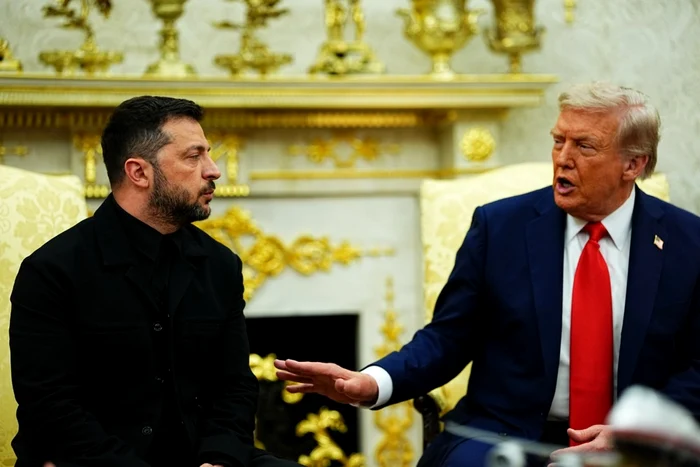
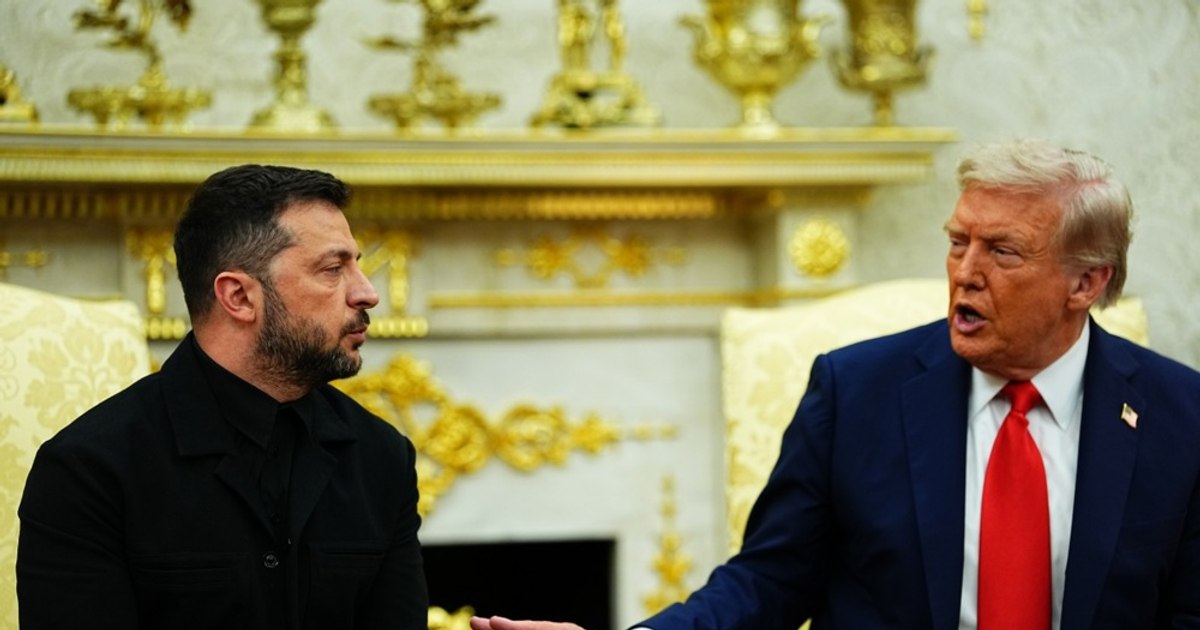
Volodimir Zelenski and Donald Trump/Photo: Profimedia
In doing so, Trump has been in a hurry to make parallels that his undersecretary of political business defense, Elbridge Colby, from Pentagon, could not or wanted to understand: China, Russia and North Korea deliberately cooperate to weaken the influence of Washington in the world.
At the same time, Colby is unable to understand that Ukraine was and remains the epicenter of this war against the United States and its transatlantic allies, notes in The Hill, Mark Toth and Jonathan Sweet.
Trump, on the other hand, seems determined to draw a clear line between camps, identifying Ukraine as a starting point for this extended geopolitical conflict.
The two authors add that Ukraine has long supported Trump. President Volodimir Zelenski and his military command have always been aware that the fight in eastern and southern Ukraine goes far beyond the preservation of stateness or territories. They understand that Vladimir Putin's defeat in Donbas is the best defense for Europe and, therefore, for Washington – both in the western hemisphere and Taiwan.
“Fight! Fight!” – The echo of two similar answers
Despite the differences in style and vision, Trump and Zelenski share a common attitude to the danger: the refusal to give up. The Ukrainian president remained in Kiev in the first days of the Russian invasion of 2022, rejecting the evacuation offer made by the Biden Administration. He preferred, on the other hand, a formulation that made the world around: “I need weapons, not a taxi.”
It is, in essence, the same attitude that Trump displayed after the assassination attempt at his address, when he got up and shouted, defiantly: “Fight! Fight!”
A support started before 2022
In Kiev, many did not forget that the first major decisions regarding the arming of Ukraine with lethal armament were taken during the first Trump administration. In 2017 and 2018, Washington approved the sending of Anti -Tank Javelin systems and intensified military training programs for the Ukrainian army. Former defense secretary, James Mattis, emphasized at that time that the goal was to support Ukraine “to remain independent and sovereign.”
The contrast with the Obama administration was significant. Although the American Congress had adopted in 2014 a legislative act that authorized military aid, the White House chose not to provide lethal armament, preferring a discourse focused on reforms and the fight against corruption.
This approach difference was deeply felt in Kiev, where the concrete military support of the first Trump administration was perceived as a decisive factor in the initial resistance of February 2022.
Trump, Zelenski and the shadows of the American political past
Although Trump's mandate was marked by controversy, including the first impeacing process of his relationship with Ukraine, President Zelenski remained firm in the defense of the American leader, declaring that “there was no blackmail.”
More recently, Zelenski has resumed calls to the international community, warning that Russia's invasion is just the beginning of a global threat. In his vision, if Putin wins in Ukraine, NATO borders will no longer be a sufficient guarantee. It is a vision shared more and more often in Washington, including Trump's relatives.
War is not just in Eastern Europe
In recent months, the geopolitical picture has been complicated. The alliances between Moscow, Beijing and Phenian have strengthened, and Chinese military technology is becoming more and more felt on the Ukraine front. At the China military parade, held on Victoria Day, the images with Xi Jinping, Vladimir Putin and Kim Jong-a parading together have transmitted a clear signal: the confrontation with the West acquires a global dimension.
It was, in fact, an image meant to send a message directly to the Trump administration: a new world order is outlined, and Ukraine and Taiwan are the most vulnerable points of this confrontation.
Kiev's call: It's America's turn to support Ukraine
After more than three and a half years of resistance, the price paid by Ukraine is huge. More than 13,000 civilians died, over 35,000 were injured, and victims among children rise to thousands. At the military plane, the estimates vary, but the official figures offered by Zelenski in December 2024 spoke of 43,000 killed soldiers and over 370,000 injured – figures that some American officials consider, however, undervalued.
Despite these losses, Ukraine continues the fight. And Kiev leaders hope Donald Trump will act decisively.
Among the concrete measures they could take: the adoption of the Russian sanction act of 2025, already supported by 84 senators; imposing an area of aerial exclusion above the Ukrainian territory; or explicitly supporting Ukraine's accession to NATO, if Moscow does not completely withdraw.
“As we have been stated for a long time, the world is in war. Until now, Ukraine has protected us from the” evil axis “. In the future, we [Statele Unite]as a country, we must support it too ”concluded Svit and everything.