The mountainous Banat, burdened by disturbing secrets. The dramas of the locals from the land on Romania's borders

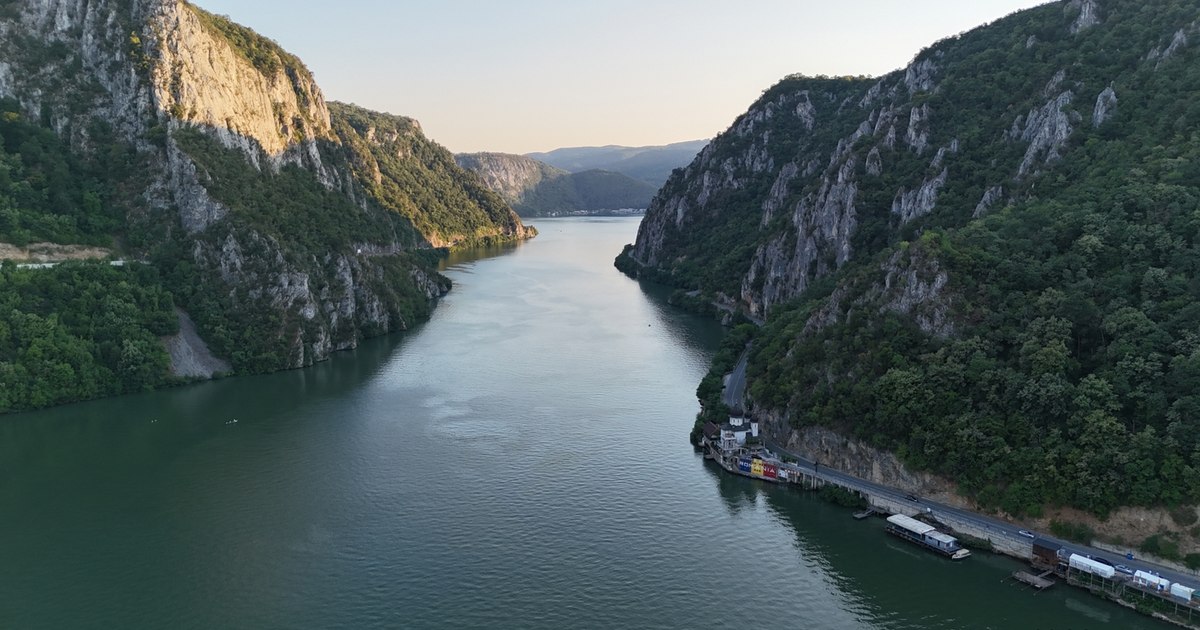
A series of disturbing events transformed the picturesque region of Banatul Montan in the last century. Numerous tragedies that happened here remained almost unknown to many Romanians.
The Danube separates Romania and Serbia. Photo: Daniel Guță
Romania and Serbia share a border of more than 500 kilometers, of which more than half is drawn along the Danube and its tributaries, such as Nera, Caraș or Timiș.
For travel enthusiasts, the most spectacular border area between Romania and Serbia is the Banat Mountain, where the Danube Gorge is the most attractive tourist destination.
The Ciudanovita camp
In its surroundings, the picturesque villages of the Banat Mountains and the historical mining towns such as Anina and Oravița animate a region rich in natural monuments. The small communities of the Banat Montan, located near the river and land border with Serbia, however, remained marked by the disturbing events that took place in the region's recent past.
In the villages close to the border, some elderly people kept the memories of the deportations of the Danube Swabians to the USSR, followed by the deportations of thousands of locals to Bărăgan and, in the decades of communism that followed, of the countless lost lives of Romanians who tried to cross the border into the former Yugoslavia, in the desire to reach Western Europe.
Other locals also talk about the “extermination camp” in Ciudanovita built around the uranium mine controlled by the Soviets, about the environmental problems generated by the mining industry in the area and about the radiation from the dumps of the former uranium and thorium mines of the Banatul Montan.
The documents of the era preserved in the archives add testimony about the labor camps in Oravița (video) and Lișava, intended for the Jewish community persecuted in the Second World War.
The series of tragedies includes the devastating accidents at the Anina mine, which caused more than 1,000 victims throughout the two and a half centuries of operation of the mine.
The industrial collapse of the Banatul Montan after 1990 and the emptying of villages animated by communities of Romanians, Swabians, Serbs, Croats and Czechs also brought bitterness to many locals, in addition to the “burden” of memories of the tragic events of communism. The charm of the Danube Gorge and the nature reserves of the Semenic, Anina and Almăju Mountains still dissipate from these troubling memories.
Danube Swabians, sent into captivity in the USSR
As early as the autumn of 1944, Joseph Stalin, the leader of the Soviet Union, asked Romania, Hungary and Yugoslavia, in the territories where the Soviet army had arrived, to provide German workers for the reconstruction of the Russian areas destroyed during the war.
The Romanian authorities quickly complied with the Soviet dictator's request and arrested tens of thousands of ethnic Germans from Transylvania, but also from the Banat, a region with a German population of approximately 500,000 before the war.
Deportations of ethnic Germans began on January 2–3, 1945, and according to historians, by the middle of the month between 70,000 and 75,000 Saxons and Swabians from across the country had been sent to labor camps in the Soviet Union.
From the other side of the Danube, from the Serbian Banat, another 12,000 women and men from the “Danube Swabians” community shared the same fate, being put on the wagons that crossed Romania, towards the USSR.
“During the Christmas days of 1944, those selected by the local communist officials had to leave behind all their loved ones: husbands, wives, children, relatives and friends. During freezing temperatures, the 'labor slaves' were transported in cattle cars locked from the outside. There was no room to move, one could only sleep in a sitting position, and the risk of freezing in one's sleep was real. Food supplies were almost non-existent, and the people survived with the little they had managed to take with them. The lack of water was particularly painful, being often denied out of pure sadism. The first victims appeared already during the three weeks of the journey,” recalled one of the deportees, in the volume “Genocide of the Germans in Yugoslavia 1944-1948”. published in Munich in 2006.
In the Soviet camps, cold and hunger were for deportees fiercer enemies than grueling work.
Ernest Urlich, an ethnic German who survived deportation to Donbas, recalled the detainees being put to work despite freezing temperatures as low as minus 40 degrees and frozen snow covering the wasteland where the camp had been set up. Many could not withstand the shock of their new situation and either committed suicide or died trying to escape. To these deaths were added the prisoners injured in the coal mines. The victims were thrown into mass graves.
In the late 1940s, ethnic Germans were allowed to return home from the USSR. Some of those who returned from the camps found their families devastated by suffering and their villages deserted, following the persecutions started by the communist regime.
Locals from border villages, considered dangerous for the regime
The tranquility of the villages close to the border was shattered again, in a short time, by the waves of deportations from the beginning of the 50s. Then, over 40,000 people from Timiș, Caraș-Severin and Mehedinți counties, located on the border with Yugoslavia, were forced to leave their homes to start a new life, from scratch, in the Bărăganului Plain.
Almost half of them were considered rogues, dangerous for the communist regime. The nearly 13,000 families were transported by freight trains to Bărăgan and left in the open, with minimal means of survival.
“As in many other countries, large areas along the borders were emptied of inhabitants. On the Romanian side of the border with Yugoslavia, the authorities did this in a region stretching for 30 kilometers, not completely, but enough to remove any local people who, in the event of an attack by Tito or against Yugoslavia, might prove dangerous to the Romanian or Soviet armies. This meant the deportation of about 60,000 of people. They were taken with only what they could carry in one bag and sent to Soviet Moldova and Bărăgan”a 1954 CIA report stated.
The first wave of deportees in Bărăgan, in 1951, came from an area of about 30 kilometers along the Yugoslav border, which stretched between the villages of Beba Veche (Timiș) and Gruia (Mehedinți), with a number of 203 localities, according to some historians. Finally, their villages were abolished, and a 50-kilometer strip along the Danube came under the strict control of border guards and the Militia. Other waves of deportations followed until 1952.
From Banat, at the Danube-Black Sea Canal
Meanwhile, 18 “special communes” were established in Câmpia Bărăganului for newcomers from the southwest of the country.
“Most of these prisoners live in brothels, while others stay in barracks. The living conditions are extremely bad. There is a lack of water, caused by the absence of wells, and people are forced to drink water from the Ialomița river. Healthy prisoners are put to work on the Danube-Black Sea Canal or on farms in its vicinity. For 10 hours of work a day, they receive 100 lei. A kilogram of bread costs 80 lei. Typhoid fever and tuberculosis are widespread. Every day 30-50 people die, and some of them commit suicide.” pointed out the authors of an information kept in the archives of Radio Free Europe (RFE).
People were only allowed to return to their villages in the mid-1950s, but most found their homes confiscated. Almost 2,000 people never returned to their villages in Banat.
In the following decades, communities near the border with the former Yugoslavia continued to witness many disturbing events. Thousands of Romanians were killed both on the “green border” and on the banks of the Danube, in their daring attempts to leave Romania, fleeing to the West. Others lost their lives in the waters of the Danube or were killed and injured by “traps” (explosive mines) installed on the country's border.
Currently, it is not known how many victims the Danube and the border guards of the communist regime have caused on the borders with the former Yugoslavia.