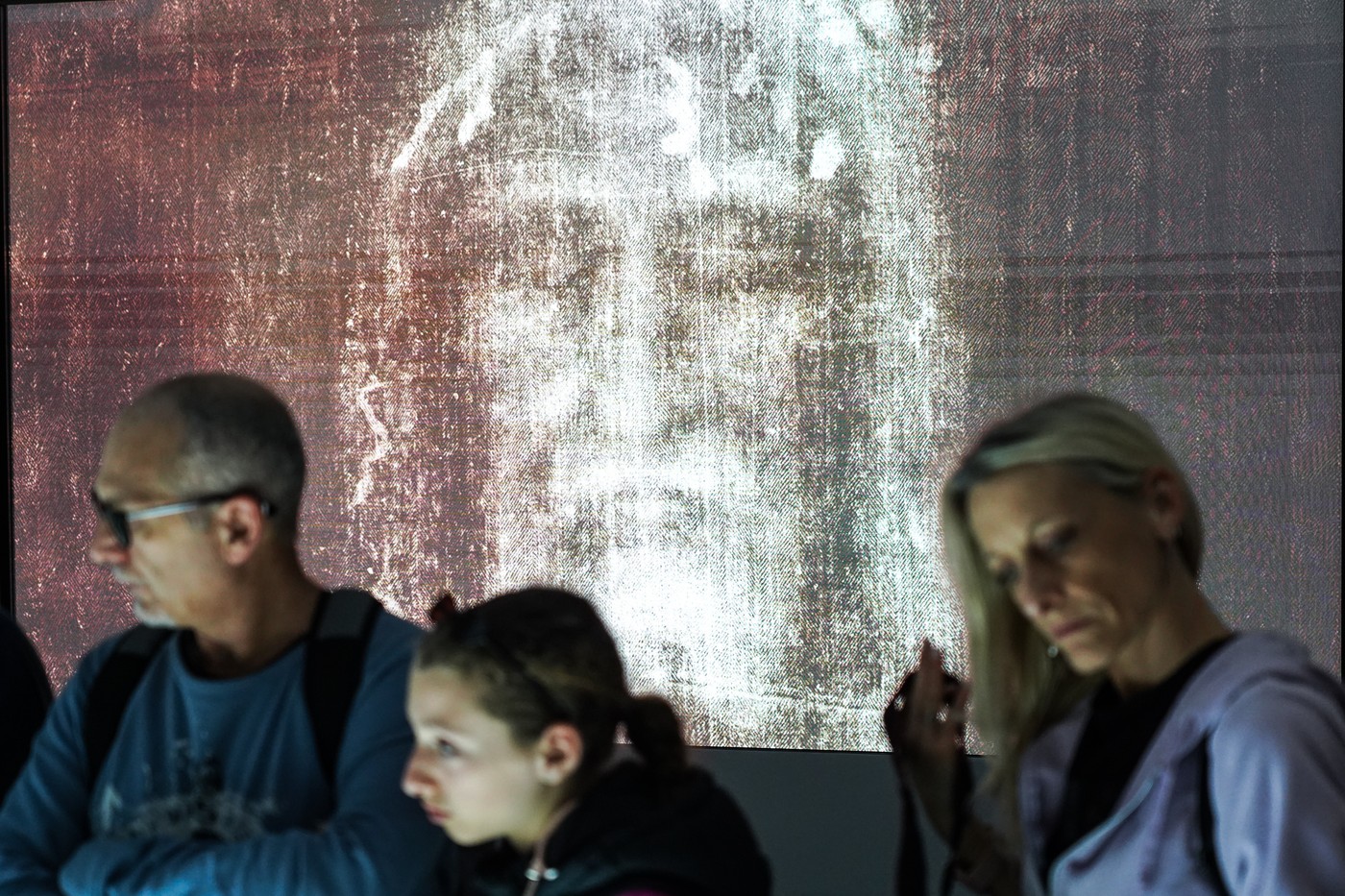
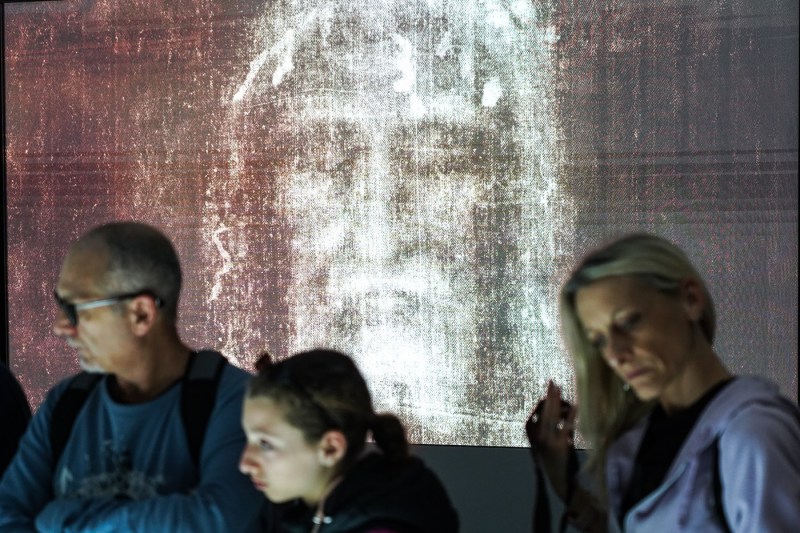
The Torino giulgiul exhibited in an exhibitionist exhibition of the Shroud on the West of the Jubilee of the Feast of the Shroud, Turin 28 April 2025. Credit Line: Selene Daniele / Avalon / Profimedia
According to a new study on an old document, the Holy Giulgiu kept in Turin, considered a long time to be the funeral canvas of Jesus Christ, is a false, the result of a “clerical fraud”, writes Euronews.
The Giulgiul in Turin is one of the most precious ancient artifacts, attracting countless tourists in the Piedmont capital, despite being publicly exposed, inside the Cathedral of Saint John the Baptist, only on special occasions.
The flax can be rendered the pale image of the anterior part of an empty man. The Catholics worshiped it for centuries as the Giulgi of Jesus, on which his image was printed after crucifixion.
Ever since it first appeared, in 1354, the authenticity of the giulgi has often been questioned. Even the Vatican authorities have repeatedly discussed if the true funeral canvas of Jesus Christ were to be considered. Subsequent research over the years has added evidence that it is possible that the giulgi may not be authentic.
Now, a recently discovered medieval document adds additional evidence, concluding that the giulgi is a fake.
Published in the Journal of Medieval History, the discoveries reveal the first known written evidence that denies the authenticity of the relic.
The oldest known testimony so far was a letter dated 1389 by the Bishop of Troyes, Pierre d'Arcis, who denounced the giulgi as a fraud.
The recently discovered document reveals that a respected French theologian, Nicole Oresme (1325-1382), described the canvas as a “obvious” and “patented” fake-the result of the deception of the “clergy” from the middle of the 12th century. Oresme writes: “I do not need to believe those who say,” He did this miracle for me “, because many clergy cheats in this way in order to obtain donations for their churches.” “This is clearly the case of a church in the Champagne region of France (where the Giulgiul was discovered), which was said to the number of Jesus who falsified such things, ”wrote the French theologian.
Oresme, later bishop of Lisieux, in France, was a prominent religious figure of the Middle Ages, highly appreciated for his rational explanations of miracles. “What distinguishes Oresme's writings is his attempt to provide rational explanations for unexplained phenomena, instead of interpreting them as divine or demonic,” said Nicolas Sarzeaud, a historian at the Catholic University of Louvain, Belgium, and the main author of this new study.
“This relic, now controversial, has been in the center of a dispute between the supporters and detractors of its cult for centuries,” Sarzeaud continued. “The discovery of now is a significant denial of the giulgi. This case gives us an unusually detailed account of a clerical fraud.” ((Material made with the support of Rador Radio Romania)