
How the most difficult railway in Romania was built. Jiu's gorge, the site where 28,000 people worked

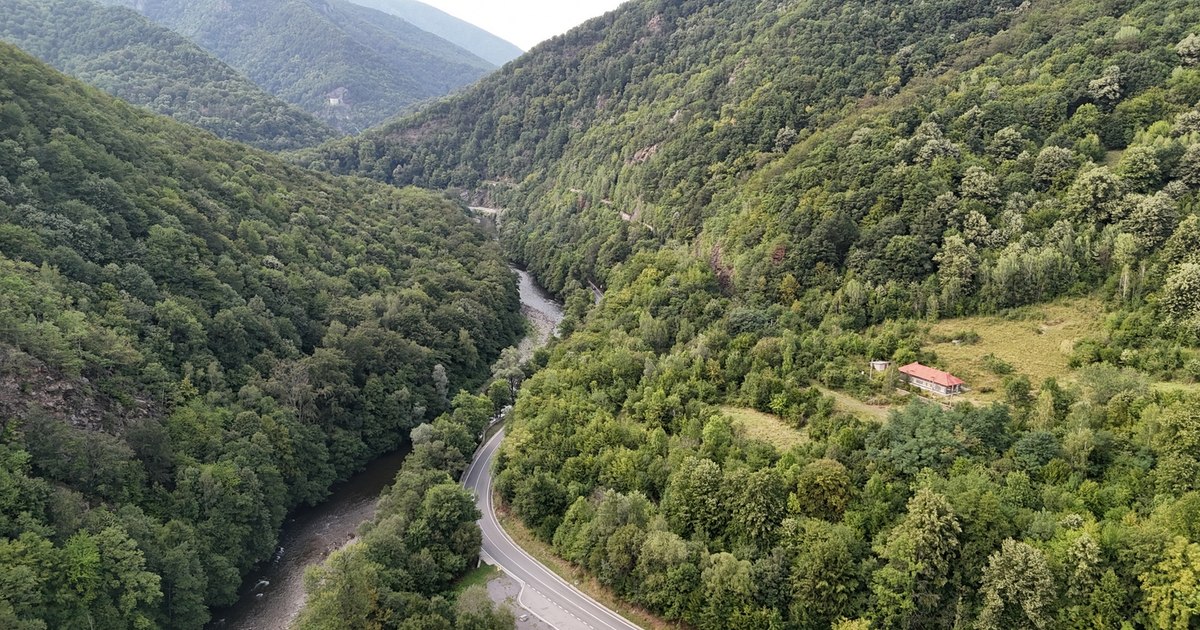
A quarter of a century lasted the construction of the most difficult railways in Romania. The Jiu Gorge has become, along with the national road that crosses it, one of the most spectacular travel routes.
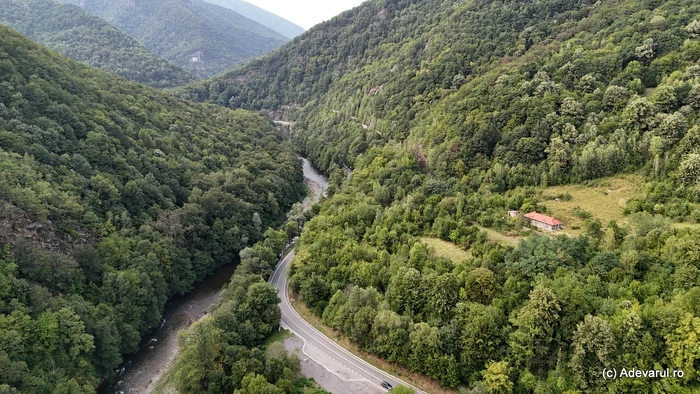
Jiu's gorge. Photo: Daniel Guță. TRUTH
The Jiu Defile starts on the edge of Petroșani municipality in Hunedoara and continues on a winding route, which near the Jiu course, towards the south of Romania, until the entrance to the city of Bumbești Jiu, from Gorj county, at the exit of the mountains.
The deep valley of the Jiu, which separates the Vâlcan and Parang Mountains is crossed by the national road 66 Petrosani – Târgu Jiu, one of the most spectacular roads in Romania. In the last two centuries, people have made great efforts to “tame” the forces of nature in the gorge over 30 kilometers.
Lainici Monastery, the landmark of the Jiu Gorge
The rocks on the side of the road that follow the course of the Jiu were damaged and dynamy, and the slopes were cemented, pierced by tunnels and covered with nets in countless places, to reduce the danger of stones collapses and to make room for the road, but also to the railways.
The most sought after place on the Jiu Gorge is the Lainici Monastery, built and painted two centuries ago. The monastery remained one of the few human settlements on the route in the mountains.
But the great attraction of the region is the railway, considered the most spectacular railway in Romania, due to the large number of art works. Over 30 tunnels dug in the rock and over 120 viaducts, bridges and bridges, all at a distance of only 30 kilometers, make the Jiu Gorge one of the most attractive destinations for train travel.
It was a quarter of a century in the site
The Bumbești Jiu – Livezeni (Petroșani) railway was built during a quarter of a century, to rail Transilvania to Oltenia. Placed since the end of the 19th century, the line was presented as a major investment for trade between Romania and the Austro-Hungarian Empire and, especially, for the transport of coal from the Jiu Valley to the south of the country.
After the Great Union from December 1, 1918, the project became a priority, but the works started in 1924 encountered many difficulties. Between 1924 and 1929 the first terraces and a few tunnels (Pleșa and Leurzoaia) were made, but the economic crisis blocked the site. The construction was resumed only in 1937.
“The technical works that require this line have complained to the executors a huge machine: crushers, provisional bridges for the transport of materials, decaauville lines, installations for the exploitation of stone quarries, ovens for the manufacture of bricks, installations for sand washing, housing for the technical staff and workers, etc. Noisy construction site, in which human work and skill give a great struggle with the obstacles of nature, to make a wide road to civilization ”, reported the newspaper Universul in 1937.
The narrow gorge, devoid of human settlements because of the rugged and already traveled relief, made it difficult for the transport of materials.
“The lack of villages in this forest and rocky massif has imposed the need to build numerous hits for works, vehicles, materials, etc. alone the Lainici Monastery, sober and concealed, marks, in the desert aspect of the region, the existence of a human life, where you can knock on a door and demand a shelter,”form the inter -war newspaper.
First miles of the railway, completed in the war years
Until 1941 the first ten kilometers were made between Bumbești Jiu and Meri, and the project had reached 60 percent of the execution. The war made the works difficult, which continued with difficulty between 1943 and 1945.
Meanwhile, another five kilometers were built between Livezians and Iscroni, until entering the gorge. Since 1946, the Bumbești -Livezeni line has been declared a strategic objective, and thousands of people were mobilized on the site of the remaining 17 kilometers, the most difficult portion of the route.
“A huge site: 2,500 workers-of which 1,000 of the CFR, the rest of the enterprises-are busy at this work. As on the Bumbesti-Livezeni line there is no human settlement, housing and canteens for workers have been arranged. It is interesting to show that the height of the largest viaduct is another 25 meters and that there are now another 25 meters, At 20 meters from each other, 500 m long at the point, on this vast site, there is a compressed air plant for 17 pneumatic hammers that drill the rocks, in order to introduce dynamite ”note the universe in 1946.
28,000 people mobilized to complete the work
At the beginning of 1948, the Romanian state opened on the Jiu Valley a “national yard”, with the objective of completing the line until November 7, 1948. “Thousands of young volunteers and CFR technicians were brought on the site, the necessary quantities of materials were ensured, camps were built and, from April 1, there will be a defile. The line ”, informs the newspaper Universul.
The exceptional narrowness of the gorge and the configuration of the land have made this most difficult railway in the country, requiring countless works of art and complicated technical solutions.
“There will be a total of seven bridges over Jiu, with an opening of 62 meters. The” Mud “bridge will have a height of 27 m. Two sectors excel from the great agglomeration of art works on a short distance. At the exit from Lainici station, at a distance of 890 meters, there are six viaducts and two tunnels” Five tunnels, six viaducts and support walls. Note the press of the time.
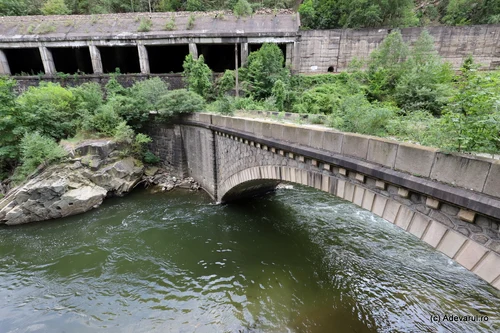
Image 1/24:
The Jiu Gorge Gorge Daniel Guță Adevărul (68) JPG
Until the autumn of 1948, most of the works of art were completed, but in some places the landslides destroyed portions of the route, covering them with thousands of cubic meters of stone. The most difficult were the tunnels, dug in the extremely hard rock and consolidated by repeated dynamites.
“During April 1 on November 1, 1948, a number of 27,988 brigadiers, mobilized and organized by the UTM, together with the workers and technicians on the site, under the leadership and guidance of the Romanian Labor Party, carried out the works scheduled by the Government on the national site. On the site, the young people increased from a political point of view. and read ”declared, in 1948, Pavel Constantinescu, the manager of the youth brigades.
The railway in the Jiu Gorge was inaugurated on October 31, 1948 by Gheorghe Gheorghiu-Dej. The communist regime presented it as one of its great achievements, although most of the construction had taken place before 1945.


