Economists evaluate the draft budget 2026: very optimistic, the second deficit of the highest in the EU, and the devil is in the details

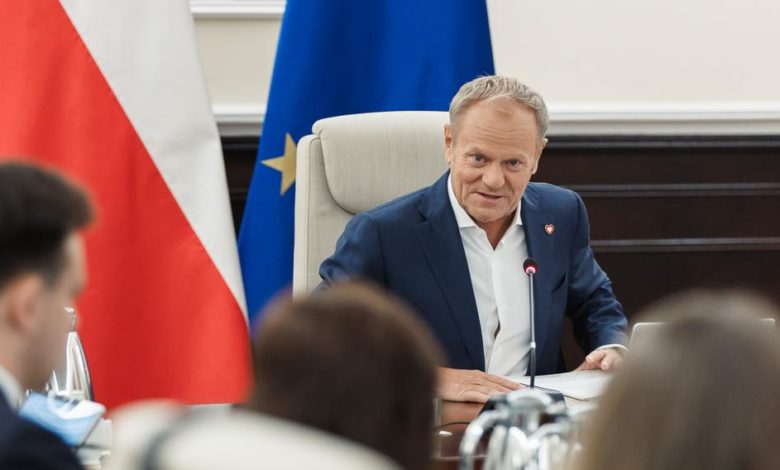
Poland has and will continue to have the second highest deficit in the EU, although the good condition of the economy saves us a bit – believes Rafał Benecki from ING Bank Śląski. The draft budget for 2026 with this deficit seems quite optimistic – in turn, in an interview with PAP, the main economist of the Confederation Lewiatan Mariusz Zielonka.
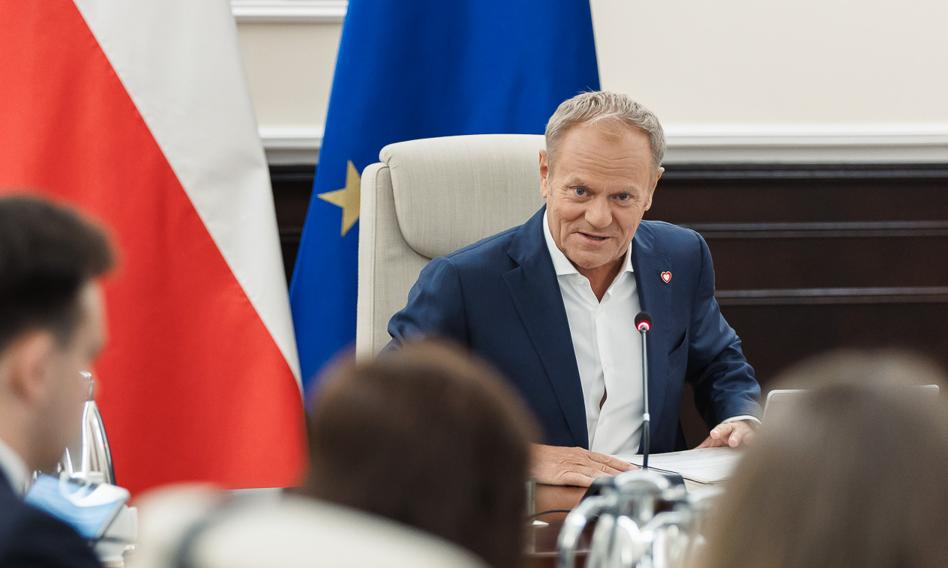
On Thursday, the government adopted a preliminary draft budget act for next year. As reported during a press conference, the Minister of Finance and Economy Andrzej Domański Project assumes that the state expenditure will amount to PLN 918.9 billion and the income of PLN 657 billion. Thus, the deficit is to amount to PLN 271.7 billion, or 6.5 percent. GDP.
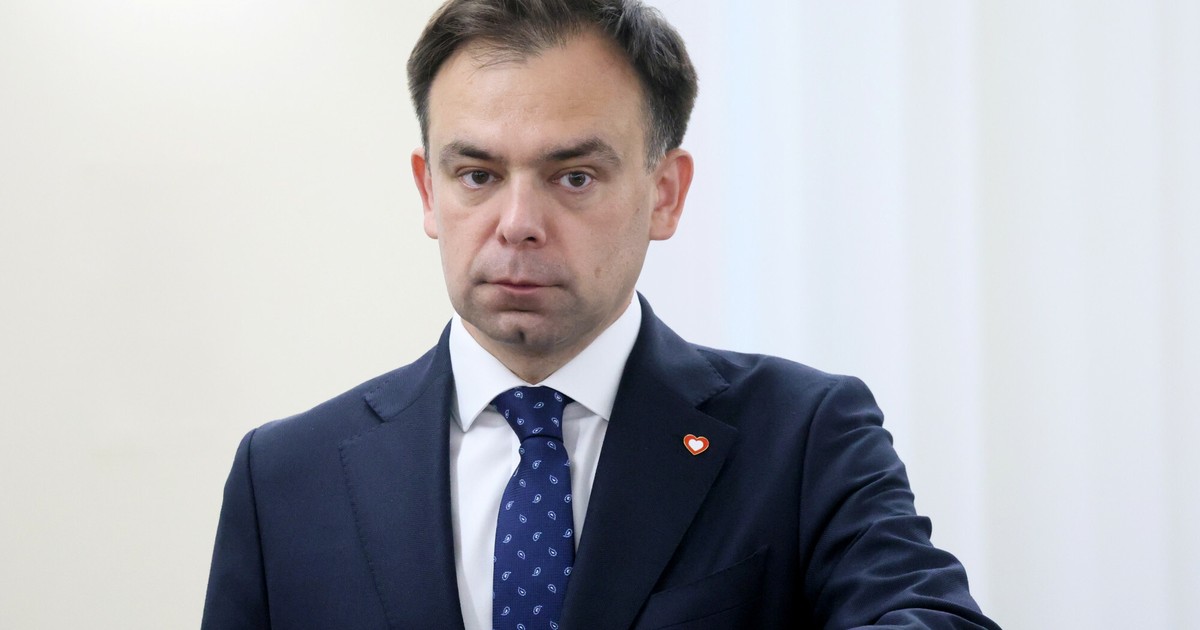
The chief economist of ING Bank Śląski Rafał Benecki, commenting on the PAP in an interview with PAP presented by the Minister, budget for 2026, assessed that the deficit of 6.5 percent. GDP means that Poland will still have the second largest deficit among EU countries. Bigger – he added – only has Romania. – This is a very large deficit, but it is worth referring to the condition of the economy. Poland is still a leader in economic growth, so it is able to finance such a huge deficit – he explained.
Advertisement
He pointed out that the good condition of the Polish economy also causes that rating agencies assess Poland better than Romania, whose deficit is slightly higher and economic growth – lower. At the same time, he emphasized that this does not change the fact that such a fast debt increase and a large deficit are a large burden on the economy and have a lot of side effects.
– First of all, such a deficit must be financed, we do it using domestic savings that push a private loan. In the coming years, Poland also has huge investment needs in various fields, including Infrastructure and energy, but also Polish business stands out in terms of innovation from other countries and has large investment arrears – the economist pointed out. He assessed that part of the deficit is due to the implementation of these investment plans, but it also consists of large social expenses, health care and defense.
Benecki pointed out that Poland today has one of the most generous social policies in the EU. – As for the share of these expenses in GDP, it is only higher in some EU countries, e.g. in France. In addition, we have road energy, and we are also a converted country. We have at least three priorities (social policy, defense, investments, including energy – PAP). If we do not set less priorities, we will undermine the success of the last 30 years – noted the interlocutor PAP.
According to the economist of ING Bank Śląski, a public debate should move to choose from, which is most important for the further development of the country. – We had many years of very generous policy for households. Now there is time for a generous policy for the economy, especially in the direction of investment and defense – argued Banecki.
In his opinion, the government must look for savings either in the form of higher taxes or lower expenses. – Poland still has relatively low taxes against Western Europe, while having social policy at a similar level to it and, unlike many Western countries, we are a converted country. These are not things that can be kept for a long time, staying with such a large deficit is to undermine your abilities – says the economist.
PAP's interlocutor also pointed out that Poland's loan needs in 2026 are PLN 422 billion, which is a historic record. – The ministry must borrow PLN 422 billion in Poland and abroad, in such a large number it is possible that cheap loans from KPO are also included, but the state budget still consists in domestic savings, which at the same time “pushes” a private loan. It is better to spend these savings on private loan, especially for enterprises – he emphasized.
Economist of the Lewiatan Confederation: The budget project for 2026 seems very optimistic
The draft budget for 2026 with this deficit seems quite optimistic – assessed in an interview with PAP the main economist of the Confederation Lewiatan Mariusz Zielonka. He added that the government assumes an increase in income by PLN 44 billion taking into account the planned tax increase, which may fail.
– The devil is in the details, including what Minister Domański and Mrs. Deputy Minister (Hanna) Majszczyk wrote on the income side. These are to be PLN 44 billion higher (than in 2025 – PAP), taking into account, of course, all those activities that would increase taxes. We are talking about CIT from banks, we are talking about higher excise duty than the path of excise duty growth – said Zielonka. In his opinion, this means that the deficit will significantly exceed 6.5 percent. GDP, which is forecasted by the Ministry of Finance.
He added that while the macroeconomic forecasts given on Thursday can be considered “credible and real to meet”, “this budget, with this deficit, seems to be quite optimistic.” He also pointed out that the budget assumed the maintenance of all social programs, although at a press conference on Thursday the Minister of Finance mentioned only the most important of them.
Economist of the Lewiatan Confederation also noted that the deficit of the sector of government and local government institutions will be higher than the assigned in the medium-term budget and structural plan for 2025-2028. He predicted that the deficit in 2026 would amount to 4.5 percent. GDP, meanwhile – as he noted – now we are talking about 6.5 percent.
– The minister also said that we do not have to go down percentage with the deficit (in relation – PAP) to GDP, it is important that we go down with the deficit nominally, which also seems quite strange to me, because clearly the caution thresholds say that we are to go down with a deficit – the expert pointed out. He emphasized that although the EC looks favorably at the defense expenses, we do not follow the path we have set for ourselves. He noted that at the time of creating the plan, the government did not know that the Union would agree to turn off the expenditure on the army.
The economist also assessed that defense expenditure planned in the project (4.8 percent GDP) and PLN 247.8 billion for health care are a lot, but these are thresholds that we declared that we would achieve by law. “Defense is changed by all cases at the moment and it is really in vain to look for a person who would negate the validity of these expenses,” he noted. He noted, however, that this raises some fears that the budget would suddenly get out of control.
Last Thursday, the Ministry of Finance announced changes in the tax sector taxation. Income tax (CIT) from banks would be increased in 2026 to 30 percent, in 2027 it would drop to 26 percent, and in the following years it would be at the level of 23 percent. At the same time, the bank tax rate would be reduced, by 10 percent. in 2027 and by 20 percent in 2028 relative to the current state. The ministry also announced an increase in excise duty on alcoholic beverages by 15 percent. From January 1, 2026, a year later, these rates are to increase by another 10 percent. Shortly afterwards, the head of the Chancellery of President Zbigniew Bogucki announced that President Karol Nawrocki would not agree to the proposed increase in excise duty.
In the first half of August, the EU Council launched the so -called Exit clause for 15 countries, including Poland. According to EU fiscal rules, the deficit of Member States may not exceed 3 percent. GDP, and the debt cannot be more than 60 percent. GDP. Launching the clause means that if these countries exceed the permissible level of expenditure, the European Commission and the Council may withdraw from the initiation of the excessive deficit procedure, as long as the surplus results from increased defense expenditure.
According to the data provided on Thursday by Domański, the draft budget act on 2026 assumes, among others Defense expenses in the amount of 4.8 percent GDP (PLN 200 billion), increasing health care expenses by PLN 25 billion to PLN 247.8 billion, PLN 6.7 billion for housing and PLN 6 billion for the “Clean air” single -family houses thermomodernization program. The project also assumes 3 percent wage increases in the budget sphere. The minister announced that the planned budget will go to the Social Dialogue Council on Friday.
According to the assumptions adopted in June for the project of next year's budget, the real increase in GDP in 2026 is to amount to 3.5 percent, and the average annual inflation will reach 3 percent. The nominal dynamics of the average gross salary in the national economy is to amount to 6.7 percent, and the nominal dynamics of gross salary in the enterprise sector – 106.9 percent. Unemployment registered at the end of 2026 is to amount to 4.9 percent. at the end of the year. The employment forecast in the national economy is about 11 million jobs, and employment in the state budget sphere is to amount to approx. 618.9 thousand. full -time jobs.
The draft budget should be submitted to the Sejm by September 30, and in four months from the date of handing over to the Sejm to reach the President's signature. If this does not happen, the president may order shortening the term of office of the Sejm within 14 days. The Basic Law provides that the president signs the budget within seven days. (PAP)
BPK/ MMU/ JPN/
Jacek Stankiewicz (PAP)
JLS/ MALK/ MHR/