

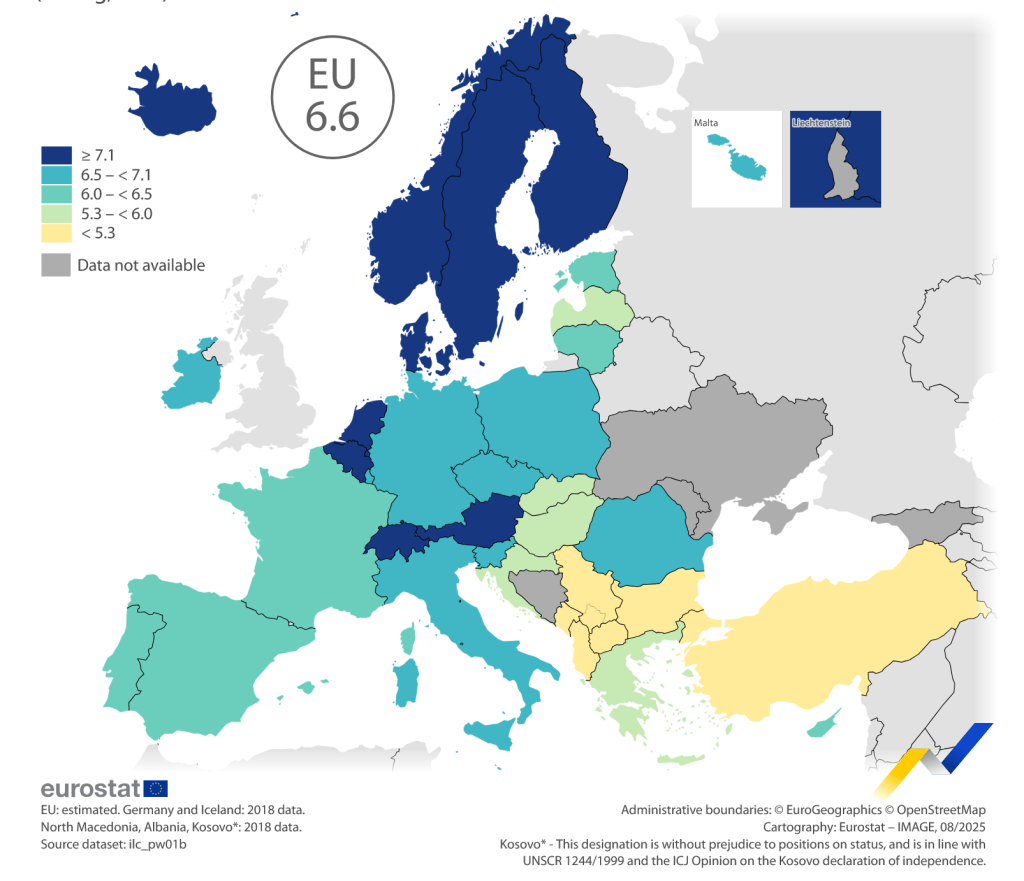
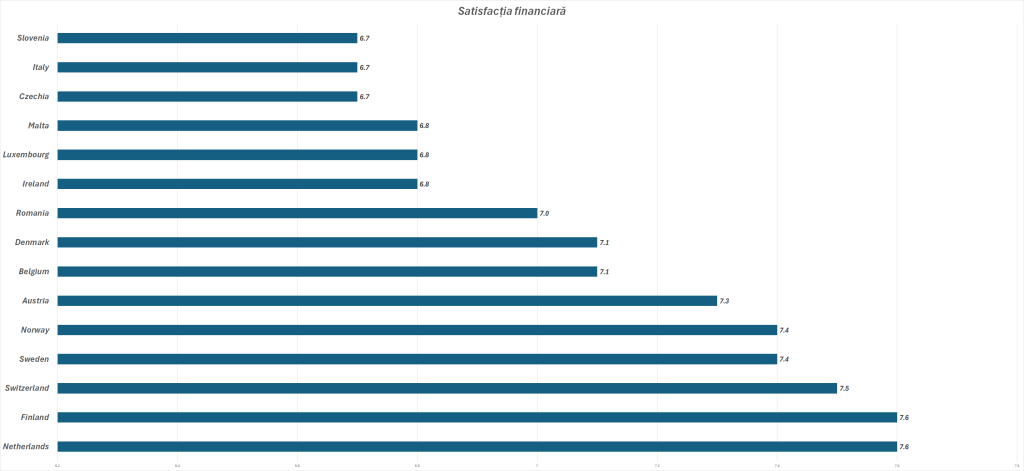
Of all the Europeans, the Finns and the Dutch (7.6) are the most satisfied with their personal financial situation, Eurostat data shows. Romania stands out positively because, although we are surrounded by countries where people evaluate their personal financial situation with a note between 4 and 5 (on a scale from 1 to 10), Romanians are very pleased with their personal financial situation, granting an average of 7.0.
It is true, the net wealth of the population (the total of the assets from which the debts are reduced) has increased significantly in the last decade, but it is unevenly distributed, 10% of the population holding 41% of the national income before taxation, shows the latest edition of the financial stability published by the NBR.
The net wealth of the population amounted to almost 1,800 billion in 2024, compared to about 700 billion in 2014.
According to the latest data published by the NBR in the stability report, between 2014 and 2024, the stock of real estate assets held by the population has doubled, and the portfolio of financial assets has almost tripled. Statistically, it seems that the Romanians did not lack money. But beyond this optimistic image, a much more nuanced reality is hidden: the consumption has increased over the available income, and the saving is, in real terms.
A boom of wealth but on fragile bases
In an economy in which external shocks are increasingly frequent, the increased net wealth offers an important buffer, the authors of the report write. In practice, however, many Romanians live “on debt” or based on past economies. The saving rate is negative – a sign that the available revenues are consumed entirely and even outdated. Basically, people maintain their lifestyle by using either loans or reserves already accumulated.
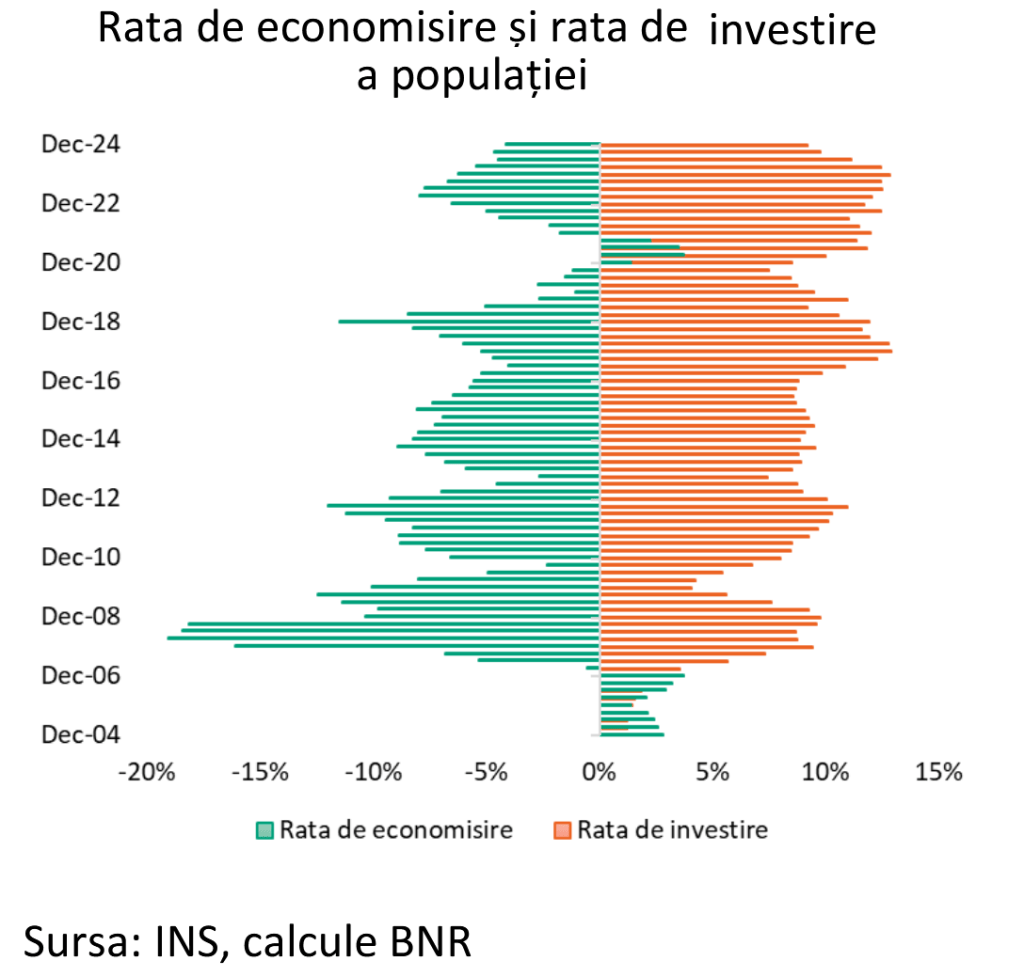
Paradoxically, despite the lack of current saving capacity, the investment rate remains positive.
Romanians continue to invest, predominantly in homes, which also explains the exceptional property holder – 94.3% of households have a home, the highest percentage of the European Union. This trend manifests itself even among those at risk of poverty, which suggests a strongly oriented culture, regardless of income.
Concentrated wealth, persistent inequality
The growth of the wealth was not evenly distributed. The revenue is important, the top 10% of the population holding 41% of the national income before taxation, a situation that is reflected at a high level of inequalities and at the banking sector.
Although 68% of the population over 15 years has a bank deposit, polarization is maintained. A reduced weight of the depositors (0.6% or 84.4 thousand people) holds 28% of the volume of deposits (March 2025), with an average deposit value of 1.06 million lei (210 thousand euros equivalent). In contrast, the remaining 99.4% of depositors (14.9 million people) have savings in the form of deposits, on average, of 15,500 lei (the equivalent of 3,000 euros).
Credit growth: How long can it take?
The consumption was strongly powered by the increase of the minimum wage and maintaining stable financial conditions. The result? An increase of 14% of the effective individual consumption in the fourth quarter of 2024, in annual terms.
However, an important part of this advance comes from credit, shows the data of the central bank. Between April 2024 and March 2025, new loans granted to the population increased by 41.7%, with accelerated dynamics on both the mortgage and consumer segment.
But this expansion seems to have reached a peak: from December 2024, the rhythm of lending is visible.
Even so, the total debt of the population climbed vertiginously, reaching 218 billion lei at the end of 2024, with a 9% advance in a single year-compared to only 2% in 2023.


