The hybrid war is accelerating. Putin rubs his hands before the election in Moldova

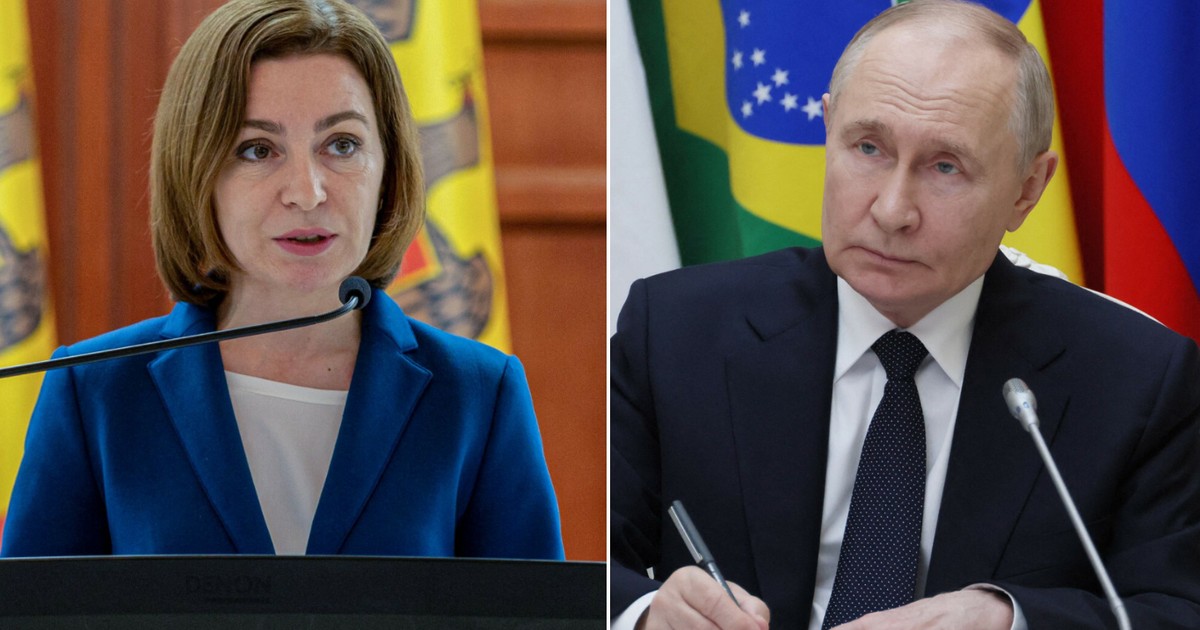
Current surveys indicate that the party and Solidarity party in Moldova (belt) may create a minority government in the best scenario after the election of September 28. At the worst, there is a risk of losing power in favor of pro -regional groups that will follow the instructions of Vladimir Putin. Current polls give the Maja Sandu party around 32 percent. support. This is a decrease of 20 percentage points In relation to the election in 2021, which allowed the democrats to build a majority government, headed by Dorin Recean. They then obtained 63 places in a 101-person unicamer parliament.
In July, four pro -Russian parties in Moldova announced that They will create a block before the September elections to have a chance to win over a pro -democratic and pro -EU grouping. It included a party of the Socialists of the Republic of Moldova, led by former President Igor Dodon, as well as the heart of the heart of Moldova, the future of Moldova and the communist party of Moldova. – We are in favor of restoring strategic relations with Russia. We want peace, not war. Our block will put an end to foreign interests and NATO – said the former president, quoted by the Reuters agency.
The authorities in Chisinau accuse the heart of the heart of Moldova and the future of Moldova of Cooperation with the fugitive pro -region oligarchy Ilan Shorwho was sentenced to 15 years in prison for corruption. Other groups that plan to start in elections are considered by the belt “Seemingly neutral”, which allegedly do not support interference with Russia, although in fact they play the defeat of interference with the West. – I don't think politicians on the left ideologically believe in what they say to people. They just earn money. Some of them are afraid of the Kremlinbecause they got money earlier and probably still get it – said President Maia Sandu in an interview with Newsmaker.
Foreign influence, economy and migration. Moldova's main problems
The Party of Action and Solidarity loses in the polls primarily due to the growing interference of the Kremlin, which for many years He finances pro -Russian politicians to preach the message consistent with the Moscow line. The Republic of Moldova also includes regions in the strong zone of Russia's influence, separatist Transnistria and autonomous gagausia. According to Russia's assumptions, they are a barrier before joining this country to the European Union and make a return in interference with the West.
Moldova is also struggling with many internal problems related to the aging society and low fertility, which are the result of, among others progressive economic emigrationprimarily to Italy, France and Germany. Kamil Całus from the Center for Eastern Studies indicated in his publication that the population of Moldova from the time of independence in 1991. It has decreased in this country by about 35 percent. At that time, the statistical Moldovan was 29 years old, and today he is 38. Residents also complain about inflation and higher energy and gas prices, which is the effect The country's cutting off from Russian resources.
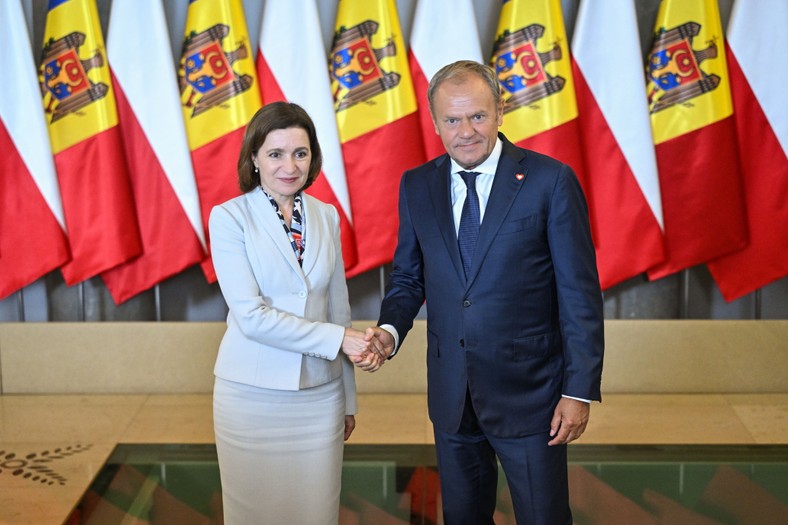
President of Moldova Maia Sandu and Prime Minister Donald Tusk
Moldova's society is also mostly conservative when it comes to moral matters, and in 2024 this country began Formal Accession negotiations to the European Union. The key challenges for Chisinau on the road to membership in the community are, among others Improving fundamental rights and gender equality, by combating violence against women, improving the situation of the LGBT+community, and conducting pro -ecological policy. These matters divide citizens, some of which recognize the EU demands as Too progressive and interfering with the current traditional life model.
Another attempt to destabilize by Russia
A strong polarization of Moldovan society could be observed during last year's presidential elections and a referendum on integration with the European Union. Maia Sandu then won in the second round with a result of 55.35 percent. Her opponent was the former prosecutor general Alexandr Stoianoglo, who with the support of the Socialist Party of the Republic of Moldova [partia prorosyjska, której liderem jest były prezydent Igor Dodon] He won 44.65 percent votes. In turn, in the referendum “Pigning in the constitution of the country's aspiration for membership in the EU, 50.35 percent were told. voters, and “against” 49.65 percent In the autonomous Russian -speaking gagausia, as much as 95 percent were such a solution. people. And in the first round of elections, Maia Sandu obtained only 3 percent there. support.
The Kremlin then invested huge money in disinformation actions, which took place primarily on social media, and especially on a telegram popular among Moldovans. Voters were also bribed. Eastern Studies Center [OSW] indicates that About 10 percent Moldovan received 50 or 100 euros to vote for a specific pro -Russian candidate. It is worth mentioning that the average monthly gross salary in Moldova is about 14 thousand. 568 lei, which in terms of about 745 euros.
The Kremlin finances Moldovan politicians
Investigators stated that the fugitive Moldovan oligarch Ilan Sor He helped in laundering money intended for buying votes through a network of banks. The millionaire currently lives in Moscow, where he also organized the Congress of his new party “Victory” and stated that “the only salvation” for Moldova is “Union with the Russian Federation” And that “there is no point in talking about the independence of the country.” On July 19, the Central Commission refused to register for the election of this block.
At the head of the list of his grouping in the next election, the gagausia tasser was to be stood [najwyższe stanowisko w Autonomii Gagauskiej] Jewgenija Guczul, which stayed in August sentenced to seven years in prison for collecting money from the Russians for political activities. He is currently in home detention. After the judgment, both judge Anna Cucerescu and the prosecutor who participated in the trial They began to receive threats. Photos of dead bodies and funeral wreaths were sent to the private address of the judge. She also received night calls.
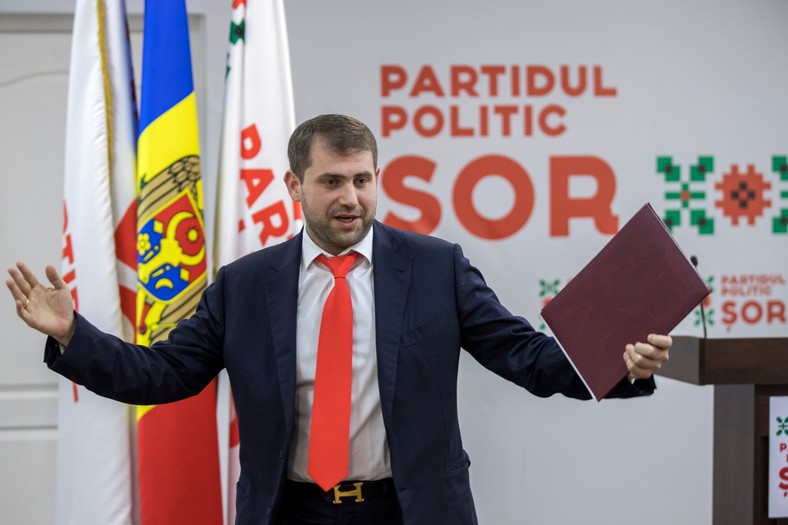
Ilan Shor
Politico indicates that Guczul was convicted of regularly transferring Russian funds of the pro -Russian SZOR party, while she was the secretary in 2019–2022, as well as for coordinating party activities and paying for protesters. The party was banned by the Constitutional Tribunal in 2023 for actions aimed at destabilizing the country, just a few weeks after the EU sanction was applied to its leader due to its connections with Moscow.
The decision of the Moldovan court clearly angry Moscow. The Kremlin spokesman accused the government in Chisinau “opposition suppression and trampling of democratic norms”. – This is of course an example of a political decision. This is an example of a test explicit and de facto, illegal pressure on political opponents During the election campaign – said Dmitry Pieskov. He also added that “people in Moldova are deprived of the opportunity to vote for those they prefer.”
Threats of Russia towards Moldova. “Cannon fodder”
Moscow before the upcoming parliamentary elections regularly strikes the democratic government of Moldova and makes military threats, which the citizens of this country are most afraid of. Russia's foreign intelligence service (SWR) argues that NATO is preparing Moldova to participate in a possible military conflict with Russiaand the local population is to be used as “cannon meat”. The Kremlin media, in turn, claim that this country is to become a “extended abutment on the eastern flank”. However, a spokeswoman for the Russian Ministry of Foreign Affairs Maria Zacharowa, accused Western countries of an attempt to transform Moldova into “Second Ukraine”.
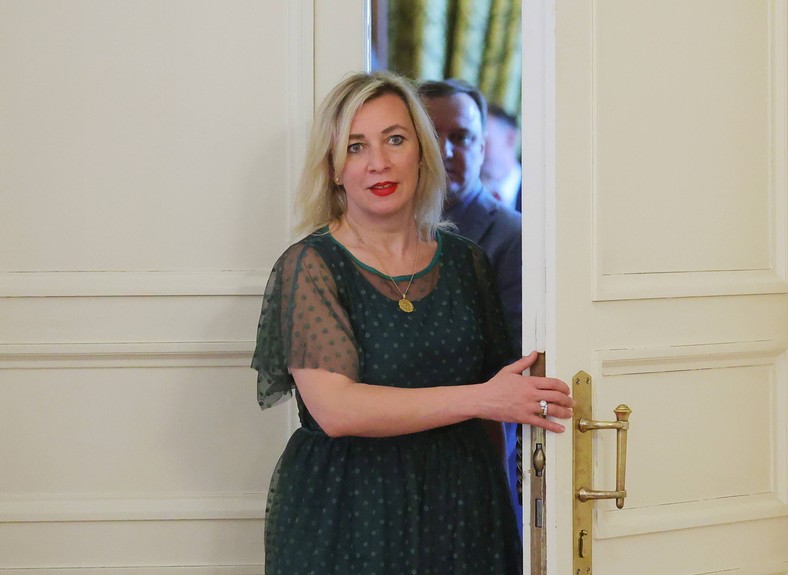
Maria Zacharowa
There are also propaganda voices about the alleged “planning of forgery of elections” by the government in Chisinau. Secretary of the Russian Security Council Sergei Szojgu accused Moldova that he was opening too few polling stations in Russia. In his opinion “There are all reasons to think that the current authorities intend to focus as in the past, on the primitive and brutal falsification of the voices of the diaspora,” which in 2024 had a key impact on the victory of Maja Sandu.
“The Moldovan Central Electoral Commission announced that the number of polling stations in Russia will remain unchanged in the upcoming parliamentary elections. However, even such activities of the Moldovan authorities do not guarantee their victory. Therefore, extreme options are not excluded – From direct manipulation of results to destabilization of the situation according to the script of the Ukrainian Maidan, “wrote the former Minister of Defense of Russia, quoted by the Moldovan portal Newsmaker.
The Ministry of Foreign Affairs of Moldova stated that “this type of statements constitute a new one unacceptable interference in their country's internal affairs And they are part of the disinformation campaign, which aims to influence the election processes and discredit the Moldovan diaspora abroad. “
Maia Sandu: Russia wants to control Moldova
– the Russian Federation wants to control Moldova, Starting from autumn, and prepares unprecedented interference in the elections in September – said President Maia Sandu at the end of July, after the meeting of the Security Council of the Country, whose topic was interference in the course of elections.
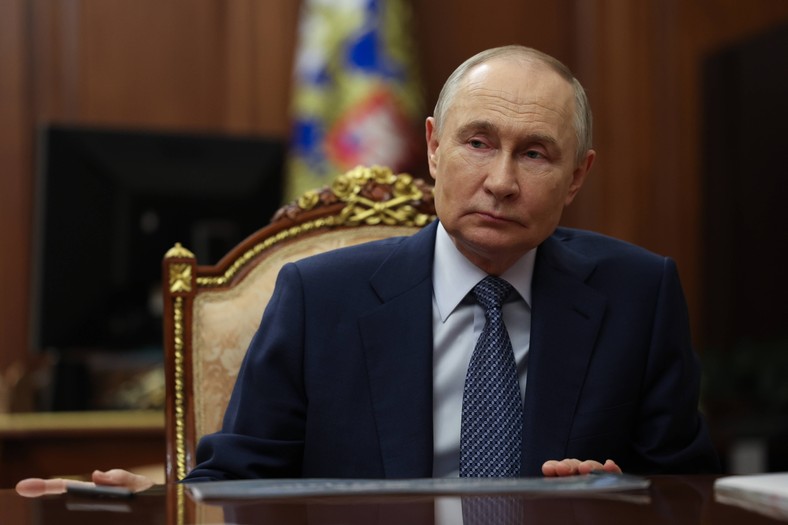
Vladimir Putin
The main goal of the Russian Federation is to insert a puppet government and implement the “Georgian script”. The Moscow Times reports that the Institute of Studies and Analysis of Conflicts of Russia (ICAR) in cooperation with Moldovan partners with Watchdog MD conducted nine weekly sessions monitoring attempts to take control of the election process in Moldova and influenced the country's internal political dynamics by Russian propaganda. The institutions have shown that Moscow at the same time finances many political projects to maximize its chances of securing the pro -Russian parliament this fall.
The victory of pro -Napper groups could also mean the implementation of the Kremlin's plan, which was warned by the pro -democratic prime minister of Moldova Dorin Recean. – Russia plans to send 10,000 soldiers to Transnistria. Currently, about 1,500 Russian soldiers, mainly locals, are stationed in the region. Increasing the contingent could threaten Ukraine and Romania, which is a member of NATO and the European Union – said the politician in an interview with the Financial Times. Recean also emphasized that Russia is seeking to strengthen control over Transnistria, which is a serious threat to Moldovan democracy. Currently, Chisinus does not allow Russian soldiers to rotate in the separatist region. However, this can change after a possible loss.
Russia among destabilization actions He also focuses on cyber attacks. The Moldova government informed on August 11 that there was a “organized attack by a foreign entity, directed against the cybersecurity of state infrastructure.” In addition Investigators conduct an internal investigation against several employeeswho are suspected of “participation in sabotage attempts and attacks on Cyberinfrastructure”.
European Union reaction
The European Union is trying to support Moldova in defense against foreign influence. On July 4, the EU-Mołdawi peak took place in Chisinau, during which Financing in the amount of EUR 1.9 billion for 2025-2027 under the growth plan was announced. Ursula von der Leyen and Antonio Costa then confirmed the support of the community for the sovereignty of Moldova in the face of a full -scale invasion of neighboring Ukraine, as well continuous hybrid threats to society and government.
At the end of August, they are also to go to Chisinau President of Romania Nicusor Dan, President of France Emmanuel Macron, German Chancellor Friedrich Merz and Polish Prime Minister Donald Tusk. The Moldovan Portal Newsmaker indicated that politicians will take part in the Independence Day celebrations on August 27, which is treated as strong support for the belt before the September parliamentary elections and showing that Moldova has a chance to become a strong strategic partner for EU countries.