The chief of Openai, Sam Altman, is very worried that “there are people who really feel they have a relationship with Chatgpt”

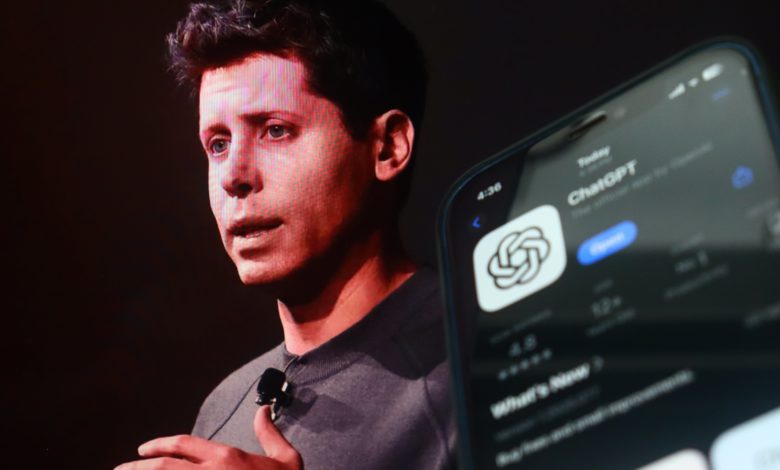
Sam Altman, Openai Foundation, acknowledged that there are people who use chatgpt who have started to have deep emotional links with chatbot, lighting the worrying effects that artificial intelligence has.
In an interview with The Verge after the launch of GPT-5, which included a controversial modification of the default model for the Openai chatbot, Altman revealed that a small group of people feel a personal connection with the assistant, maybe even personal, notes Barchart.
Altman acknowledged that Openai “totally missed some things at the launch” GPT-5, which replaced the previous model of the company, GPT-4O.
The change has aroused negative reactions from loyal users on Reddit and X, where many Internet users have lamented the loss of the “heat” and the empathetic tone of the 4O model.
The company quickly responded to critics and gave the paying subscribers to use the old model.
More and more people use chatgpt
Despite the turbulence, Altman said Chatgpt has reached new records of daily users, emphasizing the tension between innovation and people's expectations.
Perhaps the most surprising thing revealed by Altman was a fact that some users have developed an authentic feeling of attachment to chatgpt.
“There are people who really felt that they have a relationship with Chatgpt, and we are aware of these people and think of them,” Altman said. “And then there are hundreds of millions of other people who do not have a parassocial relationship with Chatgpt, but they have been very accustomed to the fact that he was responding in a certain way, validated certain things and supported them in certain ways,” explained the Openai chief.
Altman estimated that “well below 1%” of users have what could be considered an unhealthy relationship with the chatbot, but confirmed that the problem has sparked “many” internal discussions at Openai.
Relationships with lovers take
Although it is a minority, the trend is worrying. Reddit is full of content regarding users who form what they consider to be real relationships with IA.
A subreditis called R/Myboyfriendisai has over 21,000 members, hundreds of active users at any time and more daily posts of people who believe that their lover is.
Published messages include their photos and an avatar they created, along with messages in which they say they talk to their lovers.
Besides, there are hundreds of posts on other subredits about people who have stated that they have partners. There are even reports about people who have engaged or married their chatbots.
Allusions that Elon Musk's chatbot mainly maintains the problem
Altman even made an allusion to Grok, developed by Elon Musk, saying that he perpetuates and specifically encourages this phenomenon. “You will definitely see some companies that will create Japanese anime sexual robots, because they think they have identified something that works,” he said, referring to the controversial chat functions of Grek.
“You will not see us doing this. We will continue to work hard to create a useful application and try to allow users to use it as they wish, but not so much that people with a very fragile mental state are accidentally exploited,” Altman said.
Xai, the parent company of Grok, received criticisms because he was oriented to companions based on emotions. Specifically, he created “ANI” and “Valentine”, companions based on the anime you can call and with whom you can talk in real time, 24 hours a day, 7 days out of 7.
This comes at the same time as the launch of “Grow Image”, which includes a function that cannot be used in public called “spicy”. As Altman suggests, all of which are likely to perpetuate the problem, rather than contributing to its resolution.
Openai dilemma
The statements of the Openai chief highlight an increasingly heated debate on the psychological effects of advanced conversational. While for many Chatgpt users is a productivity tool, an assistant or research aid, others perceive it as a confidant or companion, writes Barchart.
By their nature, large linguistic models (LLM) simulate empathy, attention and affirmation – qualities that can blur the border between utility and intimacy.
For Openai, this creates a delicate balance. On the one hand, users appreciate models that seem more “human” and offer more support.
On the other hand, these qualities can lead to excessive addiction or to blur the emotional borders.
The company now faces questions about the degree of “heat” that should be integrated into its models and if protective measures are needed for vulnerable users.