Explosion on the real estate market in Europe: Hungary rises over 20% in housing prices, Romania – above the EU average


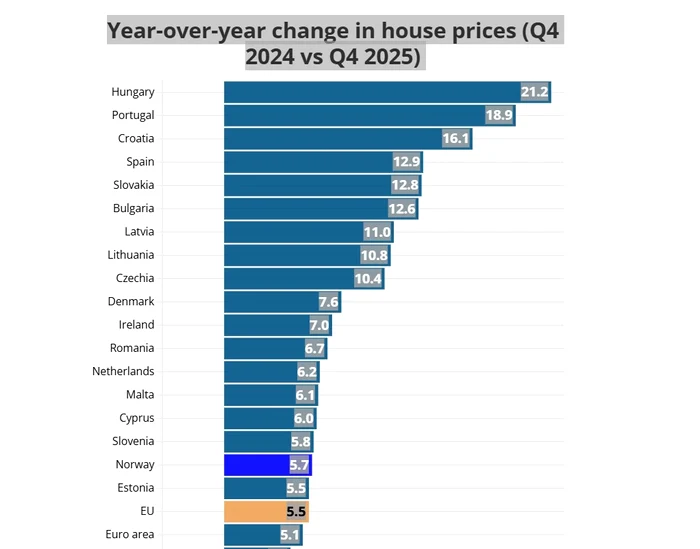
House prices in the European Union continued to rise in the last quarter of 2025, but the evolution remains uneven between countries. At the EU level, the average increase was 5.5%, according to Eurostat, on the back of improving financing conditions and the return of buyers to the market after the period of high interest rates.
City of Budapest Photo: pixabay
Specialists explain this trend by the stabilization of interest rates, which brought back to purchase some of those who had postponed real estate purchases in previous years, according to euronews.
Hungary, the leader in price increases in the EU
Hungary recorded the highest annual increase in house prices at 21.2%. Analysts attribute the advance to the government's housing subsidy programs, which have boosted both domestic demand and investment.
In the euro area, the biggest increases were recorded in Portugal (+18.9%), Croatia (+16.1%) and Spain (+12.9%).
International demand played a key role, supported by lifestyle migration, holiday home purchases and foreign investment, including from digital nomads and retirees.
In Portugal, the pressure on prices was amplified by the limited supply in the big cities of Lisbon and Porto, but also by loan guarantee programs for young people.
Increases of more than 10% were also recorded in Slovakia (12.8%), Bulgaria (12.6%), Latvia (11%), Lithuania (10.8%) and the Czech Republic (10.4%).
The region has been supported by economic growth and infrastructure investment, which has kept demand high in the real estate market.
Romania, above the EU average
Romania reported an increase of 6.7%, above the European average of 5.5%, but below the level of some states in the region.
In comparison, Denmark recorded an advance of 7.6% and Ireland 7%.
Finland is the only market among those analyzed where house prices fell, by 3.1% compared to the previous year.
Germany saw modest growth of 3% and France just 1%, both markets continuing to recover from corrections in 2023–2024.