Europe receives in writing the commercial agreement with Trump, but with a warning for car manufacturers

The European Union and the United States have negotiated a common text for weeks. Mostly, the agreement is expected, but it will delay customs downers for European cars, writes the American newspaper The New York Times on Thursday, quoted by Rador Radio Romania.
The United States and the European Union released on Thursday the long -awaited details about a commercial agreement on which, at least verbally, they had agreed last month, an agreement according to which Washington will maintain its customs taxes on the vehicles imported from the 27 EU Member States until it will reduce the taxes imposed on the American industrial products.
The terms of the agreement, specified in a common statement from the largest savings of the world in the closest relations, formalized the “armistice” announced in July, which prevented mutual escalation in the world commercial war as a trump punishment.
But that agreement had only concluded by a handshake, and the negotiators have been struggling since then to establish their terms in writing. European officials were eager to reach a formal document, hoping that he would put into practice the promises that the US administration made, exempting the community block from any other worse end.
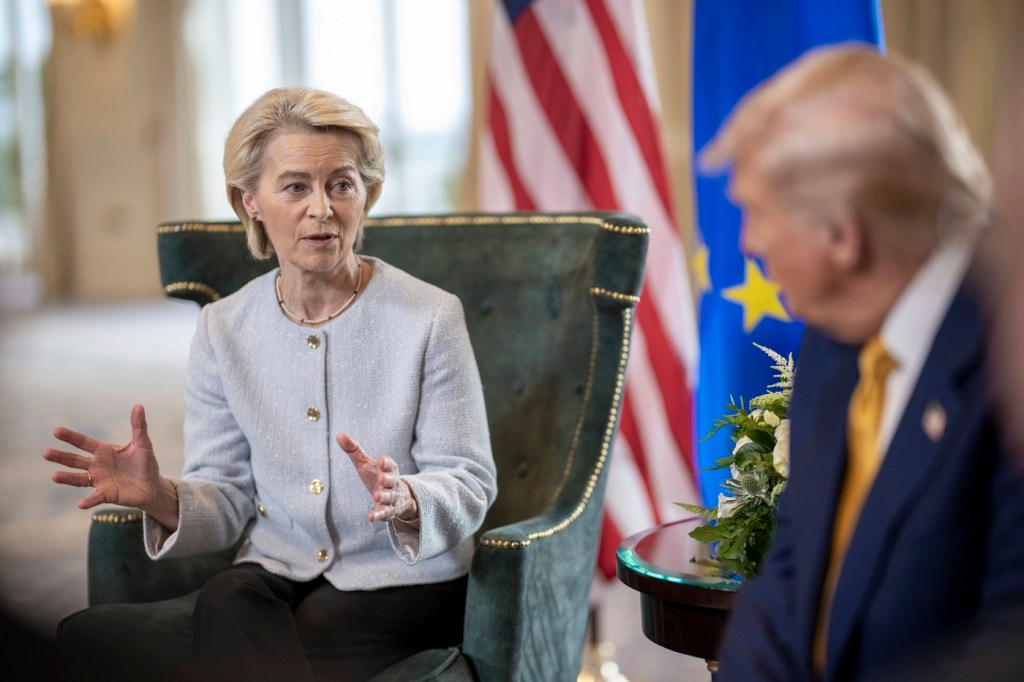 The European Commission, puzzled by the delay in the US application of the agreed commercial agreement. What was to do trump
The new version published is not an agreement with legal incidence, but it is still a step forward in order to achieve this objective.
The main fund remains unchanged. The United States will retain its increase by 15% on most products from EU member countries-a quota that Trump officially imposed by an executive order entered into force earlier this month.
The US Condition to reduce customs duties to EU cars
To the advantage of Europe, this share applies to some of its largest exports, including pharmaceuticals, many of them being taxed by 15% even after the United States will have completed its long -awaited customs duties, taxes that could reach even 200%.
Trump has sought to impose separate customs duties on pharmaceuticals, and this worldwide, for reasons of national security, with increased taxes for other important sectors, such as computers and waste. But, according to the agreement agreed on Thursday, Europe will also be exempted from these increased taxes.
The problem of cars is more complicated. The United States will not immediately reduce to Europe the customs duties imposed worldwide to cars abroad. In contrast, the two parties agreed that the United States reduce their customs duties by 15% only after Europe will also comply with its commitments aimed at reducing the taxes imposed on American imports.
Specifically, before the customs duties imposed on vehicles can be reduced, the organization will have to “officially” adopt a law that would reduce customs taxes imposed on industrial and agricultural products, such as bison meat, nuts, dairy products and many types of fish.
The postponement could dissatisfy the European manufacturers of vehicles, which, for months, have faced high financial losses due to the increase of taxes in America, taxes that currently amount to 27.5%.
But an official from the White House that informed her in advance on reporters wishing to keep her anonymity, said Washington hopes that the problem will be solved in a few weeks, taxes will be retroactively reduced until the beginning of the month when the EU will take the necessary measures.
The document, “a first step in a process that can be expanded in the future”
The common statement of Thursday is an important step for some negotiations that have been extended on both banks of the Atlantic, especially in terms of wine and alcoholic beverages. After all, these negotiations did not bring a success, so that such imports remain by 15%. Until the beginning of this year, the taxes imposed on alcoholic beverages were generally to zero.
The written document states that this prior agreement represents “a first step in a process that can be extended in the future to include other sectors.”
Before reaching this commercial armistice, the two parties seemed to have entered a big deadlock, Trump threatening to increase the customs duties imposed on Europe, and this regional block also thinking of some measures of response, measures that the White House threatened to combat, recalls New York Times.
In part, the two parties reached an agreement and because European emissaries asked Trump to promise a number of important American investments, adopting a tactic that other countries used to make the US customs stroke. According to the agreement, Europe has agreed to invest $ 750 billion in US energy, thus increasing its investments in the US with over $ 600 billion.
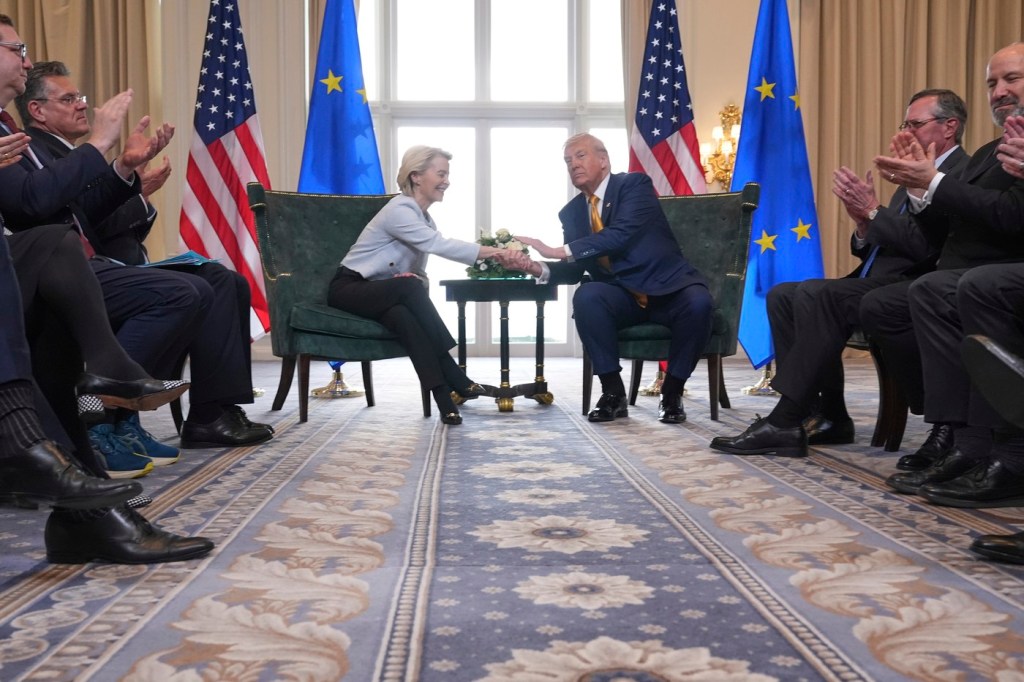 Commercial agreement between the EU and the US, after months of tense discussions. The announcement made by Ursula von der Leyen and Donald Trump
Subsequently, it became more and more clear that Brussels officials considered these commitments as aspirations, and not some difficult to achieve, given that they will come from private sources, which will not be controlled by the EU executive, respectively by the European Commission. On Thursday, US and EU officials seemed to recognize this in their common statement, which did not provide other investment details or how Washington could impose their conditions.
However, the EU and its main official, Ursula von der Leyen, were forced to make other concessions to the United States. The agreement was alive criticized in Europe because of its possible costs.
And, rhetorically at least, EU officials were forced to resume Trump's statement that the agreement would make the world commercial system. They have always claimed that, for the beginning, it is not exactly incorrect.
How did the EU give in to the Trump's roller on the topic of customs taxes: “He stepped on us”