The rental market moderated in April: +1% year-on-year and almost 2% compared to the previous month | Analysis History

- Bucharest annual evolution: stability in almost all sectors except Sector 1 (+3%)
- Annual increases: In Timișoara, rent prices increased by 8% at the city level
- Annual decreases: were registered in Iasi (-3%), Constanța (-2%) and Craiova (-1%)
- The most sought after apartments they are the ones with two rooms
- Most searched cities for rent: Bucharest, Cluj-Napoca, Brașov, Iași and Timișoara generate the most views on the platform
The rental market in Romania moderated in April 2026 compared to March, with prices stagnating or falling in most cities analyzed. The biggest monthly adjustments were recorded in Sector 2 and Sector 5 in Bucharest (-7% each), followed by Iași (-6%) and Arad (-5%), while Brașov and Sector 4 recorded decreases of -4%. In this context, Oradea was the only city among those analyzed where rents increased compared to the previous month, by +5%, while in other important markets, such as Cluj-Napoca, Constanța or Craiova, prices remained stable, according to the announcements published on Historythe most visited real estate platform in Romania.
Compared to April of last year, the evolution of rents indicates a largely stable market, with small price variations in most of the analyzed cities. The only annual increases per city were recorded in Timișoara (+8%), but also in Sector 1 in Bucharest (+3%), while decreases were recorded in markets such as Iași (-3%), Constanța (-2%) and Craiova (-1%). For the rest of the analyzed cities and sectors, the level of rents remained similar to that of April 2025, which confirms a stabilization trend at the market level.
“The April data indicate a moderation in the dynamics of the rental market, after a period in which price pressure was more visible in some cities. According to the data on the Storia platform, the evolution remains balanced, with an advance of approximately +1% from one year to the next and a decrease of -1.9% compared to March, which confirms this stabilization trend. At the same time, it should be borne in mind that there are differences between the official indicators, such as those published by the National Institute of Statistics, which include all types of rents in the economy (including those for housing in the public or private domain of the state), and the developments observed in the large urban centers based on the prices of the existing offers on the Storia platform, where we see rather stagnation and spot adjustments from one month to the next. budget, but also greater flexibility on the part of the owners in setting prices”, he declared Monica Dudău, Head of Marketing Real Estate Europe, OLX Group (Storia and OLX Real Estate).
What do rental searches look like?
In April 2026, Storia users viewed 6% more real estate ads compared to the same period last year. The most real estate ads viewed on the Storia platform in April 2026 were in Bucharest, Cluj-Napoca, Brașov, Iași and Timișoara.
Nationally, two-bedroom apartments remain the most searched for on the platform, accounting for almost half of all views in April 2026. In second place are studios, with a share of 31.5% of the total, while three-bedroom apartments occupy the third position, with 18.6% of the total. However, if we refer to the dynamics compared to last year, the three-room segment is gaining the most ground (+12%), which suggests a growing interest in more spacious homes.
The most real estate ads viewed by Storia users from Bucharest were in Sector 3 and Sector 6, which occupy the first two positions in the list of the most sought-after areas of the capital. At the same time, Sector 1 saw the highest increase in ad views (+21%), followed by Sector 5 (+12.5%) and Sector 4 (+9%).
Bucharest: prices by sectors and types of apartments
In the Capital, the differences between sectors remain visible, both according to the type of housing and the average rental price. In April 2026, Bucharest recorded an average price of approximately 609 euros, slightly down compared to the previous month (-2.7%).
Sector 1 maintains its position as the most expensive sector in Bucharest, with an average price of approximately 806 euros, down by approximately 6% compared to April 2025. In the next position is Sector 2, with an average price of approximately 669 euros, followed by Sector 3 and Sector 5, with 537 and 531 euros, respectively, both sectors registering minor variations compared to last year. In Sector 4, the average rent price was 506 euros, and Sector 6 remains the sector with the lowest average prices, around 484 euros.
In Bucharest, depending on the type of home, studios had an average price of approximately 397 euros, a slight increase compared to last year (4%). Two-room apartments rented for an average price of around 582 euros (-2% compared to last year), while three-room apartments reached around 843 euros, with slight variations compared to April 2025 (-2%).
At the sector level, developments were mixed from year to year. Average asking prices increased most noticeably in Sector 5, especially in the segment of studios (+11% vs. April 2025) and three-room apartments (+7%). In contrast, Sector 1 recorded decreases, especially in the segment of larger apartments (-3% for two rooms and -8% for three rooms).
Sector 1 remains the most expensive area, with average rents of 450 euros for studios, 690 euros for two-room apartments and 1,100 euros for three-room apartments. Compared to last year, Sector 1 recorded decreases in the segment of larger apartments (-3% for two rooms and -8% for three rooms).
In Sector 2the average asking rents were €380 for studios, €650 for two rooms and €900 for three rooms. Compared to last year, the most visible increases were in the segment of studios (+9%) and three-room apartments (+3%).
Sector 3 recorded levels of 399 euros for studios, 550 euros for two-room apartments and 700 euros for three-room apartments, with an increase of about 5% in the studio segment compared to last year.
In Sector 4the average rents were 380 euros for studios, 500 euros for two rooms and 630 euros for three rooms, with no price changes compared to last year.
In Sector 5average rents stood at €390 for studios, €550 for two-room apartments and €650 for three-room apartments, with an increase of up to 11% in the studio segment and 7% for three-room apartments.
Sector 6 recorded average rents of 400 euros for studios, 500 euros for two rooms and 600 euros for three rooms. Asking prices remained similar to last year.
What are the main cities with the CHEAPEST rents
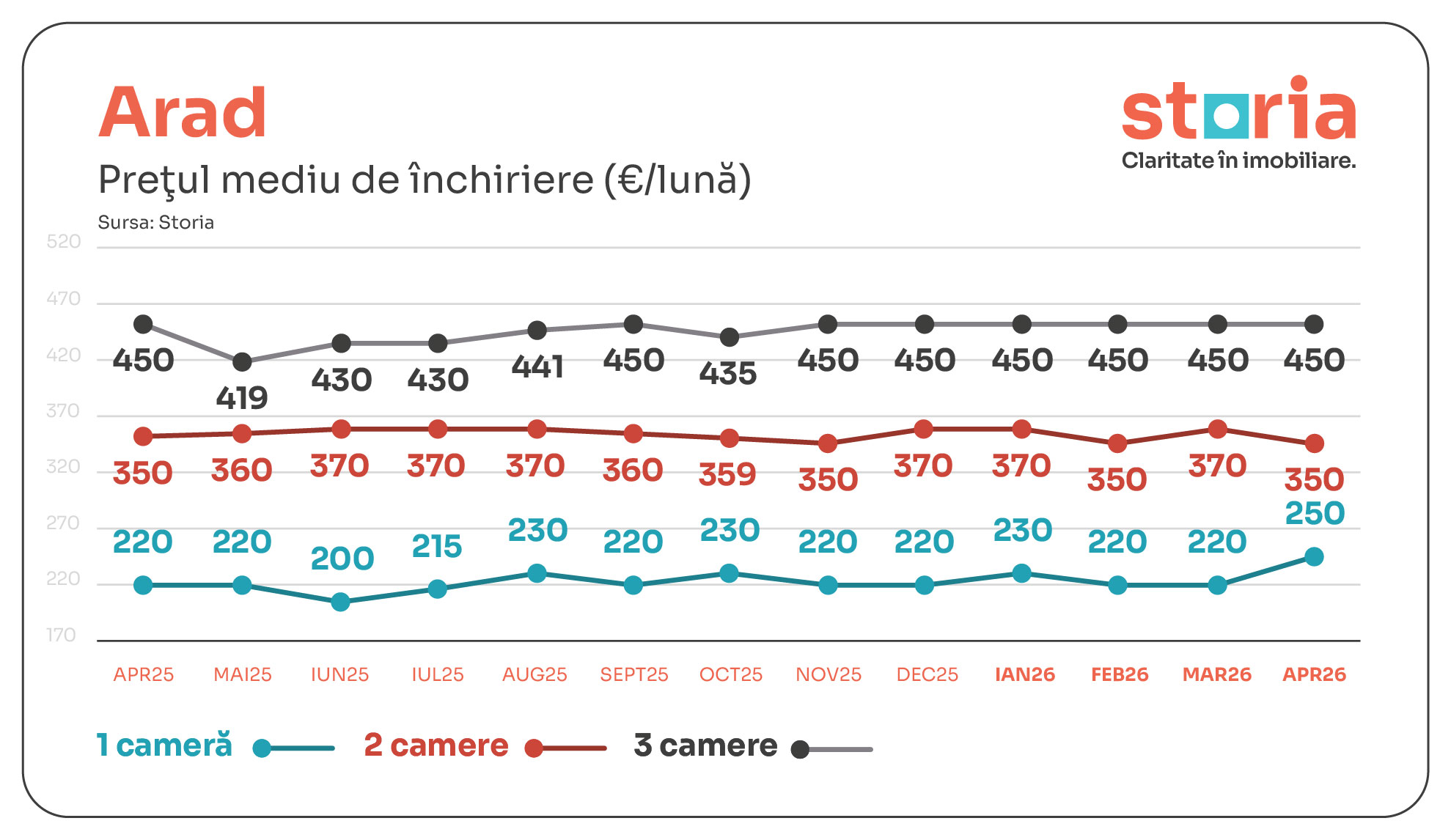
In Aradwhere rents are lower compared to other analyzed cities, studios had an average price of 250 euros in April, increasing by 14% from one year to another. Two-room apartments remained at 350 euros, while three-room apartments remained at 450 euros. Compared to the previous month, the most noticeable adjustments were in the studio segment, which increased by 14% both year-on-year and month-on-month (April 2026 versus March).
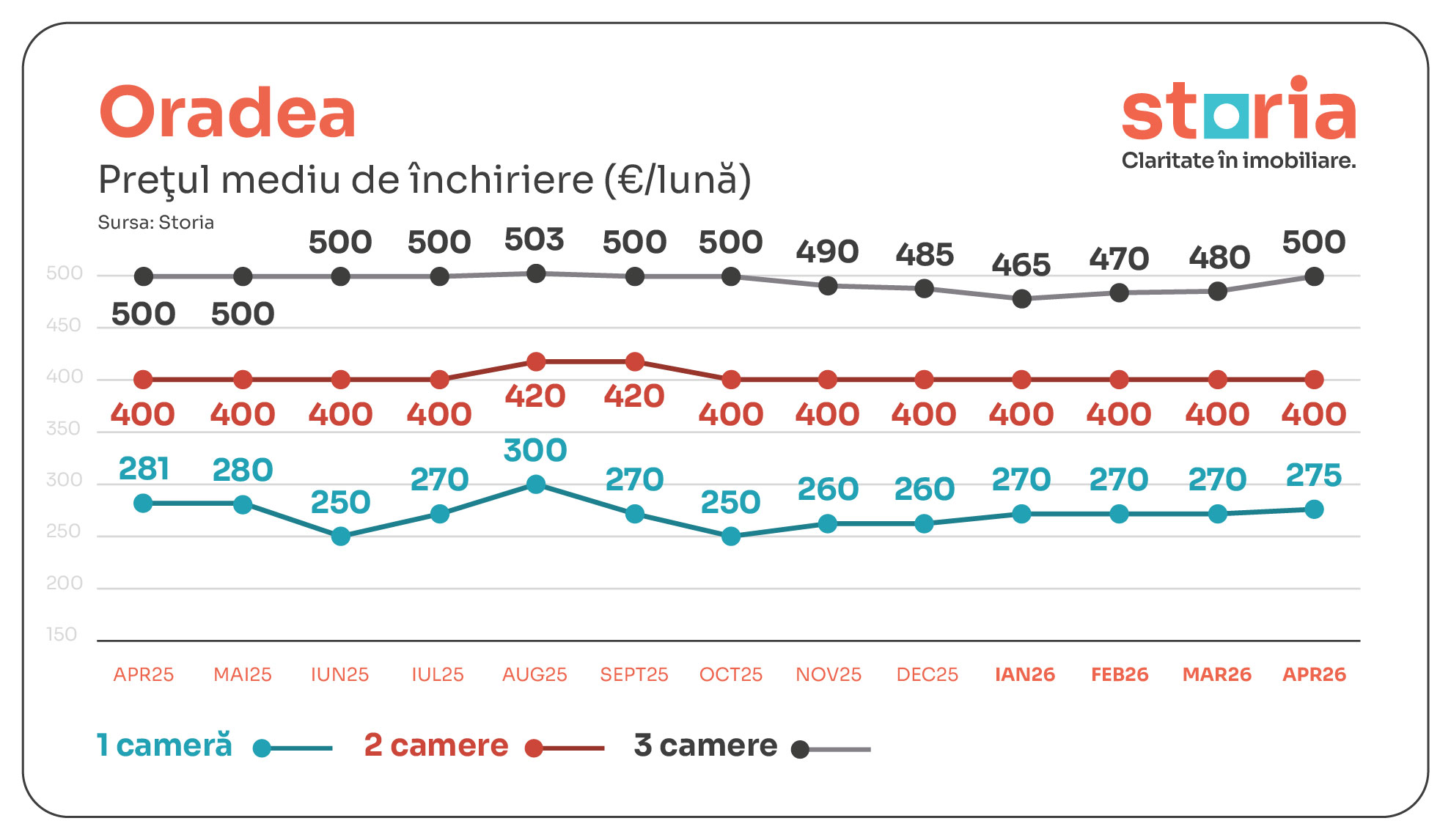
Oradea continues to position itself among the markets with low rents. In April 2026, studios rented on average for €275, down 2% from last year, while two-bedroom apartments remained at €400. For three-room homes, the average price remained at 500 euros, without annual variations, but up by 4% compared to the previous month (March 2026).
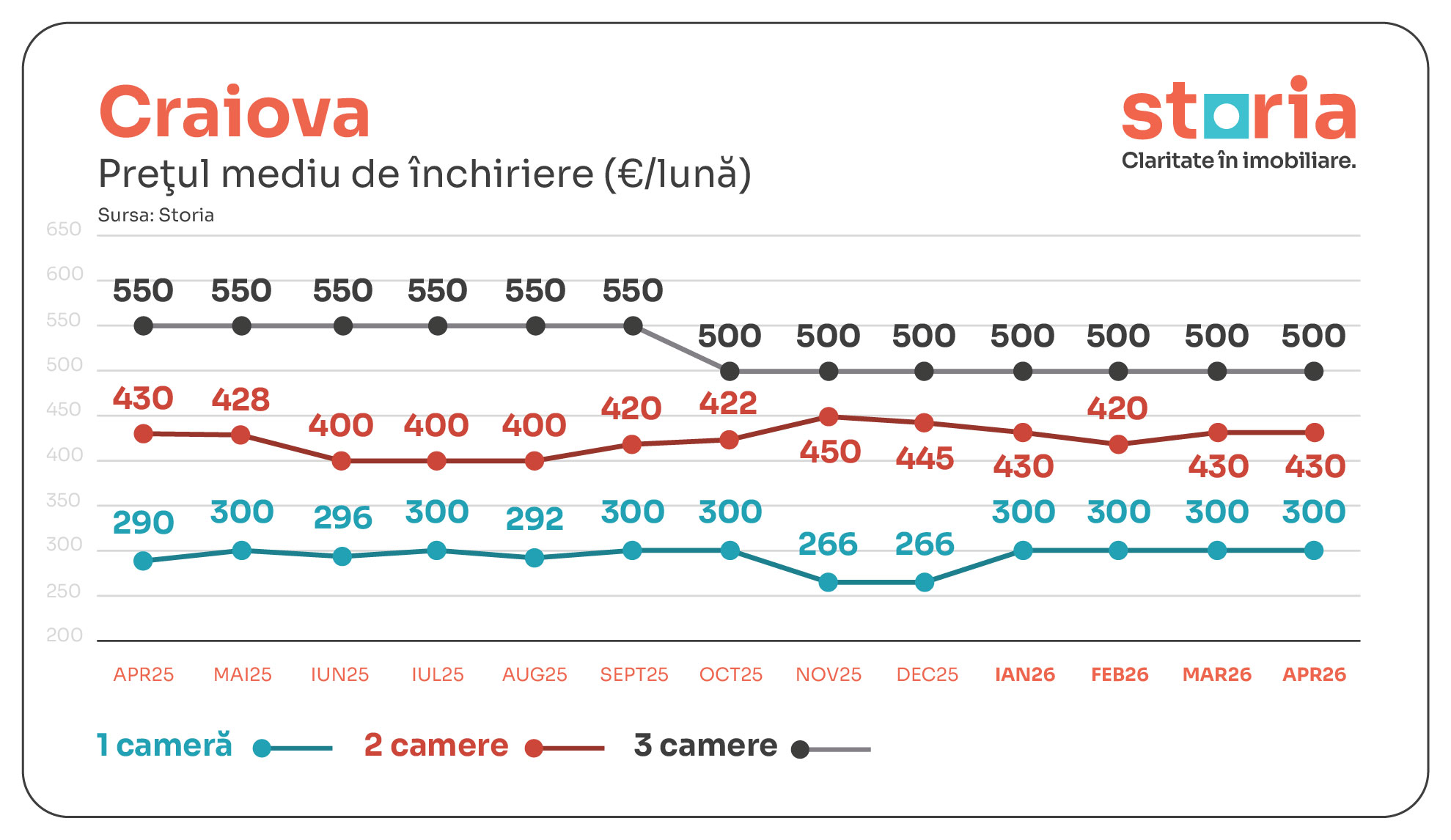
In Craiovathe rent level was 300 euros for studios (increased by 3% compared to last year), 430 euros for two-room apartments (without variations) and 500 euros for three-room apartments. The large apartment segment saw the most noticeable annual adjustment, down 9%, while month-on-month prices remained stable.
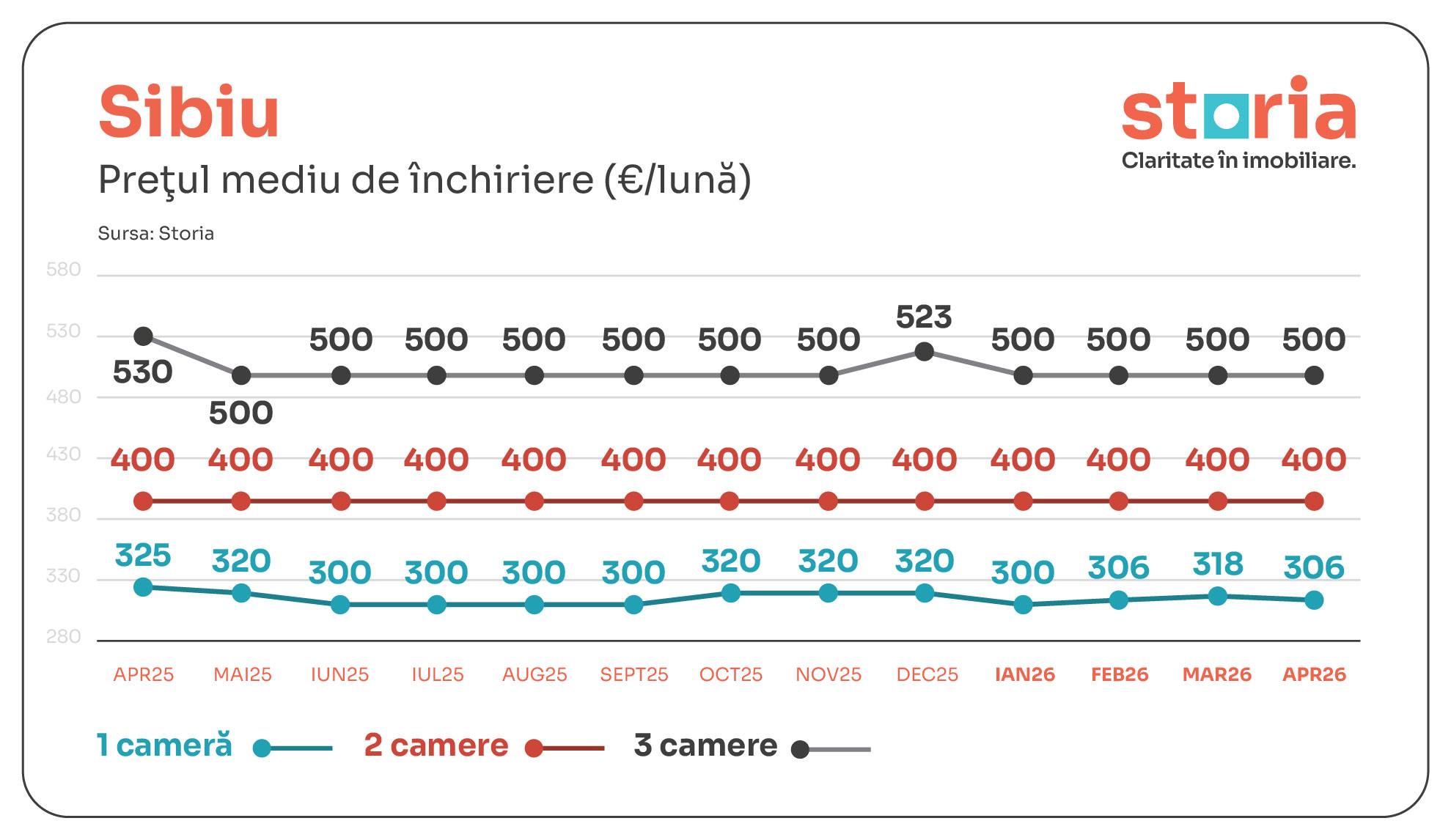
In Sibiuthe evolution of rents from April 2026 indicates a moderation of prices in the studio segment. They were rented for 306 euros on average, down 6% compared to last year and 4% compared to the previous month. Two-room apartments remained at similar levels to a year ago, at 400 euros, while prices for three-room apartments fell by 6% to 500 euros.
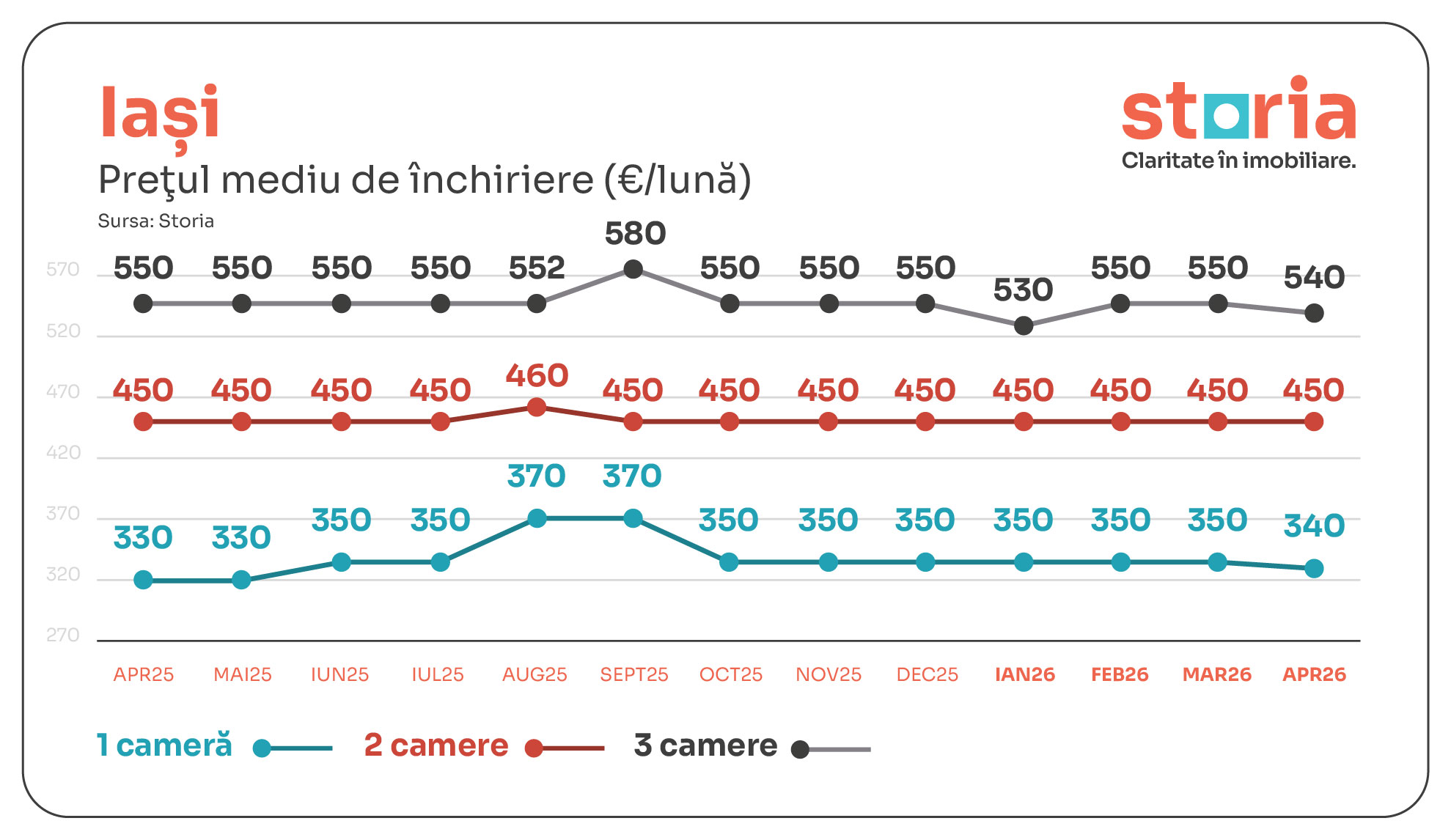
In IASIthe rental market recorded slight adjustments. Studios rented for €340, up 3% year-on-year, but down 3% month-on-month, and two-bedroom apartments held steady at €450. Three-room flats fell to 540 euros, marking a 2% reduction compared to last year, but also compared to the previous month.
What are the main cities with the most EXPENSIVE rents
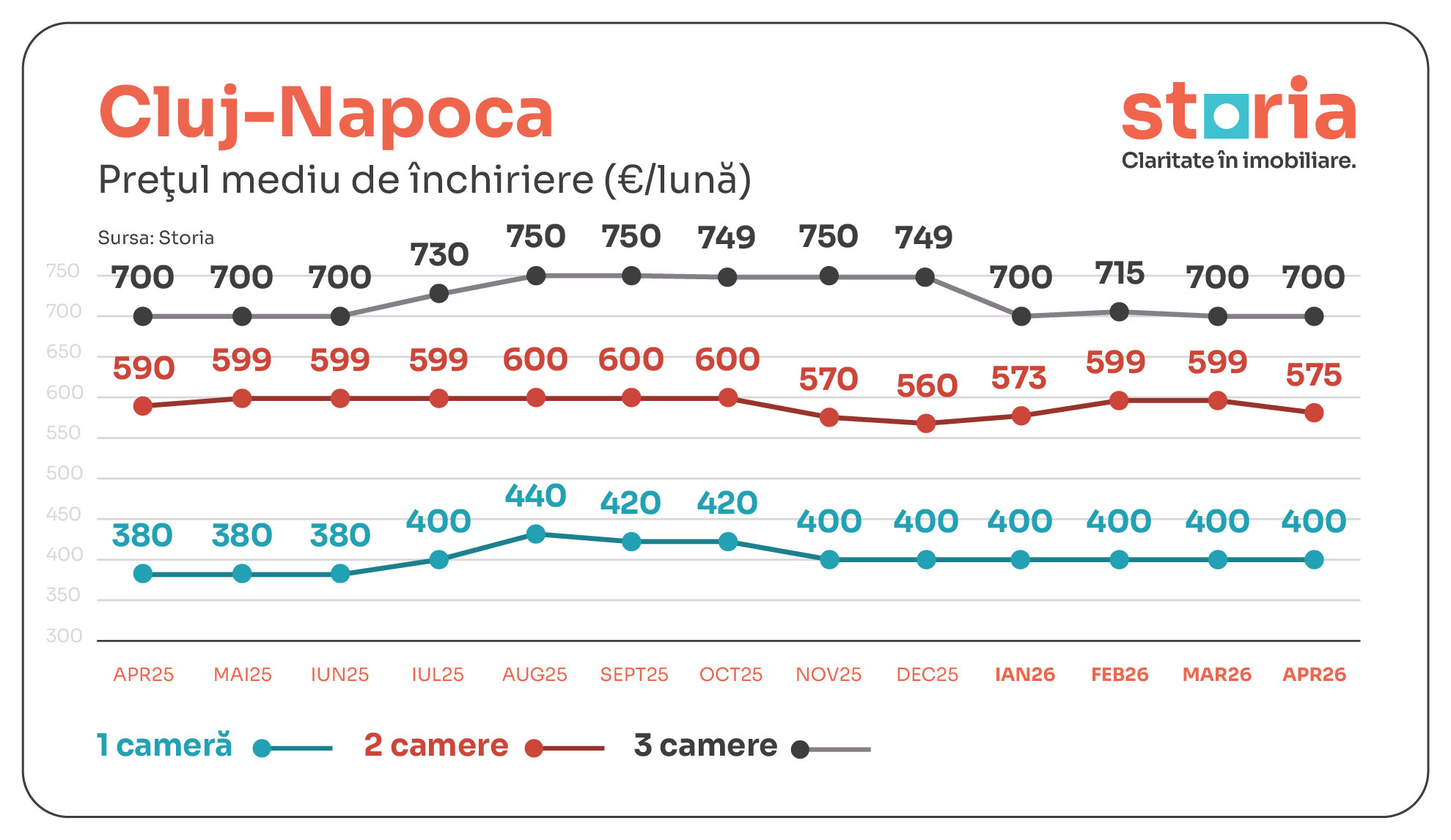
Cluj-Napoca remains among the most expensive rental markets in the country. In March 2026, studios had an average price of €400, up 5% from last year, while two-room apartments reached €575, down 3%. Three-room apartments remained at 700 euros. Compared to the previous month (March 2026), the most visible adjustments in April were in the segment of two-room apartments, where prices fell by 4%.
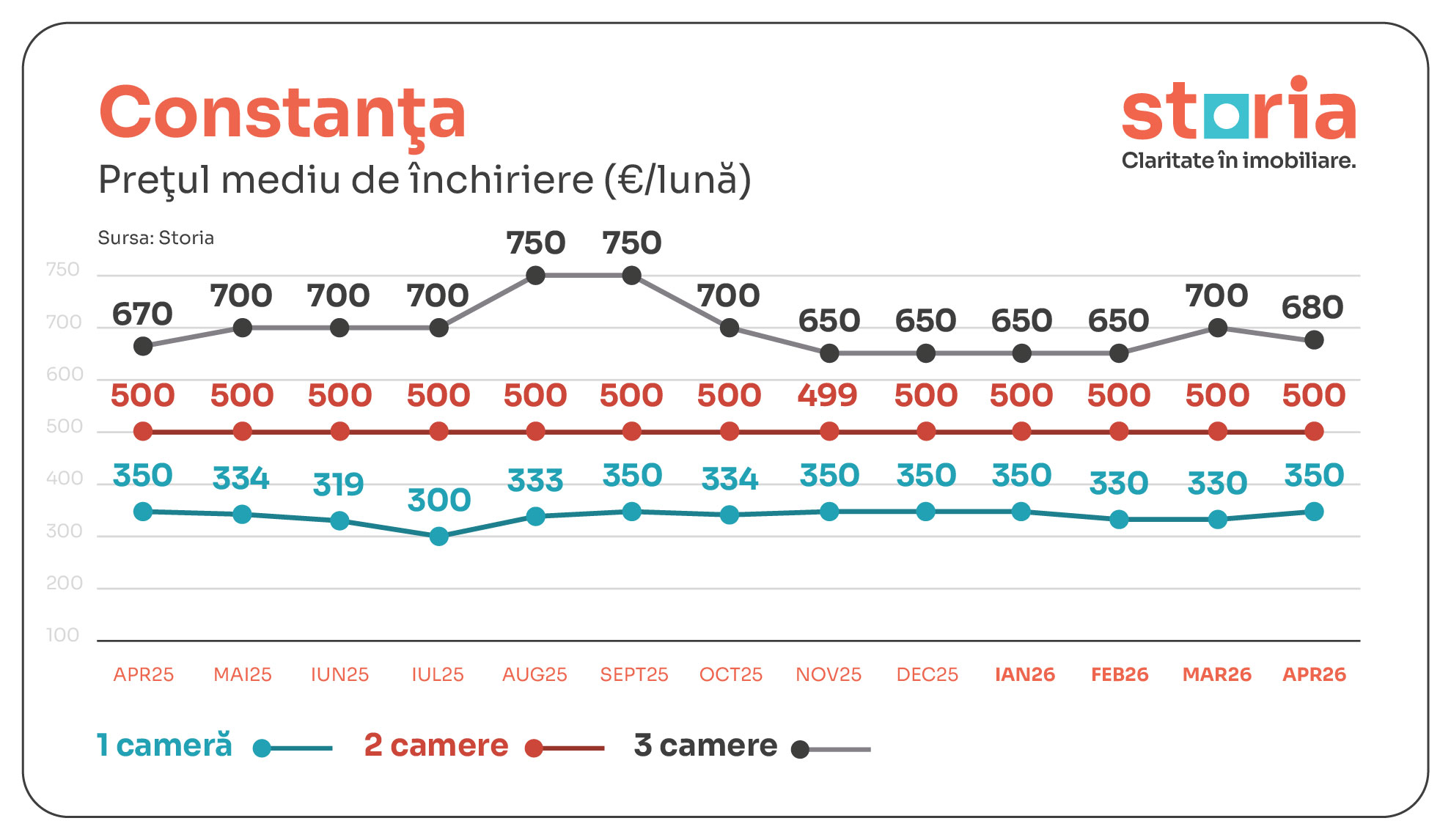
Constant recorded a different evolution depending on the type of housing. Studio apartments had an average price of 350 euros, at the same level as last year, but up 6% compared to the previous month. Two-room apartments remained unchanged at €500, while the three-room segment reached €680, up 1% year-on-year and down 3% from the previous month.
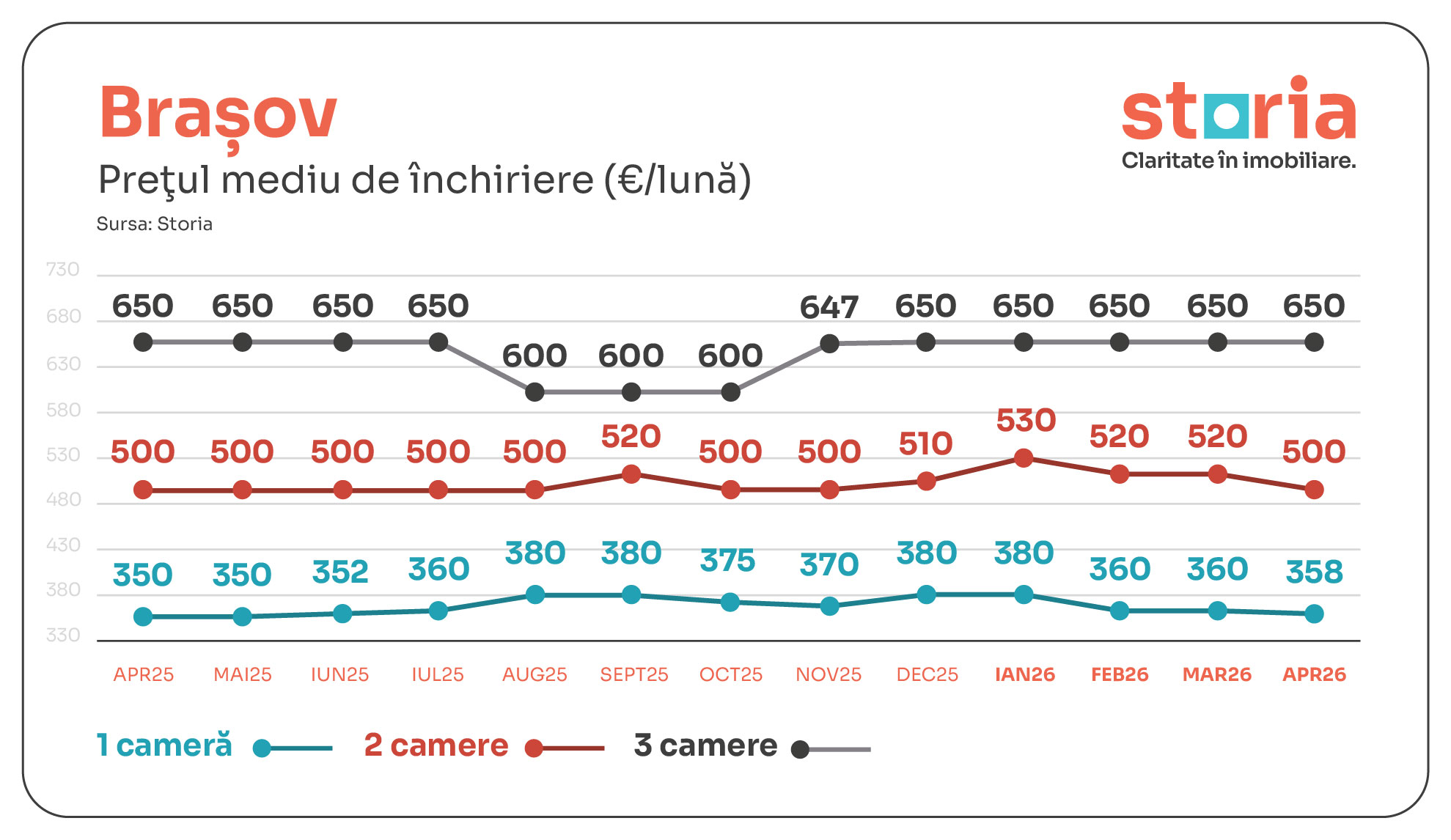
In Braşovrents remained at a high level, although the evolution was mixed. Studio apartments were rented for 358 euros, up 2% compared to last year, but slightly down compared to the previous month (-1%). Two-room apartments remained at 500 euros, and three-room apartments at 650 euros, without annual variations, but with a monthly adjustment of minus 4% in the segment of two-room apartments.
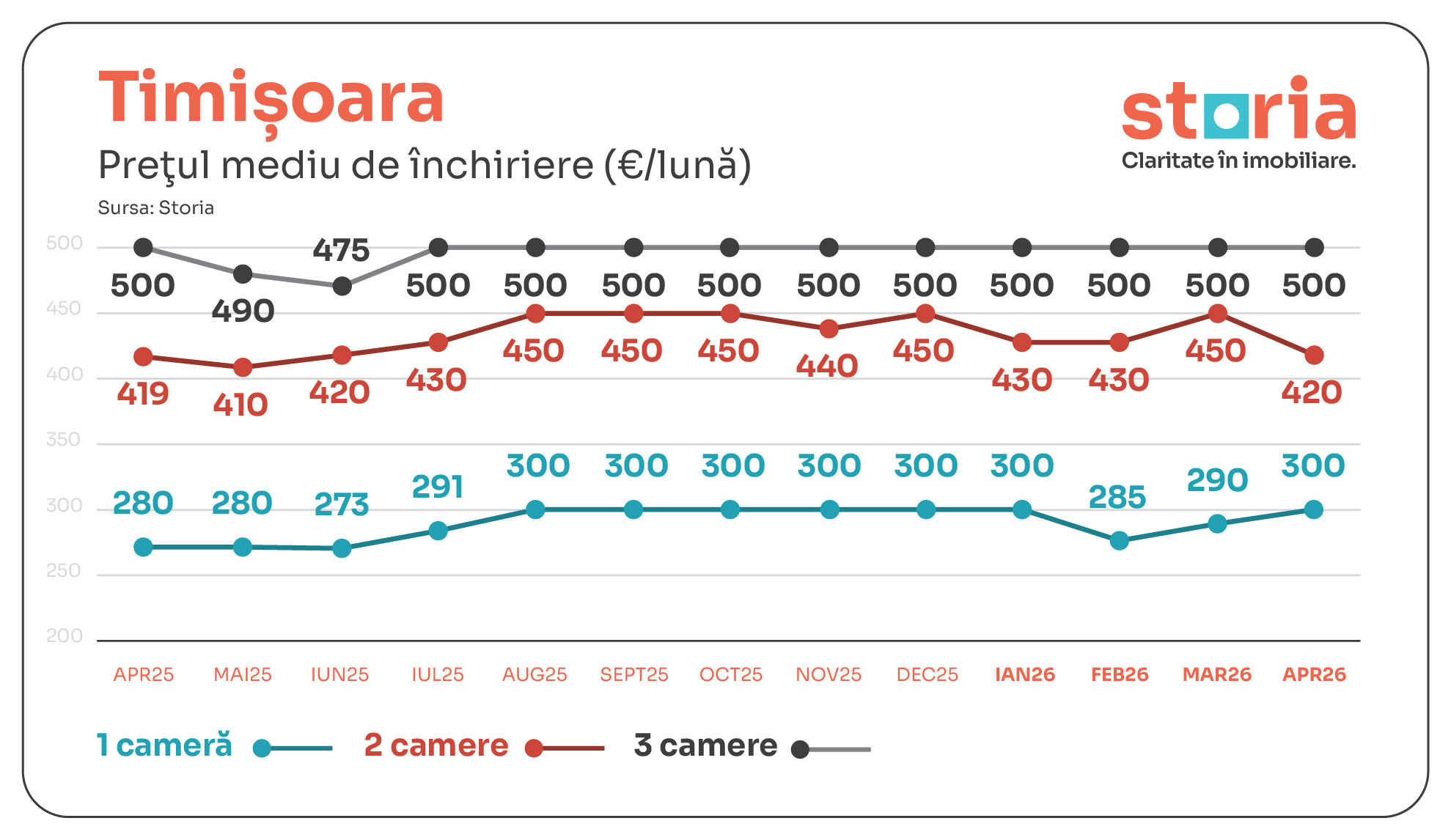
Timisoara remains in the category of cities with lower rents, although the dynamics are different depending on the type of housing. Studio apartments were rented for 300 euros on average, 7% more than last year, but with an increase of 3% compared to the previous month. Two-room apartments remained at 420 euros, the same as last year, but down 7% compared to the previous month. Three-room apartments remained at 500 euros.
***
About History
Storia is the most visited real estate platform in Romania and aims to bring more clarity to the real estate market. It's the place where thousands of owners, real estate agents and developers present their offers. Storia aims to support those looking for the right home by providing tools and valuable information about the real estate market to help them make informed decisions. In 2022, Storia launched a tool that analyzes the quality of life in Romanian neighborhoods. The Storia Index (originally TRAI) provides a score from 0 to 100 for each neighborhood, based on 17 important criteria for Romanians. This includes both objective data – such as traffic, air quality or house prices – as well as subjective perceptions, collected through an ongoing survey of over 110,000 respondents. Among the aspects evaluated are safety, cleanliness, quietness or access to cycle paths. The goal is for people to have a clearer picture of the neighborhoods they live in or are considering moving to.
🏘️ Article supported by Storia 🏘️