Why he supports Europe on Trump, though he doesn't believe Putin. The scenarios analyzed by Brussels


European leaders support the initiative of US President Donald Trump to mediate hostilities in Ukraine, but, according to “Politico, their trust in the real availability of Russian President Vladimir Putin to conclude a peace agreement remains low.
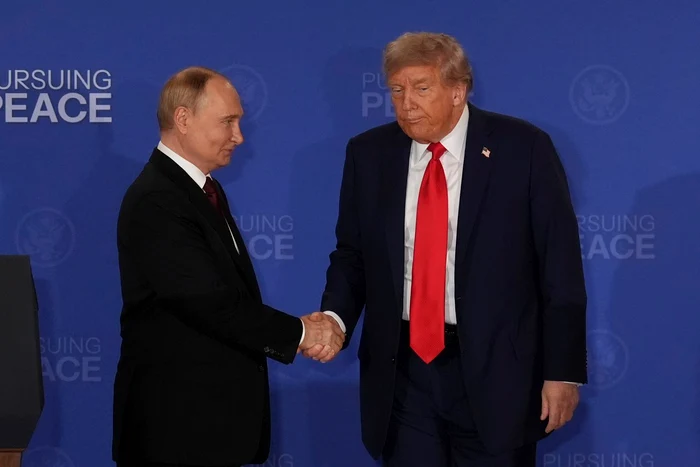
European diplomats quoted by the American publication states that, despite the support provided to Washington's diplomatic efforts, the main objective of EU states is to allow President Trump to reach his own experience, to the conclusion that Moscow is not prepared for a fair agreement.
Two scenarios analyzed in Brussels
According to the quoted source, two scenarios are taken into the diplomatic circles in Brussels: one optimistic, in which the United States obtain a conflict in favorable conditions, and one considered more realistic, in which negotiations fail, which could convince the Trump administration to adopt a more firm position than by Russia, including by re -introducing additional sanctions.
In recent statements, the President of France, Emmanuel Macron, expressed his skepticism in relation to the availability of the Kremlin to conclude an authentic peace agreement. “I do not think President Putin wants peace. I am convinced that he is following the capitulation of Ukraine,” said the French leader.
Requests incompatible with Ukraine's position
Among the requests made by Russia in informal contacts were the transfer of new Ukrainian territories, including strategic defense lines in the east of the country. Also, Moscow rejects the possibility of a NATO presence in the Ukrainian territory, considered by Ukraine a key condition for guaranteeing security after conflict.
These positions were also discussed in an informal meeting of European leaders, convened after recent consultations between Trump, Zeenski and EU leaders in Washington. According to “Politico”, five European diplomats confirmed that most EU capitals share the concern expressed by President Macron and believe that Moscow's lack of flexibility could compromise any diplomatic progress.
Economic pressure, considered decisive
European officials argue that the economic influence of Washington on third parties plays an important role in the equation of negotiations. Specifically, they indicate that, after the introduction of higher rates for India – one of the main Russian oil buyers – Moscow has become more open to dialogue.
Some European diplomats believe that a similar measure applied to Russian-Chinese trade could exert additional pressure on the Kremlin regime. In parallel, existing sanctions are seen as an instrument to be maintained, to provide Ukraine a more solid position in any negotiations.
The war continues, and the format of the agreement remains uncertain
Despite the expression of an opening of principle to post-conflict security agreements, significant questions about their content and applicability remain. For now, it is not clear whether the US administration considers a formalized mechanism, possibly approved by Congress, or a temporary solution, supported by the European states.