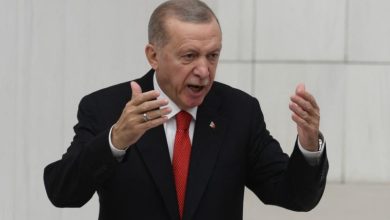
The Kremlin's game with the Zelenski-Putin meeting. What betrays the sudden change of rhetoric of Moscow

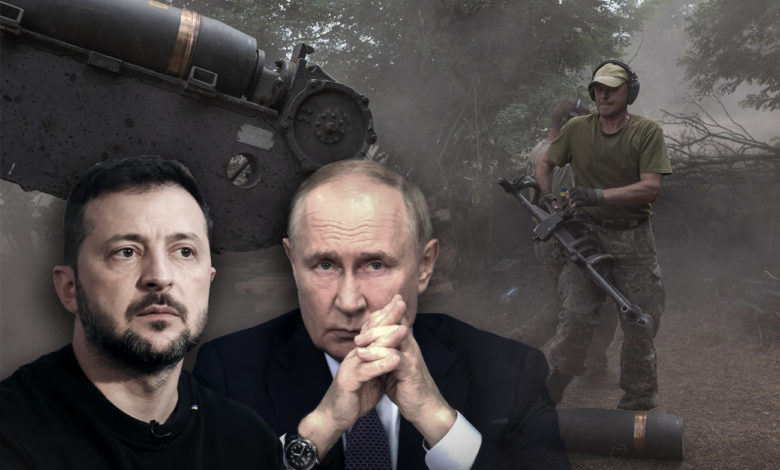
The Monday agreement at the White House regarding the next step leading to the end of the Ukraine war – a bilateral meeting between Russian President Vladimir Putin and his Ukrainian counterpart, Volodimir Zelenski – seemed to be unanimous, between Donald Trump and European leaders who came to the extraordinary meeting organized by the American leader. Then came the answer of Russia.
“The idea was discussed that it would be appropriate to study the possibility of raising the level of representatives of the Russian and Ukrainian parts,” said Iury Usakov, Kremlin counselor, at a press conference, on the telephone conversation between Trump and Putin. But the name of any leader was not mentioned, nor did it indicate who will “representatives” from the next level of negotiations.
The head of Russian diplomacy, Sergei Lavrov, adopted a more conciliatory tone in an interview given on the state television, although he put conditions. “We do not refuse any form of collaboration, neither bilateral nor trilateral, the president (Putin) repeatedly spoke about this,” he insisted. But: “Any contacts involving high officials must be prepared with the most care.”
“The main thing is that any format is included not for someone to write in the newspapers the next morning or to broadcast on the TV in the evening, or to gossip on social networks, in trying to take advantage of propaganda, but to advance step by step, gradually, starting from the level of experts and then going through all the necessary stages for the preparation. stressed the Russian Foreign Minister.
In the language of the Kremlin, this means that the Russians are by no means ready to accept this, writes CNN, in an analysis dedicated to the long-awaited Summit-Zenski, in an attempt to explain why the highest meeting is rather unlikely. And Moscow's refusal should not surprise anyone, notes the American television station.
“Putin washed the brain of the Russians, telling them that Zelenski is a Nazi, so why is he suddenly talking to him?”
This is a war that little at first by the unilateral recognition of parts of the Ukrainian territory (the self -prolights of the Donetk and Luhansk People's Republic) as independent. The Kremlin leader claimed that Ukraine is “an inalienable part of history, culture and spiritual space (of Russia)”, and its separation from Russia is a historical mistake.
Therefore, if this meeting will take place, then-as stated by Orysia Lutsevich, the director of the Russia and Eurasia program Al Chatham House-Putin “will have to accept the failure to sit at the negotiation table with a president he considers a joke from a country that does not exist.”
She also argues that the meeting would be a radical change of tone, difficult to explain to the Russian people.
“(Putin) washed the Russian brain on state television, telling them that Zelenski is a Nazi, that (Ukraine) is a puppet of the West … That Zelenski is illegitimate, so why is he talking to him?”, Says Orysia Lutsevich.
The Kremlin not only regularly plays the legitimacy of the Ukrainian leader, fixing on the postponement of the Ukrainian elections, illegal in accordance with the martial law, but in his latest memorandum of “peace” he asked Ukraine to organize elections before signing any definitive peace. Putin and other Russian officials rarely refer to Zelenski by telling them by name, preferring the “Kiev regime” expression. Also, CNN recalls that Zelenski was the one who traveled to Turkey, in mid -May, for the first direct discussions between the two parties after the negotiations failed since the beginning of the war and until then, and Putin sent a delegation led by an author of history textbooks.
Why does it have little reason to give up
Tatiana Stanovaia, the main researcher at Carnsia Russia Eurasia Center and the founder of the R. Politik project, which offers news and analyzes about Russia, shows that, although Putin does not consider a meeting with Zelenski as a crucial that for Russia is more a confrontation with the West than with Ukraine, it could accept.
“The key requirements must be on the table, and Zelenski must agree to discuss them,” she said in an interview with the American post. So far, Zelenski has rejected these key requests of Moscow, which include the transfer of the territories that Ukraine still controls. But little, she argued, sees Trump as the key to changing this situation.
“Trump is seen as a catalyst for the Russian vision of the conflict resolution and, for this, the United States should collaborate with Kiev to make it more flexible and more open to Russia's requests,” said Tatiana Stanovaia.
The researcher anticipates that Russia could try to keep the US on its side, doing what Usakov suggested and proposing a new round of negotiations in Istanbul, but with a higher level delegation, which could even include Usakov and Foreign Minister Lavrov. But Putin will not risk an “ambush” sitting at the table of negotiations with Zelenski just to find that all his requests are rejected, says Stanovaia.
Trump ended his day by posting on his social network, Social Truth, that “he started preparations for a meeting (…) between President Putin and President Zelenski.” When he woke up and called the Fox News morning show on Tuesday morning, he seemed to have realized that it was not a completed business. “We have arranged with Putin and Zelenski, and you know, they are the ones who have to make decisions. We are 7,000 miles away,” said the White House leader.
Putin has no reason to give up right now. Without having made any concession, he was “rewarded” with a grand summit in Alaska, with Trump's renunciation at the request to sign an armistice before starting any serious peace negotiations and with the withdrawal of all the ultimatums regarding the imposition of even harsher sanctions, CNN considers. After slightly reduced the extent of the night attacks with drones on Ukrainian cities in August, Russia intensified them again on Monday night, launching 270 drones and 10 missiles. If the pressure exerted by Trump on Zelenski has not yet given the results desired by Moscow, there is always the military force to which it can be resorted, the American television station notes.
According to the same analysis, the only unknown for Russia at this time is who Trump will blame when this last peace effort will fail.
Lavrov warns: “A road that leads nowhere”
And on Wednesday, Lavrov made new statements and warned that any discussion about Western security guarantees for Ukraine who does not take into account the position of Moscow will now be taken and reproached the European leaders who came to the White House on Monday to support Volodimir Zelenski to the discussions with Donald Trump that they have to have any idea previously related AFP and Reuters agencies.
“The West perfectly understands that discussing security guarantees seriously (for Ukraine – n. Red.) Is a utopia, it is a road that leads nowhere,” Lavrov told a press conference in Moscow. “We cannot accept that from now on the issues of collective security will be addressed without Russia,” the head of Russian diplomacy said.
According to him, while the United States understands better “the deep causes” of the conflict in Ukraine, from the Europeans “we see only an aggressive escalation of the situation and rather awkward attempts to change the position of the US President” without proposing “any constructive idea”.
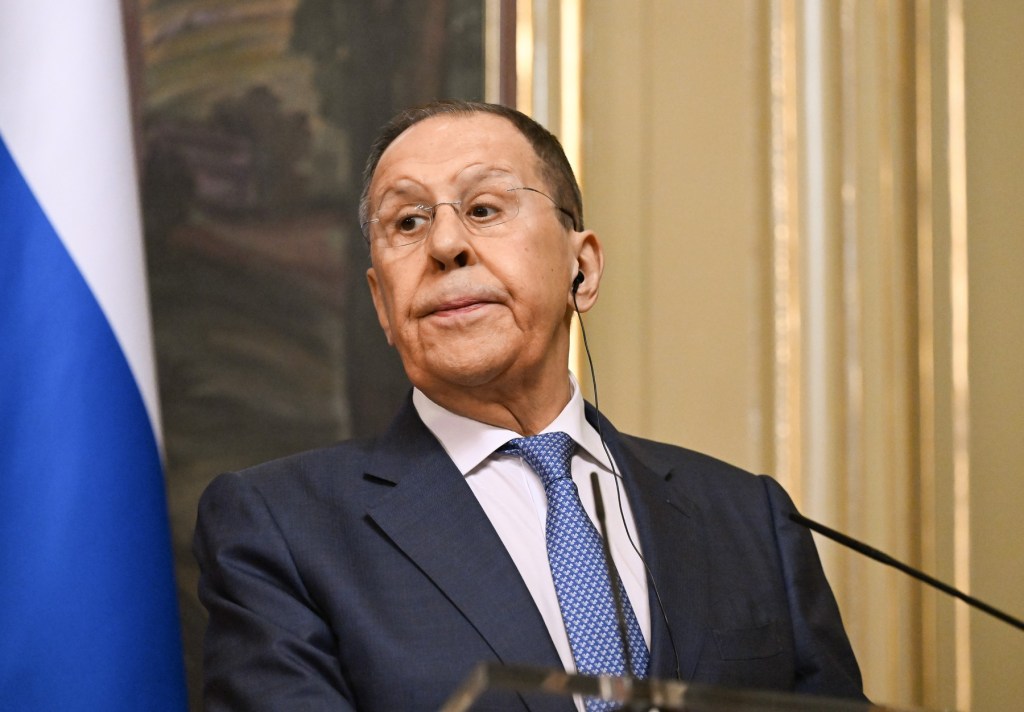 “A road to nowhere.” Russia harshly criticizes the West discussions about security guarantees for Ukraine
“The Europeans, for now, just try to keep the US in the army race”, Lavrov noted, after President Zelenski has proposed to the United States for Ukraine to buy US $ 90 billion in exchange for US security guarantees, according to a document consulted by Financial Times.
However, Lavrov said, this position of the Europeans “totally adventurous, conflicting and belico has no echo besides the American administration”, which in his opinion is to “contribute to eliminating the profound causes of the conflict”.
Answer a question about the idea of security guarantees for Ukraine in the form of conducting in this country of European troops and American aircraft, Lavrov replied that Russia will defend “legitimate interests with firmness and rigor”.
It seems that at the Trump summit held on Friday in Alaska Vladimir Putin president would have given up the categorical opposition to offering security guarantees by Western states, but outside the NATO framework and provided Ukraine gave Russia the entire region of Donbas, but the president of Ukrainian, Agerpres.
Zelenski told the press after the meetings held on Monday at the White House that, in about 10 days, his country's allies will put on paper the form that the security guarantees could take. Trump has not excluded air support from the US for a possible contingent of European troops to be held in Ukraine as a form of security guarantee.
The idea of conducting a contingent of foreign troops in Ukraine is intensely promoted by French President Emmanuel Macron and by the British Prime Minister Keir Starmer, who created at the beginning of the year and a so-called “coalition of volunteers” (or “coalition of will”) made up of sustaining countries of Ukraine and who have been able to participate in such a bodily or of force, initiative rejected by Russia.
After the debates on this proposal had decreased in intensity, the idea has now been discussed with the meetings held at the White House and which focused on security guarantees than on territorial issues, about the latter Zelenski, saying that it would be discussed by Putin only at a meeting, but for a meeting.
Lavrov said at this time that Russia still rejects the presence of a NATO military contingent in Ukraine and warned that it would lead to an “uncontrollable escalation of conflict with unpredictable consequences.”