The mini legendary-authors that have made history throughout the globe. The Romanians could have had Rodica, but they were chosen with Lăstun


After World War II, small cars, with low fuel consumption, became a fashion throughout Europe. Some of these have become iconic models, true stars of the automotive industry.
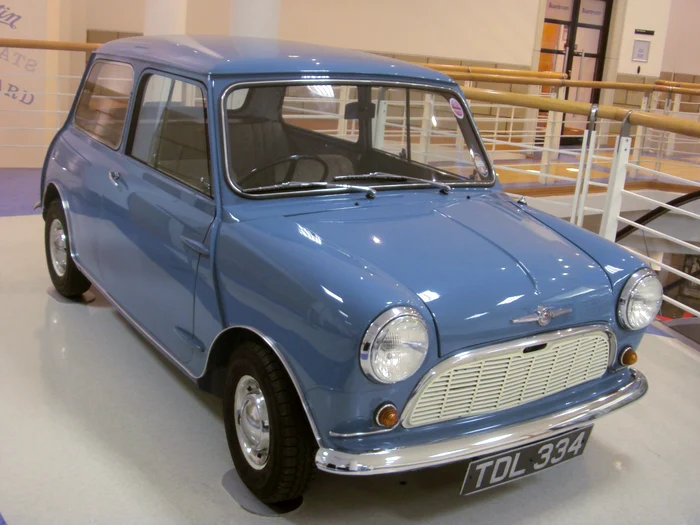
Mini Mark i photo wikipedia
The Second World War has brought immeasurable losses of human lives, but also deep economic damage. Especially on the European continent, but also the Asian continent. Destroyed infrastructure, factories and other bombarded production facilities, compromised crops, are just a few of the effects. The estimates of the specialists show that after the Second World War there were damages of at least $ 4 trillion.
In this context, after the end of the war, the world had to adapt to the new needs of society. The automotive industry was no exception. For a poor population, the expensive cars of the 20 and 30, luxurious and large fuel consumers were no longer a solution. The population of European countries needed more than ever, but at affordable prices. This is how a range of “micro-cars” appeared on the market, ie small cars that respond at the same time to the need for mobility, to the advance taken by the post-war youth, but also to the accessibility and low consumption. Thus, during the period 1950-1960 there were three of the most iconic models of small cars in the history of car. There is almost no man who does not easily recognize them, even today, when car factories have produced remakes at the request of the enthusiasts.
Hitler's “People's car” dreamed of, made the war after the war
One of the most legendary and successful small cars in history was Volkswagen Beetle. It is true, the project was carried out in the 30s, but the international success, “Broscuța” will meet him after the war, in the 50's. It all started with the desire of Adolf Hitler to make a popular car, accessible to the ordinary German. Engineer Ferdinand Porsche proposed to Hitler an economic and interesting model of “car car”. It was the first model of Volkswagen Beetle. Obviously, the name remained. Volskwagen means “the people's car.”
The first batch of Volkswagen Beetle was produced in 1938 in the New Noua factory in Wolfsburg, Germany. In 1939, the production will be stopped, in the Wolfsburg factories, armored cars will be built for war. The production will be resumed only in 1947. The factory halls were destroyed by bombing, but were restored by the Americans. They wanted some practical cars to use in busy Germany.
The production of “frogs” has been resumed. The allies tried to sell the brand without success, so a German has also arrived at the factory leadership. It was about the former executive director of Opel, Heinz Northoff. Without fear and put to work, Northff sets exports to Denmark, Sweden, Belgium and Switzerland. Northoff's zeal for exports is less related to the extension of VW sales and more to attracting strength outside Germany. Sales are strong internally, but the German currency is not worth too much. The factory needs machines from abroad, especially from America, and the holding of foreign currency is essential.
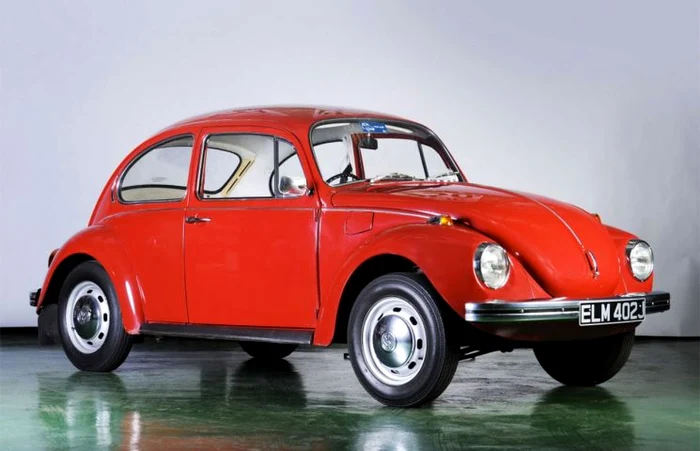
Vokswagen Beetle was making photo photo the truth
But no coin shines green in Northoff's eyes than American dollars. So in 1950 the export begins to the US. Initially, few cars were sold, but then VW Beetle became a global phenomenon. To meet the technical requirements, engineers from the VW factory increase the cylindrical capacity of the engine from 1131 cmc to 1192 cc. Power increases from 30 to 36 horses. Until 1979 over 21 million VW Beetle were sold. Over time their technical qualities but also the design improved. For example, in 1970, VW Beetle had a 1585 cc engine and a power of 57 horsepower. VW production ends in 1974 but the car was already a legend.
British jewel
In 1957, when the world was just coming after the war, the population would receive a new blow. The Suez crisis has made the prices of fuels rise vertiginously. For many people the big cars had almost no sense. The gasoline was again rationalized in the United Kingdom, the sales of large cars decreased. All this time the Germans were hitting with Volkswagen Beetle. In this context, Sir Leonard Lord from Morris company asked for a top British engineer, Alec Issigonis to design a small, efficient fuel efficient car, capable of transporting four adults and can be marketed at a decent price. Issigonis succeeded the impossible and in a small “package” he managed to make some historical innovations in the world of motoring. This is how Mini was born, a legendary car, known to everyone, especially because it was driven by the famous MR Bean film character.
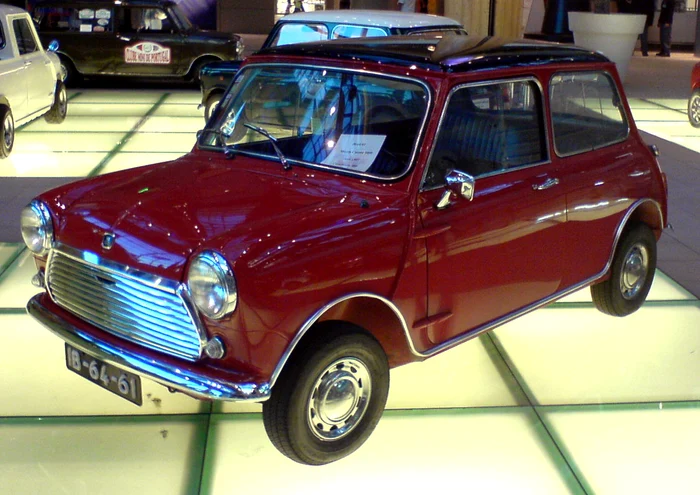
Mini Mark II Photo Wikipedia
ISSIGONIS has managed to create more space inside the body through innovations at the level of the wheel and engine position, giving the car more stability in tight turns and more space for passengers inside. The world had never seen a car like this. And when the first mini was launched in 1959, it quickly became an essence of British automotive culture. The series version of the Mini model was presented to the press in April 1959, and until August, several thousand cars had been produced, ready for export. The first Mini Mark I had a powerful engine for a small car, reaching 1275 cubic centimeters. The Mini Mark II model was launched at the 1967 British car show and had a redesigned grid, a larger rear and numerous aesthetic changes. 429,000 mini Mark II were produced. Between 1961-1971, through collaboration with John Cooper, the owner of Cooper Car Company specialized in racing cars, created a series of mini sports cars. This is the Mini Cooper Mark I and Mini Cooper Mark II. The last mini was produced in 2000. Until given, several variants and models were produced.
A post -war legend
In the same rhetoric and post -war economic necessity, another small, legendary car was born. Known with affection as “Cinquecento”, the Fiat 500, because it is about it, has quickly become an iconic car of the 50-60s. The story of this car began in the summer of 1957, in the middle of the post -war economic boom in Italy. An accessible car, from a financial point of view, was needed. Small, economical, perfect for walking through the city but also for the roads in the country.
So the legendary Dante Giacosa, designed the original Fiat 500 model. A “People's car” in Italy. Small, accessible and extremely practical, it was all the young people from that period needed. Giacosa received the “Compasso d'O hour” award for his design being the first time that this illustrious prize was awarded to a car manufacturer. The first Fiat 500 was under three meters, a two -cylinder engine, mounted on the rear axle, cooled with air. It had only 13 horsepower and reached a speed of 85 kilometers per hour.
An interesting element was the textile hatch, at the ceiling level. This not only reduced the weight of the car, but also maintained the costs at a low level, the passengers could cool quickly, opening the hatch. And the low fuel consumption transformed into an instant success in an era in which each penny mattered. With its design but especially with the fuel economy, the Fiat 500 has become a real phenomenon.
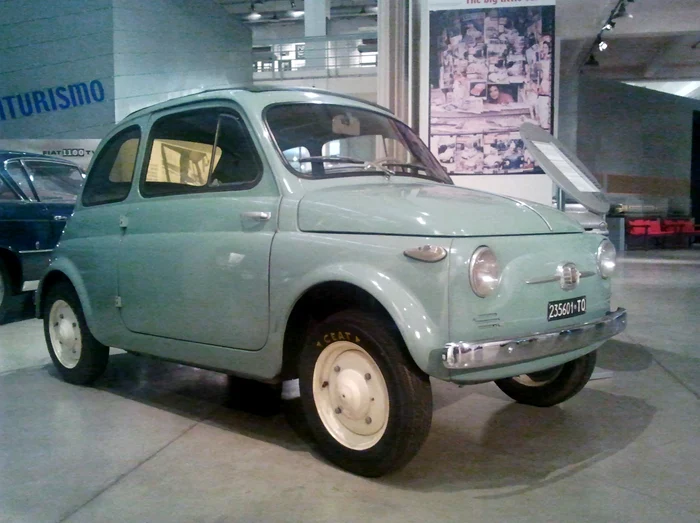
Fiat 500 photo wikipedia
In the 60s it became a symbol of nonconformist youth, freedom and fun, embodying the carefree spirit. In the UK, the Fiat 500 created its own niche. As the British embraced this foreign miracle, it became a favorite of the culture of youth, embodimenting the rebellious spirit of the time. Throughout its production, Fiat 500 has experienced numerous updates and improvements. For example, the 1960 D model 500 D had a powerful engine of 499 cubic centimeters and a power of 17 horses. The production of the Fiat 500 was completed in 1975 after over 3.8 million cars were sold.
We had Rodica, but also the Lastun
In the 50s, in full fever of small, practical, “people” cars, the Romanians also created their own models. For example, in 1957, engineer Nicolae Lucaci from the factory in Brasov produced the Rodica car. That's how he called the engineer's little girl. It was a small car, convertible, with an original design. It had only two places and 13 horsepower. Lucaci created the model and made enough kilometers with him. But the Socialist Republic of Romania was not willing to invest in it. Only in 1988, we had a truly small car, produced in series.
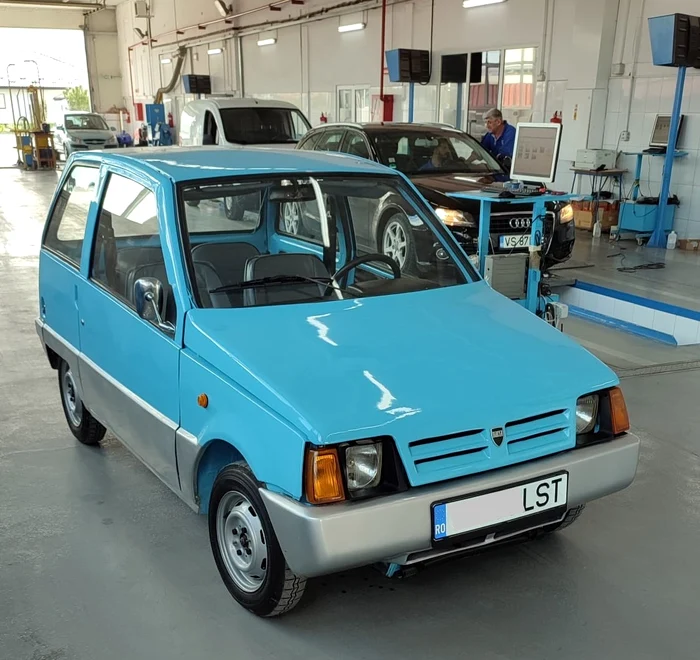
Dacia Lastun PHOTO RAR VASLUI
This is the Dacia 500 Lăstun. The production was made in the former Tehnometal plant in Timisoara, and the first lot was put up for sale in January 1989. It was a car in two doors designed for four people, ie two adults and two children. It had a 499 cubic centimeters and a power of 22.5 horsepower. It was catching a maximum speed of 70 kilometers per hour. It had an enviable consumption, only 3 liters percent of kilometers. The production stopped in 1991.