Special pensions, hard to “kill”. A constitutional teacher explains why justice reform always ranges between two extremes

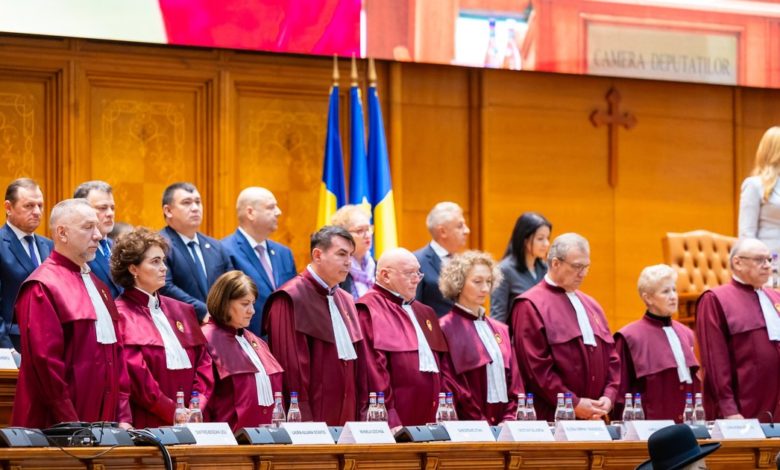
Prime Minister Ilie Bolojan announced on Tuesday a new attempt to reform the special pensions, after in the last 15-20 years there have been several unsuccessful attempts to solve this problem. Doctor in constitutional law and university lecturer at the Faculty of Political Science of the University of Bucharest, Bogdan Iancu explains, in an interview for “Adevărul”, who are the great obstacles to this reform and why have all the attempts so far failed.
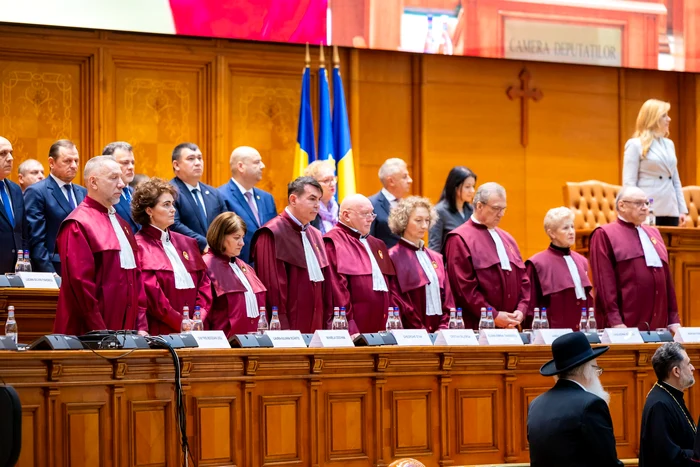
The CCR systematically blocked any attempt to reform the special pensions. Photo: Facebook
Truth: The problem of special pensions was present in the speech of all political parties, but none of them managed to solve it. The Constitutional Court (CCR) rejected, on several occasions, the legislative initiatives aimed at the abolition or modification of the special pensions, declaring them unconstitutional. However, more precisely, what were the reasons invoked by the RCC and to what extent would they be questionable?
Bogdan Iancu: The CCR invoked the independence of justice during the previous crisis, as a supreme argument. At that time, only the pensions of the magistrates were not reached, in the name of the independence of justice (decision 873/2010 https://legislatie.just.ro/public/detaliidocument/11988). At that time, however, this independence and a high level of pay, pensions, etc. They were justified, as well as the functional autonomy of the DNA, as well as the extreme autonomy of the SCM (including by reference to the standard model of the judicial council, which requires 50% magistrates in the councils, not 16 of 19) by the supreme imperative of combating corruption. This was the predicate of all reforms, this was the initial purpose of the entire current configuration. The MCV was still at the beginning then, many things were different. And the conditions were others, 25 years old, 60 years old. Things have changed. Without denying the role of politics, this is a hour in which the magistrates also entered. No one forced the judicial mandarins from Bucharest to settle for tens of thousands of euros coming from Periurban to the center. No one forced many others to increase their emollumes through hundreds and thousands of processes, since 2000, as Mr. Beautiful. Daniel Morar in his book of 2022 (D. Morar, could be otherwise, Humanitas, Bucharest, 2022, from page 558 onwards). They sued and their colleagues gave them justice (so to speak), until they were waging 40%wage increases, initially designed only for prosecutors and judges who were prosecuting, respectively judged causes of great-media or organized crime. It is a sport, as we all know, in which the profession (“power”, as some say) has acquired expertise, agility, in national championships.
Who's guilty
Who bears the fault of these failures: the magistrates or the authors of these “reforms” of the special pensions, made, in the opinion of many, intended in such a way as to fall at the CCR? And obviously, what would be solutions if they exist?
Individuals are not to blame and such an important socio-professional category should not be demonized. Structural deficiencies must be corrected, if and as much as possible. However, the CSM is more and more similar to a trade union organization, less and less with the guarantor of the independence of justice. And that was expected, extreme autonomy leads to forms of corporate, internal politicization, this has been known for a long time. The case of Italy is revealing, so exactly the model system for judicial self-government. Such forms of self -omization inevitably come into conflict with classic representations regarding the role of the judge (“power in a certain null sense” says Montesquieu, explaining why: “only the lawyer of the law”, neutrals, apolitical, impartial). It is not possible with payments in the chain, and with big pensions, and with daytime, and Tiktok. Too many get headaches.
What solutions, apart from changing the law, could exist?
I don't see what solutions can exist at the moment. Recruits can be done, either “lateral” or through INM, only at the first degree of jurisdiction, to judges and prosecutor's offices. However, this problem should not be solved in ethical-moral terms, but according to the structural conditions. Any man in all minds, if he has a choice between a relatively good salary, but very often improper conditions plus publicity campaigns and legislative insecurity, on the one hand and a quiet life with a higher pension, on the other, will opt for the second version. The magistrates should not be deified, nor demonized, a structural problem and should be treated more balanced, cold.
As it is in the normal world
Romania, a member country of the European Union, fails to solve the problem of special pensions for so many years. What is the situation in other EU countries?
In Germany, a judge of Amtsgerichttheir court, has a salary income of 4,472 to 4,820 euros (differs from Land to Land, the smallest is in Turingia, the largest in Baden). https://www.beck-stellenmarkt.de/ratgeber/legl-career/zahlen-daten-fakten/so-st-ver-verdienst-im-richterlichen-Beruf increases by promotion to the end of the career, but not over 8,000 and something, the highest step, the highest growth. The average net salary on the economy in Germany is about 2,700 euros.
A lecturer (Juniorprofesor, teacher W1, can be paid for a little better, in Bavaria 5,538 https://www.academic.de/ratgeber/gehalt-prESsor-prESsorin-bayern).
German judges retire at the age of 67, with pensions that cannot exceed 71.75 % of salary and bonuses (according to the law on salary of civil servants and judges,
https://www.gesetze-im-internet.de/beamtvg/bjnr024850976.html ). To the maximum it is reached by multiplying 1.79375% by 40 years of activity. The pension is diminished if the judge is anticipated to the pension (they do not have “magistrates”, their prosecutor being as part of the executive), by 3.6% per year.

Bogdan Iancu. Photo: personal archive
I mention again that there are no striking discrepancies between professional categories in the public sector. Not only certain categories are learned that they are “the fastest and most righteous of the Thracians.” At the moment, returning, a Romanian judge from a small court, with the “definitive” just taken, receives a higher salary than that of a university professor at the end of career, a professor who retires at 65, not at 48. License, it can still be retired.
Justice reforms are cyclical
Is there a risk that in the next 35 years, how much has elapsed from the Revolution and until now, the problem of special pensions will remain the same in the air?
In the doctrine, there is an interesting study that shows us that the reforms of “justice” are cyclical, from extreme independence to extreme addiction. We never find our balance, nor do we tend to it. The tendency should come from Elite and ask the amateurs to see what the average level of preparation of the Romanian elites during the construction of the modern state was. In PNL, let's say. Studies exist.
The great obstacles in the way of Prime Minister Bolojan
Prime Minister Ilie Bolojan is still optimistic, and today (no – Tuesday July 29) has officially announced how Reform in this areastarting from the fact that the magistrates will retire at 65 and that they will have a lower pension than the salary. However, the provisions of the law would apply only in the future, not for the pensions that are paid, so that the law will have a chance to pass by the CCR. To what extent the magistrates who only retire will only be able to admit discrimination from those previously retired and get the long -awaited cancellation again?
I cannot foresee what will happen, in a normal world it is not possible at all what you ask, let me answer you indirectly. In normal worlds, no unconstitutionality exceptions in 2019 are unexpected to be resolved in 2025 – I refer to the recent decision on ANI, on behalf of the right to private life of the public person. In principle, non -retroactivity finds its very important meaning mainly in the matter of criminal law, except for the well -known criminal law more favorable to the perpetrator, who retroactively or ultraactivates, as the case may be, in all liberal systems. I can give you many exceptions from the principle of non -retroactivity in subjects other than criminal law, in seated and respectable law systems.
In principle, any rule establishes distinctions, the norm comes from Latin, the carpentry echo was the norm, it used the carpenter for cutting the wood at right angles. Not every distinction discriminates, if so we had no rule. I do not see what discrimination was when a prosecutor in DIICOT or DNA and a criminal judge at higher courts received an increase that their colleagues did not receive. What is the great risk when you deal with divorces or simple theft, not great corruption or clans? Why does the distinction discriminate you? He was considered, not disinterested in us, that he was discrimination. All legal norms and concepts operate only under the premises of the existence of a relatively stable context, the understanding of some distinctions, the preservation of some hierarchies, a common sense or a common sense. With ignorance and especially with bad faith, they can be interpreted in all ways. I have already seen magistrates who were cutting and lightning against the MCV while in force, now I say that wages and pensions were MCV recommendations, others who quote some species of the truncated Court of Justice, only with what they are.
Could we expect a wave of retirements among the magistrates, now that this law has been announced? What would be solutions in this context?
This is the big problem, which I do not know how they will solve. Recruits can be made, either through INM or by competition, only at the base of the system. I don't understand how they want to replace the output outings.