
What is the connection between the color of the cat and its temperament. The researchers discovered a new color – “Salmiak”


Cats are certainly creatures that arouse curiosity every time, there is a connection between the color of the fur and the personality of the felines, according to specialized studies.
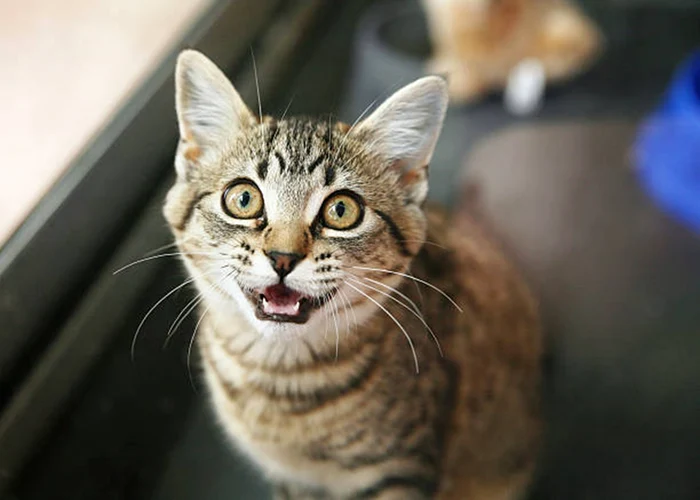
The letter M on the forehead is specific to tigered cats
Cats that have a simple color, such as white, black and gray, differ from the others through their docile temperament. Although the black ones have been treated differently throughout history depending on each culture (for example, in the UK are considered to be a sign of luck), cats with one color are considered to be among the most loving and playful.
What is even more interesting, white cats with blue eyes are prone to hearing problems, even its lack. In the case of black cats, they can only have 100% this color if both parents are black. If one of them is not, then it is possible for your panther to have red tones when taking a bath in the sun or having a lower or lighter color fur, writes Joyfurpets.com
Tuxedo
The black cats with white, or Tuxedo (from the “costume”, because they appear as if they were dressed “to the costume”), are characterized by their unexpected curiosity and by the fact that they are considered confused! Tux cats are common, and they are considered to bring wisdom and luck in the family. We must admit that they are elegant!
Tabby
Tabby (or tiger) cats have many color variations, from gray-blue, gray to red (ginger tabby). What is characteristic of them, despite the different striation models, is the shape of the forehead. It is the most common type of fur and their playful and affectionate spirit is well known! Did you know that, from a genetic point of view, most red cats can only be male? It is a rarity to meet or live with a fluffy red girl!
Tortoiseshell (tortie)
A type of color that is often confused with Calico cats, but there is a difference between them: Tortoiseshell (or torture) cats contain only 2 colors (rarely 3), and predominant is the black color. Although it seems to be made up of fur pieces, the torture cats have an adventurous and mystical spirit, being a less common color.
Calico (Tri-Colourur)
Calico (or Tri-Colourg) cats are fascinating in that they have 3 colors. In order to be considered a calico, they must have an almost equal division of colors throughout the body (so a white cat that has only the colored tail does not fit this category).
Like Torties, they are considered to be lovers and love adventure from all points of view. What is even more fascinating, they are the opposite of red cats! Most of them can only be females, because only they can have 3 colors genetically. When a calico male is born (very rarely, but it happens), it is generally sterile from the beginning.
We all met Burmese fur and Siamese. These are fascinating through their fur-they are black on the botic, ears, tail and lab, the coldest extremities in their body, as long as they are white-beige. They are considered to feel the most comfortable in their boxes, where they feel safe and should not face the outside world. Although they are curious from mother nature, they will never venture very far, being more attentive to everything around.
The researchers discovered a new color – “Salmiak”
This beautiful shade of black, white and gray, named after a popular snack in Finland, where this fur color has begun to appear more often, is due to a hair that is black at the root, but becomes whiter to the tip. The fur of this type was first observed in 2007, and in 2019, it was brought to the attention of a group of Feline experts, led by geneticist Heidi Anderson, according to popular Mechanics.
The researchers initially assumed that this new color variant was only an interesting manifestation of the gene responsible for the “dilution” of the color, that is for the appearance of white in fur.
From a technical point of view, cats exist only in two basic colors: black and orange. Any other color is either a combination of the two, or an faded variant of one of them (no caused by the dilution gene), or both. So, when the specialists began to observe cats with fur “salt and pepper”, the natural assumption was that they represent a new and interesting expression of the dilution gene. Add a little more white than usual to a black cat and you get “salt sweet wood”.
But, after analyzing all the known genetic variations that control how the dilution gene affects the color of the fur, the team has not found anything conclusive. So they went to the following step: they sequest the whole genome of two of these special cats and researched the entire amount of genetic data to discover what determines the emergence of this new type of fur.
It seems that the answer was in what was missing. “There was a large piece in the Aval of Gena Kit sequence,” Anderson told New Scientist, referring to a known gene for affecting the white models on the fur of animals. And these cats simply … they lacked a piece of DNA in the area.
After testing 181 cats to ensure that they understood correctly what they observed, the team managed to confirm that the missing genetic sequence was, in fact, responsible for the color of Salmiak type fur. And the mutation is a recessive one: the cat expresses this color only if it inherits the mutation from both parents, which explains why this shade is so rare.


