Romanians take their first home credit at 36, until then with their parents. The Spaniards take their first credit at 41, and the Belgians at 27


Adrian is 24 years old, works on a multinational IT, and although he still wins well lives with his parents in a 3-room apartment in Bucharest.
He has no big expenses, his mother cooks, shopping and washing her clothes.
He says he wants to raise money to buy an apartment, but at the same time “who knows, I will leave the country at some point.”
He does not want to make a home credit, especially during this period from a fiscal point of view. He hopes to lower the prices of the apartments, to fall the real estate market. No one hurries him, talking to him.
There are many other fellow citizens who delay to leave home for up to 30 years, in men, and 25.4 years in terms of female, according to Eurostat data. An explanation may also be the fact that they marry earlier.
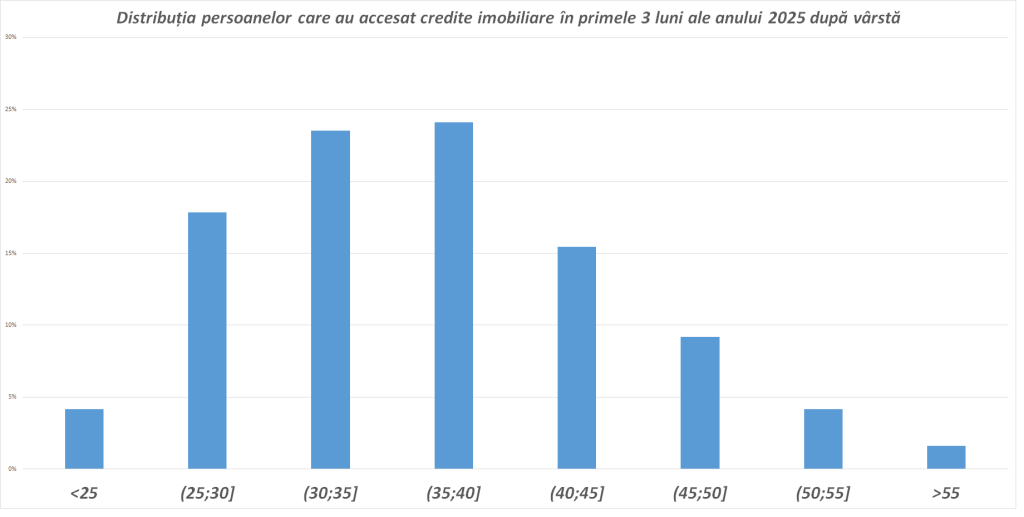
The average age at which Romanians make the first loan at the bank has increased slightly, reaching about 36 years, shows the data of the National Bank, transmitted at the request of HotNews. In Europe, the average age at which people take the first mortgage loan or buy a home is about 34 years, with big differences between countries.
Belgium: The youngest buyers, the average being around 27 years.
France and Austria: The typical age is around 31.
Germany: The average age is 34 years.
Romania: The average age is 36 years.
Spain: Those who buy the first home are often about 41 years old.
USA: Those who buy the first home are often about 36 years old.
Age tends to be older in southern Europe, where many young people live with parents until the beginning of 30 years.
The terms of repayment of mortgage loans are generally between 20 and 30 years, so most payments end shortly before retirement age.
It is right, the credit conditions, salaries and housing prices differ between countries, but the National Bank has calculated that To buy a two -room apartment in Cluj you work as much as you work for a similar one in Vienna.
For the purchase of a 55 sqm home without contracting a real estate loan, about 12 years in Vienna, almost 18 years in Prague and around 15 years in Budapest and Warsawthe NBR data shows.
In contrast, in counties like Giurgiu, the indicator does not exceed the value of six years
Therefore, Europeans usually take the first mortgage loan at the beginning or middle of the age of 30, but the national average varies from the end of the 20s (Belgium) to over 40 (Spain), depending on the local market, social norms and economic situation.
That's right, some young people try to take their lives on their own but lose their advancement because of economic crises and return to parental home.
25 years ago you needed 66 salaries to take a studio. Today you need over 70 wages
Access of young people to one home decreases from one generation to another. If we take the example of 2000, the average salary was 2,139,138 lei, and one euro was worth 20,300 lei. In other words, expressed in euros, the average salary was 105 euros. A studio in Titan was about 7,000 euros in 2000, that is, just over 66 average net salaries.
The National Bank calculated the time required to purchase a 2 -room home (55 sqm), without taking into account the subsistence expenses or saving and without financial support from banks.
The highest level of the indicator is registered in Cluj county, where about 11 years (132 months) are required for the purchase of a home.
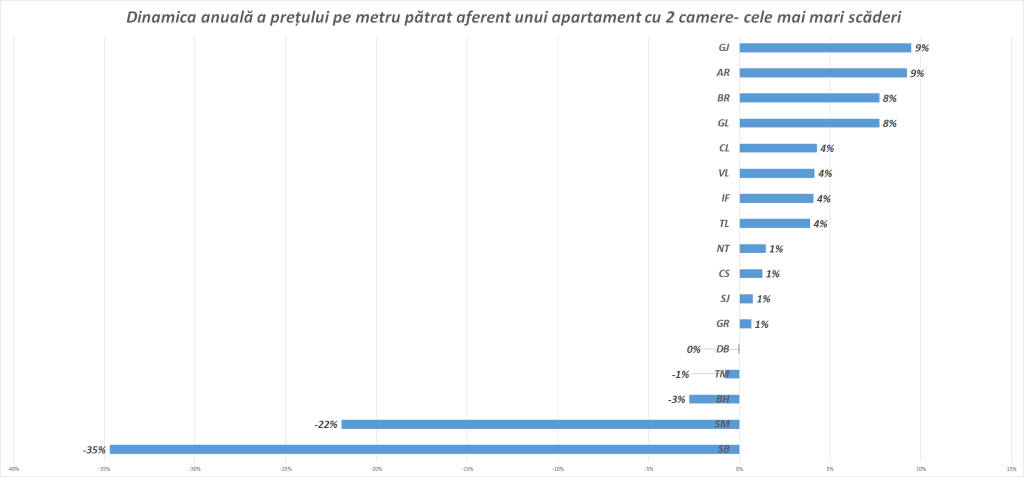
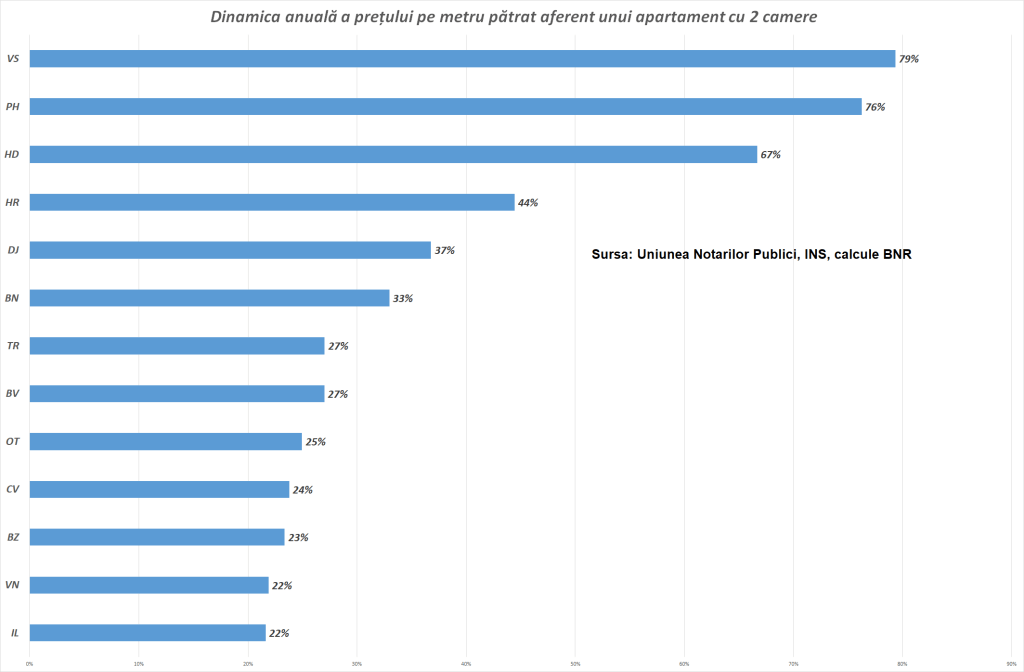
In Romania, there are big differences from one county to another in terms of real estate prices. In some counties the prices fall, while in others they grow steeply.
The BNR calculated the evolution of prices on each county. In Sibiu, the low prices most. Source: Union of notaries public, INS, BNR calculations.
In others, prices exploded:
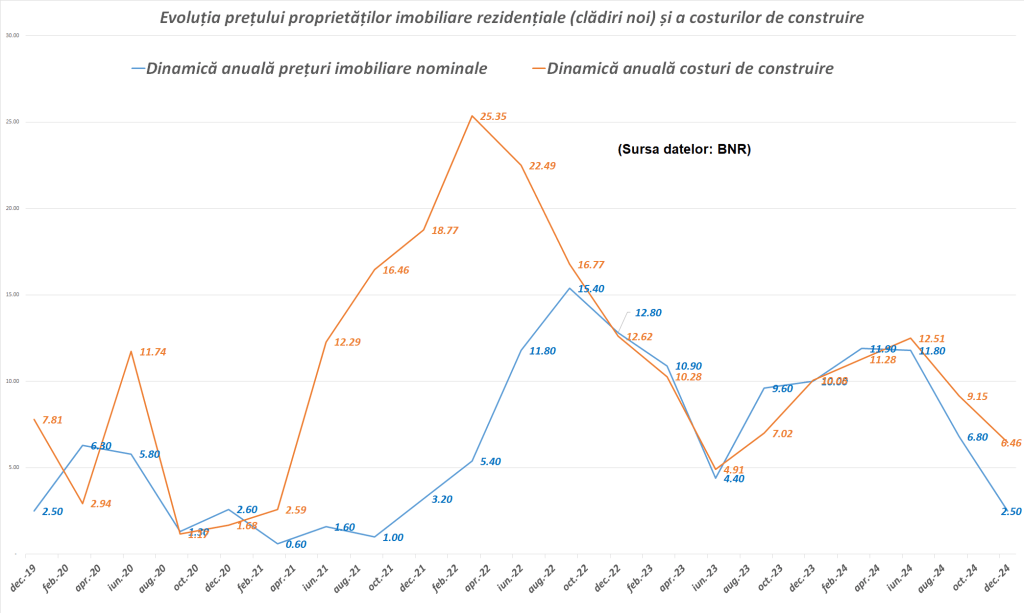
We are now in a period when construction costs increase faster than the prices of the apartments, but there have been periods when things were back.
Daniel David: The state in the parental home for a long time can have both positive consequences – strengthening intergenerational ties and negative consequences
The young people in the generation called Bumerang- those who go to study and then return and live with their parents because they have not been able to gather their money to start on their own in life. And they can not even stay alone. “These practices appear in both the youngest of the X generation and those in the Y generation (millennials). The main cause is the economic one. To the millennials can be added a psychocultural component, related to the fact that the independence/character is slightly lower than those of the X generation, so that such a practice is easier to accept. Intergenerational -as well as negative consequences: pressure on parents, postpone the psychological autonomy of children, depressive/anxious states of those obliged to give up initial autonomy, etc.) ”, explains for HotNews.ro Psychologist Daniel David, Rector UBB and the author of the” psychology of the Romanian people “.
For many young people the adventure of entry into life on their own ends quickly due to lack of money. At his 26 years, Andrei P. had moved with his friend in rent. They both had jobs and it seemed that everything was going well. Only, after about a year, Andrei lost his job and the financial burden remained on the shoulders of Izabele. She was paying the rent, she paid the phone bills, she bought the food.
Moving back to parents has consistent mental costs for both young people and their parents.
Andrei was looking for work but he didn't want anything. After another year Izabela set her foot on the threshold. Either he takes his first job offered, or leaves. Proud, Andrei rang his parents who were of course, received him back. Moving back to parents has consistent mental costs for both young people and their parents.
“Not only young people feel worse, but also parents, as they (who are already 55-65) are part of a generation who wants and knows how to enjoy” second youth “, as the return of children is felt as a kind of invasion of the won,” explains Maria Voinea, a specialized sociologist.
That's right, there are extreme situations: a couple from New York has resorted to the courts to convince his son to move to his house. The parents gave their (30-year-old) boy, after he refused all the proposals to leave the family's home, the BBC note. The documents showed that Michael Rotondo moved to the family's house eight years ago, and during this time he did not pay rent or helped in household activities. Moreover, when his parents offered him money to move, he ignored him.