“The End of the International Order.” Why Trump's Aggressive Greenland Strategy Raises Fears of NATO's Death


If America were to absorb Greenland, either by force or otherwise, the resulting crisis could destroy European confidence in Article 5, the mutual defense clause of the North Atlantic Treaty Organization, at a time when allies should be focusing on the Russian threat, said several analysts and former or current officials, cited by The Economist, New York Times and Financial Times.
Donald Trump's aggressive strategy on Greenland directly hits NATO's cohesion.
EU officials are now discussing how to respond to threats from Washington, which has promised additional tariffs against some European states until Denmark agrees to cede the US president's coveted Arctic island.
A trade war seems likely, with neither Denmark nor its European allies showing signs of giving in.
And the stakes for NATO are enormous, several voices have emphasized, including German Defense Minister Boris Pistorius, at a time when the allies face multiple threats, Russia in particular.
 “It's a scary time.” The EU is preparing a response to Trump over Greenland, and some are considering an unimaginable option. The first step has already been taken
Danish Prime Minister Mette Frederiksen warned earlier this month that “if the United States decides to militarily attack another NATO country, then everything would stop.”
Not everyone agrees that NATO could disappear overnight, but many warn that the trust that has underpinned the North Atlantic Alliance for decades would be shattered.
America remains the political and military backbone of NATO
Disputes between NATO members are not new, reminds The Economist.
Between 1950 and 1970, Britain and Iceland fought the so-called code wars, with Icelandic ships opening fire in 1975.
Most notably, Turkey had invaded Cyprus the previous year, coming into direct conflict with Greek Cypriot and some Greek troops. Greece responded by withdrawing from NATO's integrated military command for six years.
In 1996, a Greek fighter jet shot down a Turkish warplane over the Aegean Sea. And in 2020, a Turkish warship locked its fire control radar on a French frigate in the Mediterranean amid tensions over the Libyan civil war.
These clashes had little long-term impact.
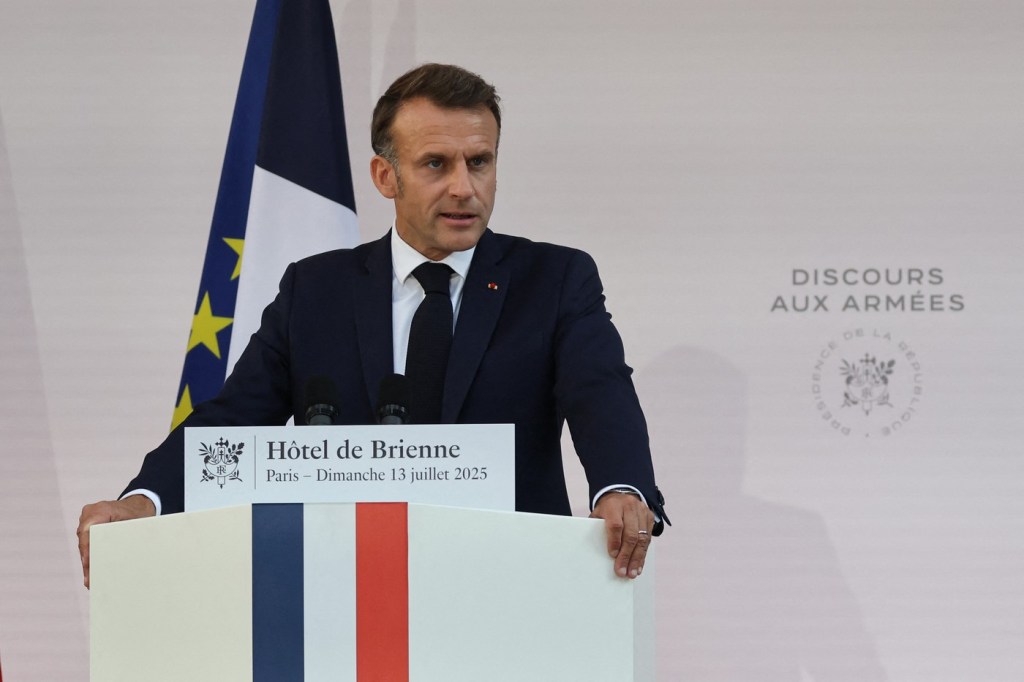 Emergency meeting in the EU on Sunday, after Trump's threats / Disclosure from Macron's entourage, what the French president wants to do
American threats to Greenland are much more serious, however, because America remains the political and military backbone of NATO, the British magazine notes.
An American general occupies, as has been the case for 75 years, the position of Supreme Allied Commander Europe (SACEUR). NATO's defense plans for Europe – including Greenland – were drawn up by the last SACEUR, Chris Cavoli, and involve a high degree of American involvement.
US military officers occupy senior positions and are present in all major commands. Without American air power and intelligence, NATO forces would find it much more difficult and costly to defeat Russian aggression.
Confidence in Article 5 would be shattered
If America were to absorb Greenland, either by force or otherwise, the resulting crisis could destroy European confidence in Article 5, the alliance's mutual defense clause, several voices have warned
Trump, however, has frequently cast doubt on the solidity of that commitment.
At issue is Article 5 of NATO's founding treaty, which states that an attack on one ally is considered an attack on all. Such an attack triggers the obligation of each NATO member to respond, although not necessarily with armed force.
The treaty does not explicitly state what would happen if an ally attacked another ally. Article 5 has only been invoked once in NATO's history, after the Al Qaeda attacks on the United States on September 11, 2001, so there is no precedent to provide guidance.
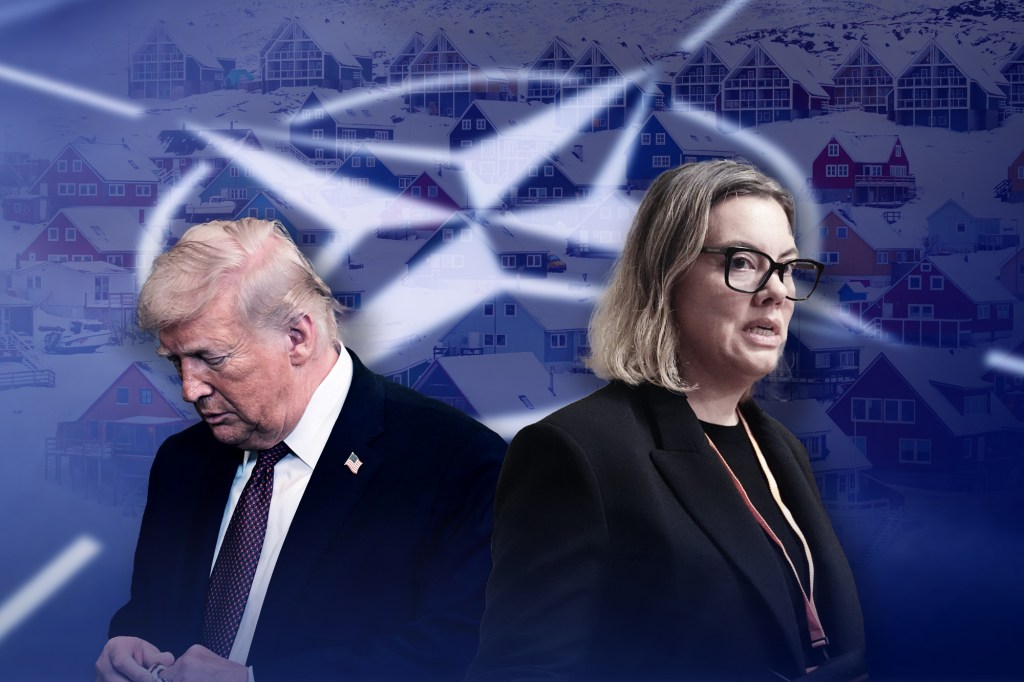 VIDEO – EXCLUSIVE Greenland's minister of resources, considered one of the stakes of Trump's actions, calls for Romanians as allies, after the latest events. “It's about our Western alliance and it's devastating”
Technically, Sten Rynning, a NATO analyst and professor at the University of Southern Denmark, explained to the New York Times, any NATO ally would have the right to prevent the alliance from sending forces to defend an ally under attack.
If the United States invaded Greenland, Washington would “undoubtedly” prevent the alliance's intervention, he said, “and NATO would be blocked.”
At that point, Russia could take advantage of the domestic chaos to test NATO by sending its armed forces into alliance territory, Rynning said. “And then, if NATO couldn't react to that, it would be basically defunct,” he said.
Warning from Germany
Even if there were no fighting in the streets of Nuuk, the shock of an almost bloodless annexation would be a moment of profound and irreversible disillusionment.
“How can NATO continue to be critical of Russia when its most powerful member violates the territorial sovereignty of another member?” asked Julie Smith, who was Joe Biden's ambassador to NATO, according to The Economist.
European governments would face a difficult choice in such a situation. Some would argue that Greenland is too small and unimportant to justify the collapse of transatlantic relations.
Others would worry that a rupture could lead Russia to attack (or at least test) European defenses.
In an article published in Die Zeit newspaper the other day, German Defense Minister Boris Pistorius argued that unilateral US action would be a dangerous path that risks undermining transatlantic solidarity.
“Going it alone is a worse alternative and endangers NATO's existence as a defense alliance for the North Atlantic,” Pistorius wrote, adding that Germany and its partners are ready to assume a stronger role in the Arctic and North Atlantic.
“The US uses language quite close to that of the gangsters it is supposed to control in Moscow and Beijing”
A warning also came from former NATO Secretary General Anders Fogh Rasmussen.
Rasmussen, who is also a former Danish prime minister, told the Financial Times that Trump was using Greenland “as a weapon of mass distraction from real threats”, such as Russia's war in Ukraine.
“For me, it was a painful process. From my childhood, I saw the United States as the natural leader of the free world. I even talked about the US as the policeman of the world,” said Rasmussen, who sent Danish troops to fight alongside the US in Afghanistan.
“Now we see that the United States is using language quite close to that of the gangsters it is supposed to control in Moscow, Beijing, etc.,” he said.
“I am concerned that the world's attention is now focused on something that is not a threat to either Europe or the United States — namely Greenland, a friendly ally of the United States — instead of focusing on what should be the focus right now: How can we force Putin to sit down at the negotiating table in Ukraine?” the former NATO secretary general said.
“The divisions in the West are playing in Russia's favor. I'm sure Moscow hopes that Greenland will become the iceberg that sinks NATO. So this goes beyond the borders of Denmark and Greenland. The conquest of Greenland would mean the end of the current international order,” Rasmussen warned.
The European response
One option for Europe would be to fight back. Europeans could, for example, resort to economic sanctions through sanctions and customs duties.
The European Union has refrained from harshly retaliating against Trump's tariffs, in part because of its reliance on American military power. But Trump's threat could change that calculus.
After his post, senior members of the European Parliament suggested that the trade deal struck last year between America and the EU in August would not survive.
Europe could also take a more aggressive economic approach, targeting US technology companies. But this should be done at the same time as an emergency increase in defense spending.
And a new trade war would put enormous pressure on budgets.
What will happen to the American bases in Europe?
A major issue would be the future of US forces and bases on the continent. Many European states would like them to remain, regardless of any Arctic adventures, as a guarantee of security.
Others may see threats of their removal as bargaining leverage with the Americans. It would be extremely difficult for America to project its military power in Africa and the Middle East without access to European bases such as Ramstein, a sprawling center in Germany.
America's seizure of a sanctioned tanker on January 7 depended on access to British airports and bases, for example, as well as unspecified support from Denmark.
Indeed, America's ability to monitor and counter threats in the Arctic — apparently what drives the desire to annex Greenland — depends on the cooperation of Greenland, Iceland, Britain and Norway, among other NATO allies.
“There is a world where the alliance would continue to function, but without trust”
In the event of a sudden rupture, however, some countries could face a crisis in terms of their defense force, notes The Economist.
Many European air forces, for example, could not fully operate fleets of the F-35, the most advanced fighter jet, without access to American communications, targeting data and munitions.
This could force them to take a more hesitant approach.
European leaders could find themselves caught between public anger – 62% of Germans expressed support for coming to Denmark's aid in a conflict with America – and the reality of US dependence.
Therefore, some say that NATO is too complex to dissolve in a single day, although that is not great news.
“The impact on the alliance would not be immediate,” Smith explained.
“I would not expect a grandiose announcement that the alliance is officially closing its doors. There is a world where the alliance would continue to function, but without the trust that has underpinned NATO since its inception some 75 years ago,” she said.