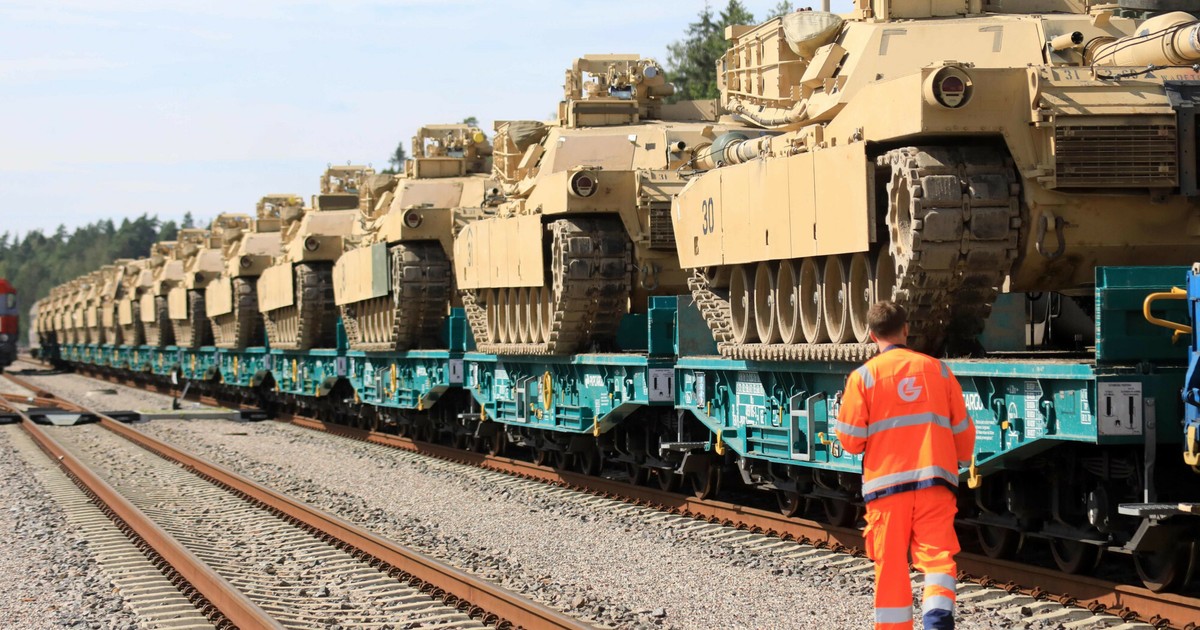
Europe is catching up in defense and armor. The announced expenses in this area are so high that – as the European Central Bank notes – this is increasingly affecting the shaping of all fiscal policy in the euro area.
“The fiscal impact of new funds in the field of defense expenditure, announced since mid -February, included in the base forecast of Eurosystem experts of June 2025, is a total of 0.6 percent of GDP in the years 2025–2027” – reads in the EBC report.
In an annual basis, it is expected that additional expenses will grow over time and reach a level of 0.3 percent. GDP in 2027 new expenses come from eight eurozone countries, most of which from Germany.
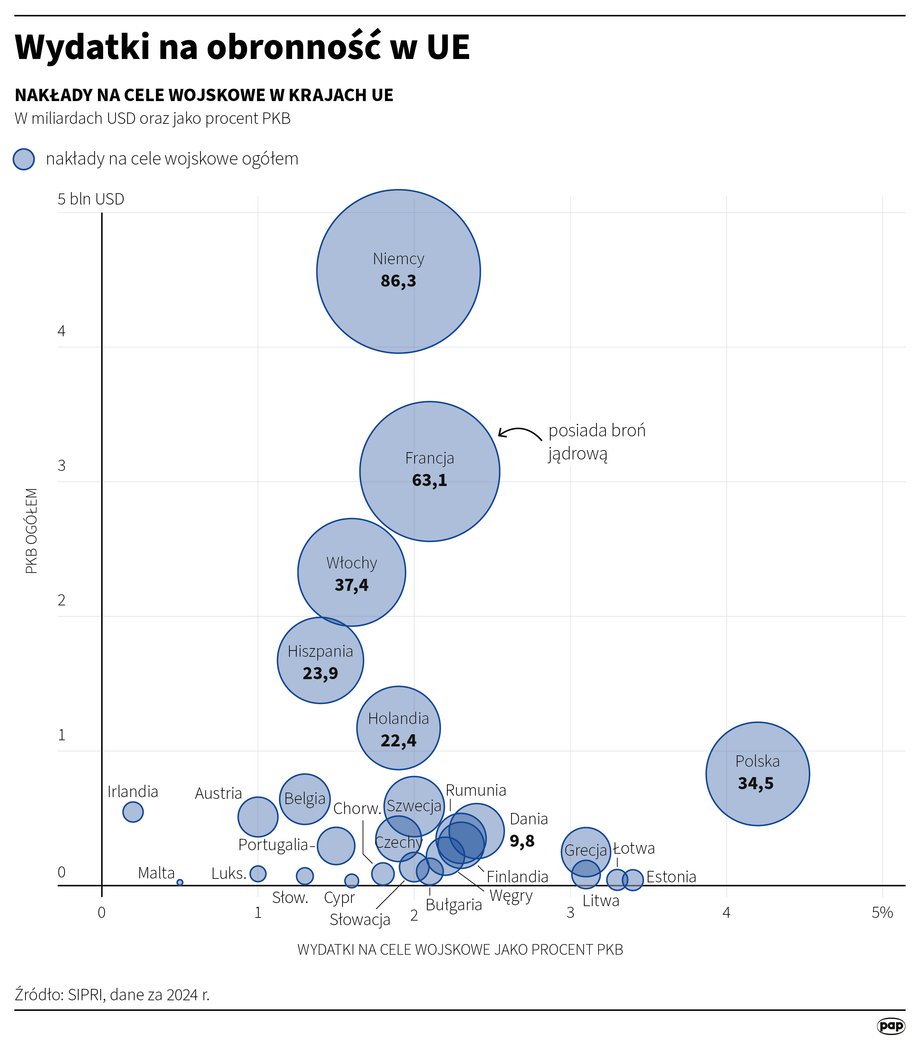
|
Michał Czernek / PAP / PHOTOS
Expenses for reinforcement and euro zone GDP
Economists of PKO BP who commented on the ECB report, point out that according to estimates Defense expenses will conquer the GDP growth of the eurozone by 0.1 percentage points annually in the period 2026-2027, with low impact this year.
See also: It can be the motorbike of the Polish economy. Defensive expenses calculated in billions
This effect will be varied between individual eurozone countries, shaping in the range of 0.06 percentage points. up to 0.12 percentage points, and lower estimates concern in particular those countries where arms expenditure is partly financed by limiting other expenses instead of an increase in debt or are characterized by a relatively higher importance compared to other government expenditure.
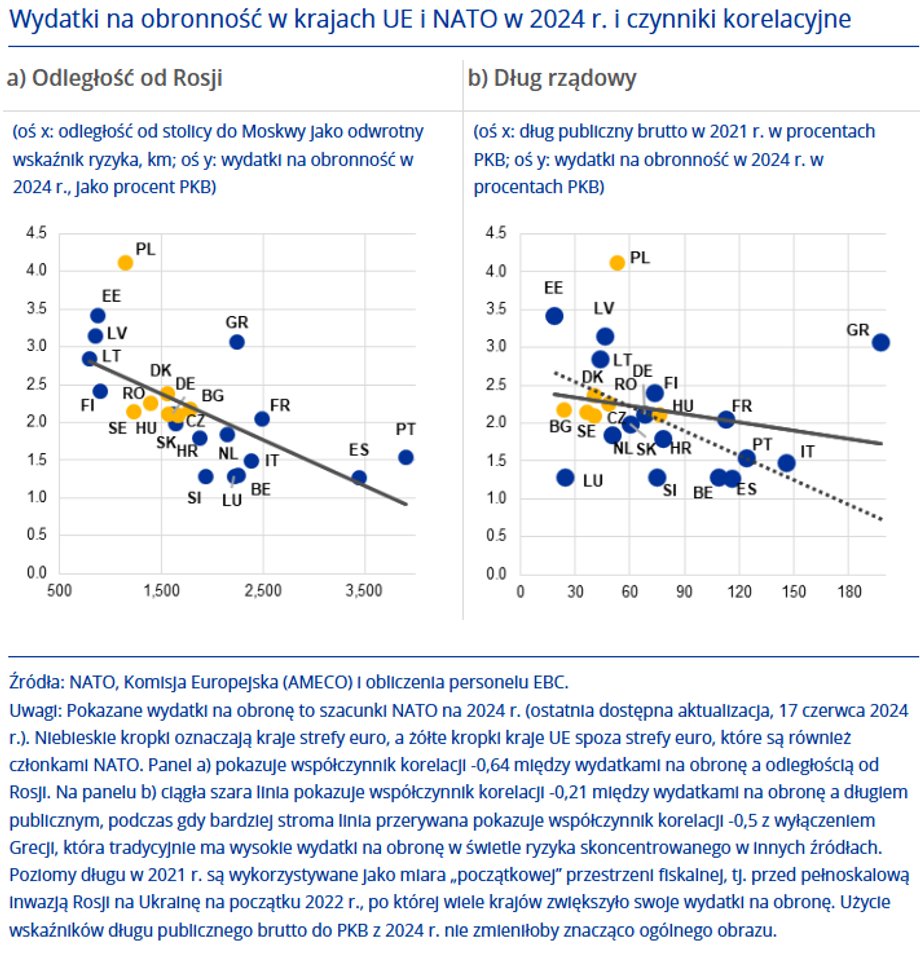
|
EBC
Reinforcement expenses and inflation in the euro area
“The inflation is to be limited due to the poor connection of defense expenditure with category prices, which are included in the inflation basket. The main channel of impact on prices will be indirect effects related to higher internal demand and payroll levels ” – pointed out economists of PKO BP.
See also: President of Citi Handlowy: We want to be even more present in the defensive sector [WYWIAD]
EBC also takes into account the possibility of increasing defense expenditure, which – as the bank emphasizes – could bring more significant growth effects, while inflation, although increased, would remain limited.
Greater expenses for reinforcement? Here are the effects
Assuming a gradual increase in expenses (tilted towards government investments) to 3 percent. GDP at a status of 2027, GDP growth would be 0.4-0.6 percentage points above the base level in 2027, and inflation would be higher by 0.1 percentage points
“Such effects can be considered maximum in 2025-2027because the scenarios are constructed to allow full financing of additional defense expenses by means of debt. As before, the impact of additional expenses is simulated in different conditions to construct a number of macroeconomic effects. In these scenarios, in addition to the larger share of imports in expenses and a more tense labor market, a moderate increase in the profitability of treasury bonds is taken into account, which reduces the impact on production and inflation, “reads the EBC report.
It emphasized that the presented calculations are subject to significant uncertainty. In addition to the fact that you cannot specify the actual future fiscal expenses (size, structure and schedule of activities) with 100-percentage, there is also a question mark over fiscal multipliers of defense expenditure.
In addition, risk analysis does not take into account possible tensions on financial markets if public debt indicators do not fall within the average period, in particular in highly indebted euro area countries or in the case of more adverse macroeconomic changes.