The middle class about life in Germany. “Now we live only to work”

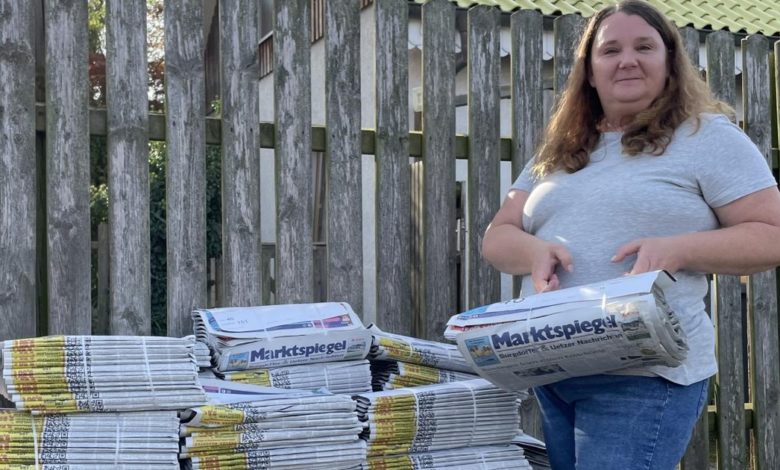
Rebecca Jepson never had too much money. Thanks to hard work, she and her husband managed to buy a small house in the suburbs of Hanover for less than 120 thousand. euro (approx. PLN 510,000, counting at the current exchange rate). “We wouldn't be able to pay anything else before we retire,” they say.
The house requires renovation, but the Jepsons are convinced that they will fulfill their dream of their own four walls for themselves and two of their children. They managed to do it with average salaries. However, work on the house was in place because the family is practically lacking money.
First came the Covid-19 pandemia, then Russia's war in Ukraine, inflation and a sudden increase in energy prices. And the bitter awareness that despite having a second job, saving and optimism, transition the last stage on the path of promotion to the middle class It may fail. The life of Jepson reflects The hardships of the lives of many German employees.
Rebecca Jepson is a definite and assertive person. During the first meeting in front of the furniture store in which he works, in a few seconds he collects 24 striking employees to a group photo and joins them with a combat shout. – We are worth more, without us there is no business – they shout striking.
Strikes have been going on in the retail sector for months throughout months, where low wages and unstable working conditions are the everyday life of many employees. The Hans Boeckler Foundation, which is closely related to trade unions, recently stated that this sector has been exceptionally benefited from price growth. Employees, however, believe that too little of this profit goes to employees.
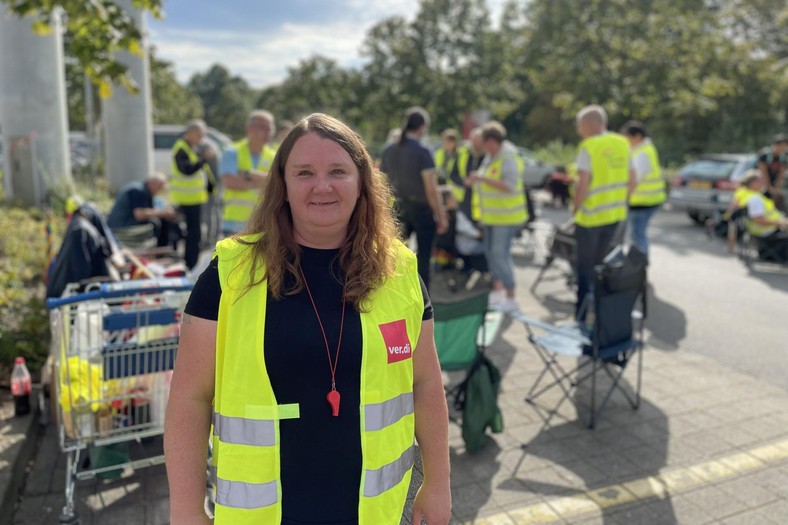
Rebecca strikes under a furniture store where he works full -time.
Frustration is huge. That is why sellers from Lower Saxony have been ongoing for months, demanding, among others rates by 2 euros 50 cents (approx. PLN 10 20 gr) higher per hour.
“Something is wrong”
Rebecca Jepson is on the front line. That day he sits at a beer table in a yellow vest and is counting. As a saleswoman in a furniture store, she earns less than 2,000 EUR 414 gross (approx. 10,000 PLN 220) per month.
Her husband, who works in a warehouse of the same company, gets just over 2,000. 676 euros (11 thousand 370 PLN) – that is, according to Jepson, too little. – Everyone says work should pay off. If you are full -time employed and you still barely pay bills, something is wrong – he adds. Many of his colleagues are constantly worried if they will afford gasoline or food at the end of the month.
The Jepsons also had to reduce expenses. Rebecca Jepson buys discount clothes. – Four shirts for 12 euros (PLN 51) – he explains. Visits to restaurants are out of the question, “even going to the cinema needs to be planned”. Only at the beginning of the month, the family allows themselves for minor pleasures – that is, ham and salami from a butcher in the town near Hanover. Everything in their small house was bought cheaper – with an employee discount at the furniture center. – We bought a sofa from this store – 60 percent Cheaper – say the Jepsons.
The car standing in front of the house cost 950 euros (4 thousand 36 PLN) – and soon the review will have to undergo. -I will have to do a few things first and hang our loan installments-adds the 45-year-old and laughs nervously-as always when she says something that is difficult for her. It can be seen that pressure is constantly taking it – during a strike and at home in the face of all financial problems.
It costs everything
The pair shows the house: in the living room some walls are still unnatured, in the staircase the cables hang from the wall, and due to the failure in the bathroom there is a lack of some tiles. These are the damage that the Jepsons want to fix, but have no money. The current expenses exceeded the limit, the savings are over.
And the 18-year-old daughter has just made a driving license-which also cost almost 4,000. euro (PLN 17,000). Due to various schedules at work in a distant furniture center, the couple needs two cars. And it also costs.
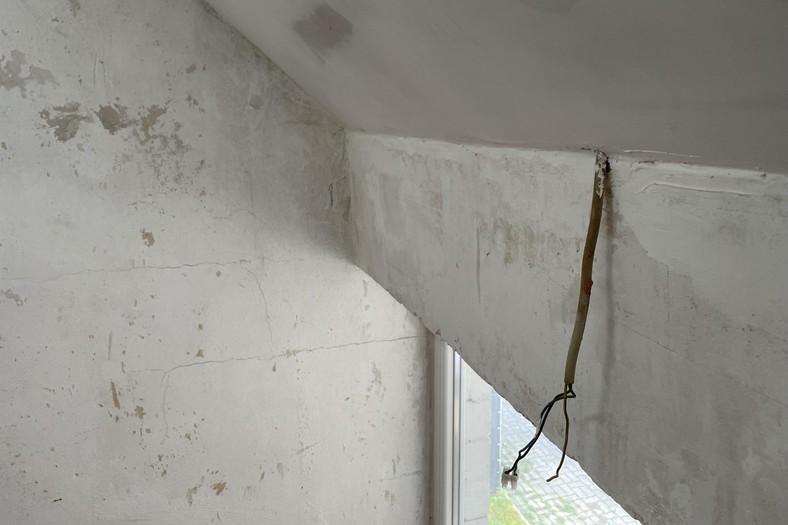
The interior of the dream house of Jepson.
The topic of money determines the daily life of the family. “Actually, we have somehow managed to somehow with our salary, otherwise we would not buy a house,” says the couple. But now it is different, and employers are based on demands of wage increases.
Unlike his wife, Simon Jepson is a rather restrained man. Despite the good knowledge of the German language, he is ashamed of the fact that as an Englishman he sometimes has to go to his native language to express his thoughts. The 46-year-old worked as a logistics in the British Air Force and suffered from post-traumatic stress team after missions in Afghanistan and Iraq. When fireworks explode on New Year's Eve, he barely leaves the house. He has panic attacks when something falls over in the warehouse.
Jepson hoped that he would be able to work as a forklift driver in the furniture center until a pension. However, health problems cross his plans. “My physiotherapist gave me five more years,” says Simon. At work, his neck is constantly strained. He doesn't know how to earn money, since he can't do the work he has learned now. – I've been doing it since I turned 19. I don't know anything else – he adds.
“We wanted to grow old here”
Simon also suffers from separation from the family he left in England. He says his father has cancer, but he hasn't seen him for five years because There is no money to visit it. Talking about it is difficult for him. He is also reluctant to show his semi -completed, renovated house. He is emaciated.
Simon Jepson's restraint disappears when The topic of German politics begins. The man is annoyed by high energy prices and the heating law of the coalition government of the SPD SPD party, FDP free democratic party and green. The family installed an oil heating system at home.
“Prices have doubled,” complains Simon. He is afraid that in a few years he will be forced to install a new heating system due to new regulations. – If the government imposes such an obligation, we will have to sell the house – he explains. – We wanted to grow old here, but we will probably have to sell it at some point – he adds. Even with the support of the change subsidy, they would not be achievable for them.
– I feel cheated by the government. We, as a middle class, are simply robbed of everything we earn – says Rebecca. – If the coalition government continues to work in this way, the middle class and the economy will completely fall – he adds.
Weekend “entertainment” Jepsons
After Saturday breakfast, the couple goes to the second job. To make ends meet, the Jepsons provide advertising newspapers on weekends. They get a minimum rate despite full -time work. There are 670 newspapers in the driveway of their house. Rebecca Jepson Stanka, charging packages to the trunk of his old Peugeot. – You should work to live. Now we live only to work – says her husband.
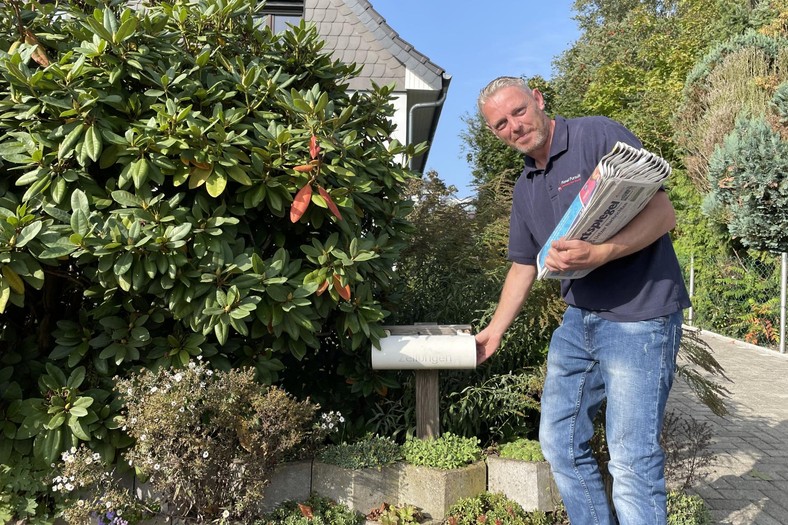
Simon and his wife earns extra money in his free time, spreading newspapers.
The weekend work takes four and a half hours when I work for two. It is even nine hours alone. With a bicycle attachment full of newspapers, the Jepsons traverse the streets of the suburbs of Hanover to have it at the end of the month A few hundred euros more.
The couple are fed up with constant waiting. The Jepsons are thinking about spending a pension abroad. “Maybe in Hungary,” Rebecca Jepson wonders.
Or anywhere – just where they can do anything.