Break the world dominance of the United States and Europe – this is the goal of China, Russia and India. The powers no longer hide with it. Just look at the recordings from China. The attitude of India is particularly worrying, which turn away from the USA after Trump imposed a huge duties on them.
On Wednesday, September 3, representatives of government will take part in the Great Chinese Military Parade in Beijing. The West imposes sanctions on Russia, North Korea and Iran, but it is these rebellious regimes that China and India break down the red carpet. What's more, under the leadership of China, the governments of these countries are looking for cooperation in various organizations to build a new world order. During the summit in Tiencin, which ended on Monday, “anti-west” was sworn in.
Although it sounds dangerous to us, they forget about one power. China, India and Russia will not overtake the West so easily. There is a lack of something important to these powers.
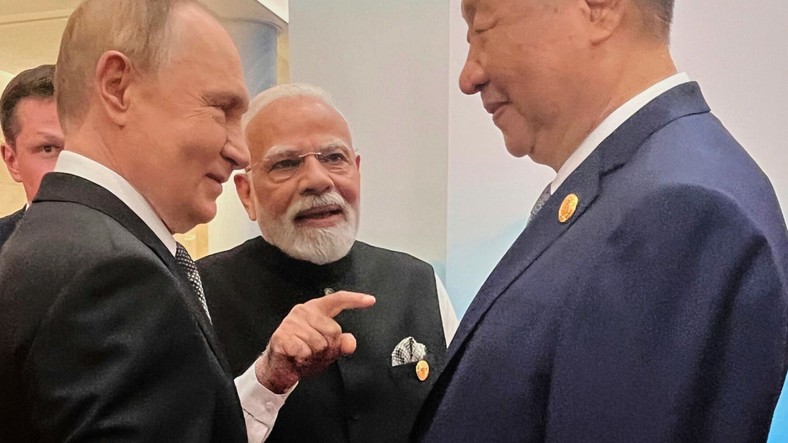
The Chinese leader XI Jinping and Vladimir Putin have been striving to create a “multiply order of the world” for years. To this end, they organized in organizations such as BRICS and Shanghai Organization of Cooperation, which includes China, Kazakhstan, Kyrgyzstan, Russia, Tajikistan, Uzbekistan, India, Pakistan, Iran and Belarus. Representatives of these countries met at the weekend at the summit in Tiencin and will join the powers during the Wednesday military parade in Beijing.
The greater the trade war is resolved by US President Donald Trump, the stronger the unity of the Shanghai Cooperation Organization countries becomes. After Trump's huge duties on India applied, 50 percent (allegedly for trading with Russia), this country is looking for closer cooperation with China. For the first time in seven years, Prime Minister Narendra Modi set his foot on Chinese soil again.
Continuation of the material under the video
However, creating a new world order will not be that easy. Countries that try to create a counterweight to the West are actually conflicted with each other in many issues.
Disputes between members
China and India are the two most populated countries, each with about 1 billion 400 million citizens. Beijing and Delhi are argued in the Himalayas for the course of the border. India does not trust China also because of the support that the latter give them the greatest rival – Pakistan. Democratic India is largely dependent on China, but they do not want to lose contact with the West. Both powers also compete for influence, especially in Central Asia.
In turn, Moscow is becoming more and more dependent on Beijing, which the elites in the Russian Federation do not like.
Indian Prime Minister's Office Via AP / Associated Press / East News / East News
Russian President Vladimir Putin, Prime Minister of India Narendra Modi and Chinese leader XI Jinping in China, September 1, 2025.
There are more differences. India imports military equipment from Russia, but at the same time they consider Moscow to be a less credible partner than the West.
When it comes to cooperation with Iran, ideological and religious differences mean that the mullads will always keep distance from other governments. The North Korean dictator Kim Jong Un is a unpredictable player who prefers to isolate himself than to cooperate with anyone. The coherence of the anti -western block is therefore still very weak, although it grows through Trump's actions.
– This common enemy and common economic goals bind these countries – says Klemens Fischer, a professor of international relations at the University of Cologne, who worked as a diplomat for 30 years for 30 years. According to the expert, however, one should not expect that all these countries will create a formal military alliance. “Members of the Shanghai Cooperation Organization and BRICS are too different.”
Some countries, such as China, Russia and India, also use these organizations as an instrument of foreign policy. “However, they must be very careful not to dominate, not to cause centrifugal forces,” says Fischer. In other words: if large countries take over too much power, other Member States may move away from them.
The West should not panic. The weakness of new organizations is that they are not based on ideological compliance, but above all on common enemies.
Europe now needs flexibility and wise tactical behavior. Fischer explains: “If you manage to break common economic interests through better offers, such movements will not be long -lasting.”
I’m Ashley Davis as an editor, I’m committed to upholding the highest standards of integrity and accuracy in every piece we publish. My work is driven by curiosity, a passion for truth, and a belief that journalism plays a crucial role in shaping public discourse. I strive to tell stories that not only inform but also inspire action and conversation.