In 2025, the image of the employee of the public administration remains almost unchanged compared to the last two decades. Although the public system has crossed numerous attempts of reform and digitalization, the servant's portrait remains anchored in an outdated institutional culture, marked by professional real estate, reluctance to change and lack of initiative.
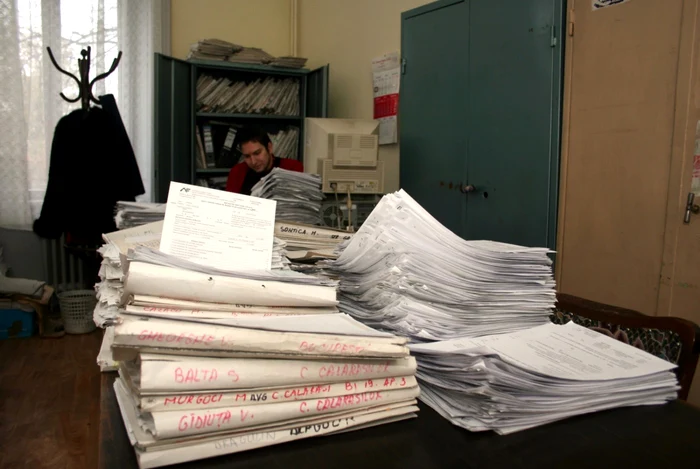
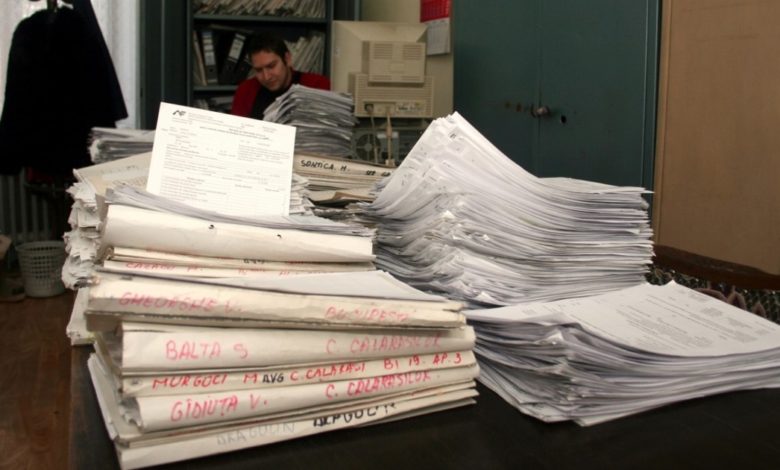
The budgets are anchored in an outdated institutional culture. Photo Mediafax
Thus, the state employee has become the product of a system that rewards stability to the detriment of performance, a symptom of a blocked administration in the past, warns Bogdan Fârșirotu, an expert in vocational training and president of the APSAP training center.
At the statistical level, the portrait of the civil servant in Romania seems, at least at first sight, promising. According to the study carried out by the APSAP Training Center during April -June 2025, on a representative sample of 4,743 employees from the public administration, the typical official ticks a series of criteria considered ideal in the public sector: he has higher education – 89.6% of the respondents hold at least one license, of which almost 49% have a degree. It has a mature age-over 66% of the respondents fall within 38-55 years, which confirms the profile of an employee in a professional stability stage, but also of potential resistance to change.
Also, 33% has been working for over 15 years in the same institution, reflecting an obvious professional stability. Moreover, almost 60% declare it “SATISFIED“From the current job, which – in theory – should suggest a balanced, dedicated, experienced and loyal employee. In addition, only 2.4% declare that they are members of a political party, which – formally – supports the image of an apolitical administrative apparatus.
“With this lens, the Romanian civil servant seems to be a balanced professional, with a stable career, advanced education and attachment to the institution. However, the same study indirectly indicates and the less visible features of this profile: a high degree of professional immobilization, reluctance to change and the lack of the initiative. The detriment of performance, conformism instead of the initiative and bureaucratic seniority instead of adaptive competence.
85% of respondents hold execution functions, and long -term stability, in the absence of mobility or career evolution, often reflects a blocking in the state system, not a strategic assumption of a career in the public office. The expressed satisfaction is rather a manifestation of the comfort given by a job in the state, than a proof of the commitment to performance and competitiveness ”Bogdan Fârșirotu told “Adevărul”.
They are not afraid of dismissions
In fact, almost 94% of the respondents say they do not have or have little fears about a possible restructuring that could affect their job, which confirms even more clearly that the safety of the job is a given, not a result of individual merits.
In parallel, over 85% consider that they have the skills needed for a higher post, but only 28.7% think that the current salary is correct in relation to the work submitted – while over 70% consider it worth more.
“Therefore, we observe an imbalance between self -confidence, lack of mobility and level of expectations, which confirm a professional culture rather focused on rights than on performance.”completes the specialist.
Budgets recognize system inefficiency
The same study, conducted by the APSAP training center, reveals a series of contradictions that really define the portrait of the civil servant in Romania. For example, although 58.7% of employees are self -evaluated as having intermediate or advanced digital skills, and almost half are considered to be prepared for the complete transition to digital processes, 62% do not hold any certificate to attest to this level, and in almost 50% of cases the office computers do not even have a web chamber or a functional microphone. However, the same employees identify – in an overwhelming proportion – lack of digitization, excessive bureaucracy and inefficiency as the greatest problems of the public system.
“It is a subtle form of institutionalized denial: the system declares itself prepared for digitalization, but it has neither certified people, minimum infrastructure, nor necessary professional culture. Equally worrying is the lack of opening to good European practices. Conditions, the idea that the Romanian public administration could align with EU standards is purely theoretical.
Essentially, the current portrait of the Romanian civil servant is marked by an apparent compliance with the formal norms – studies, stability, institutional loyalty – but hides a painful reality: lack of adaptability, initiative and connection to the modern realities of the administration. It is an administration that works in minimal parameters, in a defensive bureaucratic logic, at a time when Europe is already discussing digital resilience, intelligent governance and administrative innovation ”concludes the specialist Bogdan Fârșirotu.
On the merits, the European context highlights the systemic gap in which the Romanian administration is found. According to Eurostat, Romania is in the last place in the European Union in terms of the share of people between the ages of 25 and 34 who have completed higher education. Only 10% of Romanians said they participated in online courses or used digital educational materials in the last three months – another last place in European rankings, well below the EU average of 33%.
Regarding the capacity for innovation, the European innovation board (EIS 2024) again places Romania in the last place, registering the worst progress between all Member States. At the macro -institutional level, The Economist Intelligence Unit relegated Romania, in the 2024 edition of Democracy Index, in the category “Deficit Democracy” in the “hybrid regime” category, invoking the cancellation of presidential elections, campaigns financing and external interference.