The then President of the United States, Harry Truman, issued the disposition of the use of nuclear weapons against Japan. He explained that he made such a dramatic decision to accelerate the end of World War II and prevent further victims among US soldiers.
– said a biographer of American presidents, Longin Pastusiak quoted by Polish Radio.
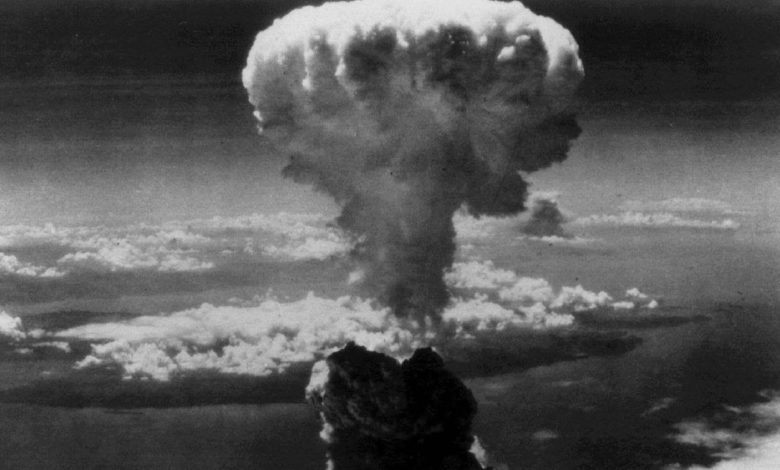
First in the morning of August 6, 1945, the “Little Boy” atomic bomb dropped into the Japanese city of Hiroshima, dropped by an American military aircraft. A moment after the outbreak, a giant fire pole was created with a fungal -like shape. Three days later (exactly on August 9, 1945), Nagasaki met the same fate. The “Fat Man” atomic bomb, which was much larger than the one previously dropped, fell on the next Japanese city. Initially, Kokura was to be the goal. However, due to too much cloud cover covering this city and thus limiting visibility, it was decided to change the object of an attack on the one that was originally a reserve goal.
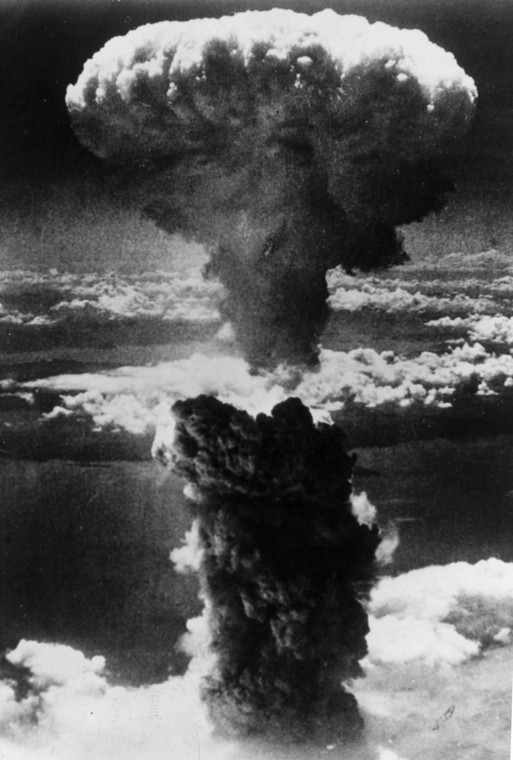
On August 9, 1945, “Fat Man” atomic bomb fell on Nagasaki
These were the first two and the only cases of use of nuclear charges in the history of mankind. Atomic hell was to force Japan to surrender. The exact sizes of the disaster are not known to this day. It is estimated that as a result of both explosions they died or have been affected by the effects of radiation (severe burns and radiation disease) over 400,000. people.
The Pole survived the nuclear attack on Nagasaki. That's how he remembered him after years
At a time when a nuclear bomb fell on Nagasaki, there was a Polish Franciscan, missionary, father of Mieczysław Mirochna, a collaborator of Saint. Maksymilian Kolbe. At the time of the attack, he stayed in the Polish Franciscan monastery located on the slope of Mount Hiko, east of the city center. There was only one religious with him. In 1957, in an interview with Radio Free Europe, Father Mieczysław Mirochna admitted that he had stayed there at his own request, because due to the increasingly frequent American bombing, all Poles had to leave the monastery. He did not want to do it, so he asked for a special permission to stay in Nagasaki.
– recalled years later in a conversation with Radio Free Europe, Father Mieczysław Mirochna, adding that neither he nor his companion had any injuries caused by an atomic bomb explosion.
This part of the city in which Polish monks lived, just protected against damage caused by a bomb dropped by the USA. From Urakami (parts of Nagasaki, which she fell on), was separated by a mountain, which created a kind of protective barrier and thus shielded buildings, including the monastery from the shock wave. In addition, the monks believed that at that moment divine providence was watching over them.
He described the religious, emphasizing that he was convinced that it was thanks to these prayers that nothing happened to them.
He was in Nagasaki when an atomic bomb fell on the city. “We saw a terrible glow of fire”
Father Mieczysław Mirochna, when the bomb fell on Nagasaki, he worked with his brother Zenon in the library – the monks sorted books.
– a religious from Poland reported in an interview with Radio Free Europe.
He added.
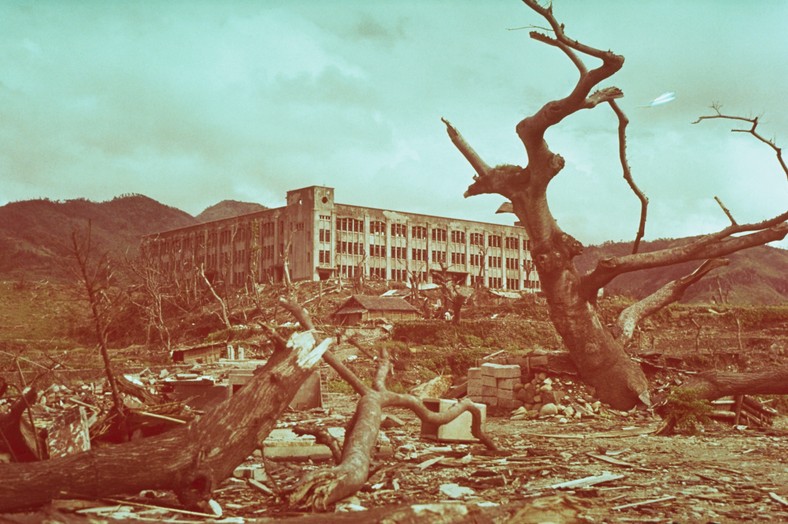
At a time when a nuclear bomb fell on Nagasaki, there was a Polish Franciscan, missionary, father Mieczysław Mirochna in the city
According to the religious, after the explosion he lay on the floor with his brother Zenon for a long time. The clergy expected another bomb. After a long time, when it “calmed down a bit”, the monks went outside the monastery.
He said.
Father Mieczysław Mirochna admitted that after a nuclear bomb fell on Nagasaki, the city was razed with earthly. “Nothing left, no house,” he described.
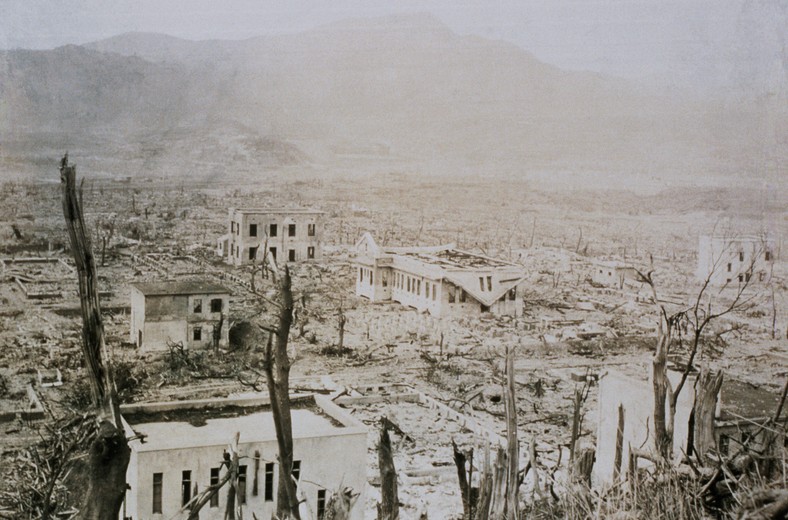
This was what the Japanese city of Nagasaki looked like after an atomic attack
Father Mieczysław Mirochna – a Pole who survived the nuclear attack on Nagasaki
Father Mieczysław Mirochna was born in 1908 in Bochnia, and died in 1989 in Japan. He was one of the closest companions of Father Maksymilian Kolbe. In 1930 they came to Nagasaki and created a thriving mission center in this city, and built a monastery in it. In 1949, Mieczysław Mirochna founded the Congregation of the Franciscan Sisters of the Knighthood of the Immaculate. He was also the superior of the Franciscan monastery in Nagasaki.
Already in the first days after the outbreak of the atomic bomb, the priest began to help orphaned children who lost their loved ones as a result of the attack. He created a center for them. This institution was also intended for victims of war and people who lost their roof over their heads. Brother Zenon helped the religious in this activity. Father Mieczysław Mirochna developed extensive charity and social activities in Japan. He assumed nursing homes, publishing houses, as well as educational institutions. He was buried at the cemetery in Japan.