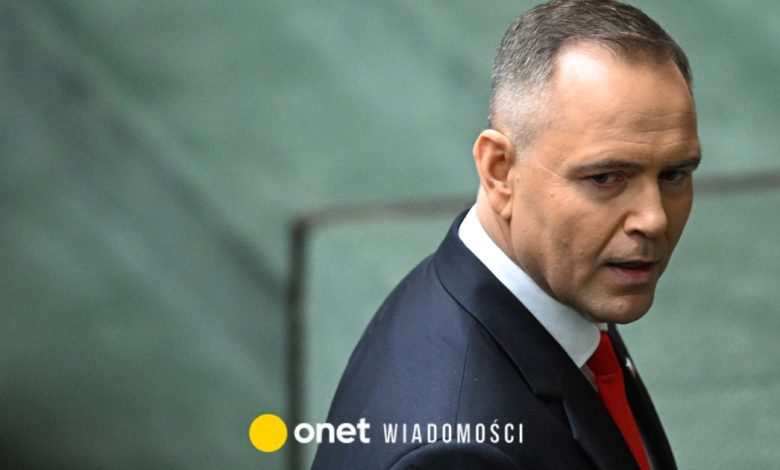
Witold Jurasz: Karol Nawrocki in the message did not mention the key case

Poland must get ready for a possible war, but the Polish elites, preparing the state for such a dramatic scenario, must also remember that it remains the least likely.
A much more real threat is the one that does not be of existential character, but one in which Ukraine is forced to adopt adverse conditions in one way or another, whether peace or truce, Europe returns to cooperation with Russia, and Poland again becomes a second -class NATO member.
In his message, the president brought a whole Russian threat to only a military dimension.
Karol Nawrocki was wrong talking about the USA
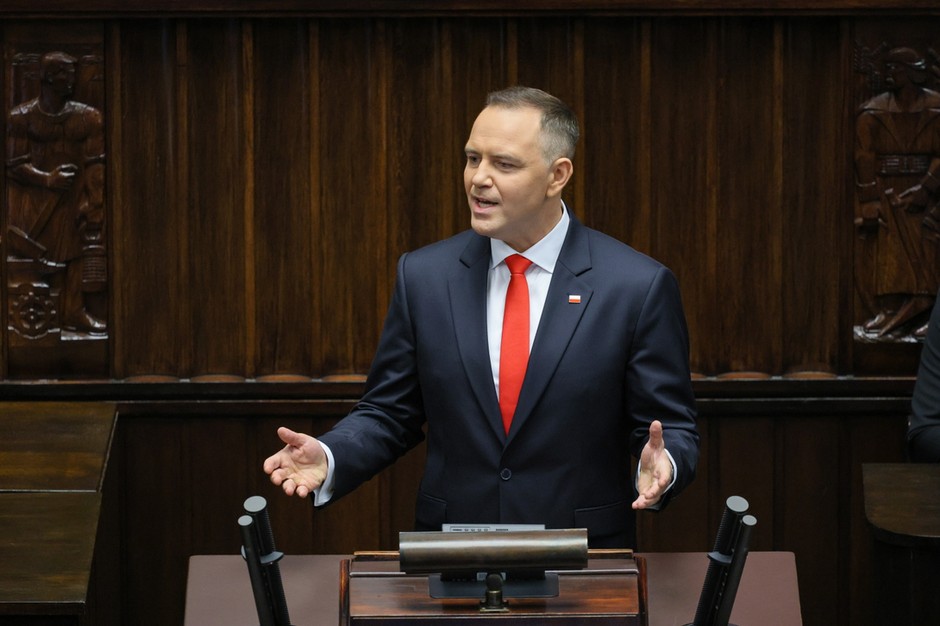
Karol Nawrocki during the messagePAP/Paweł Supernak
Ukraine is not the only country that has not appeared in the message. In a word, Karol Nawrocki did not stammer about Great Britain or France, and he only spoke all overly, but with clear reluctance. The only country that the president mentioned was the United States.
Interestingly, the president mentioned, however, the “bilateral alliance” with the United States. Such an expression suggests that Poland has some kind of bilateral (bilateral) whether it is an alliance or a treaty from the USA. In the meantime, unfortunately, this is not the case. Poland has bilateral relations with the USA and bilateral contracts with the USA. The thing is that none of these contracts (whether commercial or extradition, probably very important in the era of Donald Trump's presidency) creates any alliance from the USA.
Continued article under video material
The only expression of the Alliance with the USA is joint membership in NATO. President Nawrocki spoke about NATO, but the fact that at the same time he mentioned only about the USA, and completely skipped our other partners is a mistake.
It does not change the above assessment that Washington is absolutely crucial from our point of view. At the same time, however, putting everything on the USA, as PiS did and apparently intends to do it Nawrocki, is the same error as it was long -term – in this case proper Polish liberals – naivety in relation to Russia and the failure to see the allied disloyalty, which we experienced in the Russian context on the part of even Germany.
Speaking of the EU, Karol Nawrocki forgot about an important thing
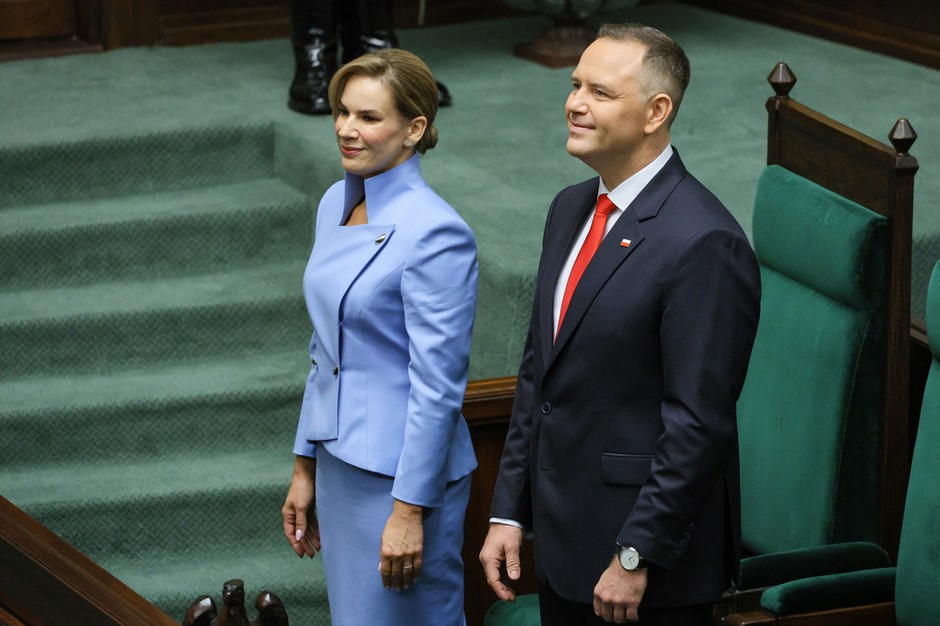
Marta Nawrocka and Karol Nawrocki during swearing inPaweł Supernak / PAP
The Polish political class also made errors in foreign policy in relation to its regional dimension. Liberal side underestimating it and without restraint, boasting of cooperation with France and Germany in the so -called The Weimar triangle (which cooperation, judging by German policy towards Russia, did not translate into anything specific), and the right -wing side without understanding that the creation of formats of the Nine Bucharest can be only moderate.
To oppose Russia and lever in the position of Poland, it is worth playing (just effectively) with the strongest, and not to enjoy the alleged position of the leader in the alliance of medium and small (who, let's add when they came to what they came to Berlin at the end, not Warsaw, or – like Viktor Orban, and recently Robert Fico from Slovakia – on Moscow).
In the meantime, Karol Nawrocki about the Bucharest nine mentioned as if it was an important element in our policy. It's just not that.
Speaking of the European Union, President Nawrocki very clearly emphasized the need to maintain Poland's sovereignty. When he said that the Union could not usurp the powers that he is not in the treaties, he was right, although some in love in the Union would probably not agree with it.
The problem is that when referring to the EU, the president also spoke about it in principle only in the context of what we would not agree to, why we will say firm “no” and what is a threat to us. Unfortunately, Karol Nawrocki forgot to add that in the end it pays to be in the Union.
In a word, he also did not stammers that sovereignty is a derivative of prosperity, and this is largely a derivative of membership in the EU. Above all, however, he forgot to add that sovereignty is a derivative of anchoring Poland in the West, which in turn has two dimensions: Natowski and EU. At this point, Karol Nawrocki was clearly lacking in the proportion and precise distribution of accents. Meanwhile, the essence of foreign policy is this pharmacy precision, with which politicians can (or cannot) say “yes” and “no” at the same time.
Aleksander Kwasniewski's lesson for Karol Nawrocki
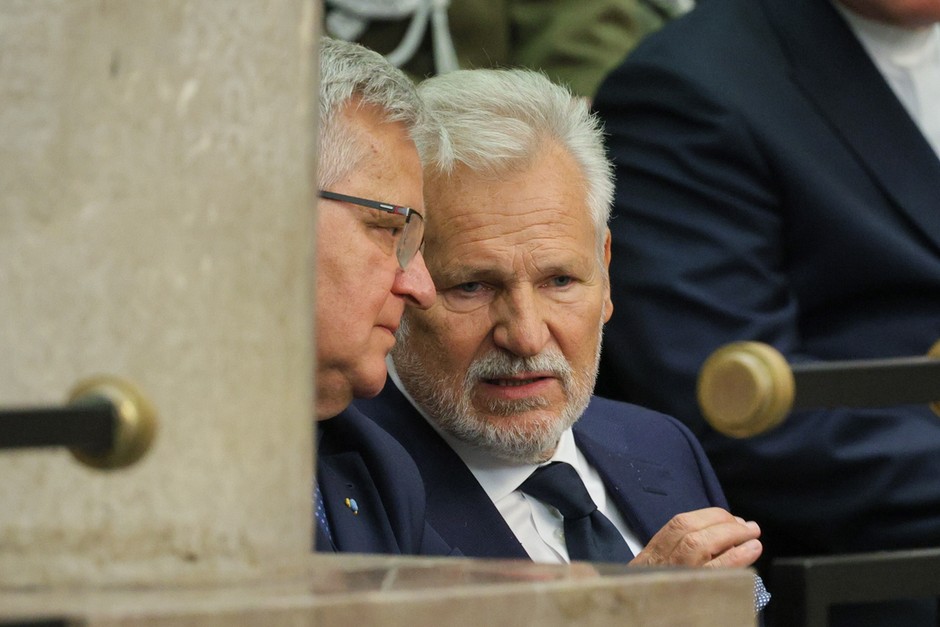
Bronisław Komorowski and Aleksander Kwasniewski during the swearing -in of Karol NawrockiPAP/Paweł Supernak
Aleksander Kwasniewski listened to the president's message, who, taking his office, announced that he would be the president of all Poles. Kwasniewski, in the name of support by the Church of Poland's entry into the European Union, went compromise, thus acting at least in a few matters contrary to the wishes of those who chose it, and probably also against his own views.
Kwasniewski's greatness was that he understood that he understood that these views must give way to the interest of the whole country. The former president also understood that in order to achieve anything in foreign policy, it is necessary to represent not only those who chose it. The phrase about being the president of all Poles was not only an empty slogan in his mouth. The message of Karol Nawrocki gave the impression that the new Polish president does not set such a goal at all and that he intends to be the president of those who voted for him.
If this is the case, it bodes badly to this presidency. Successes in foreign policy cannot be achieved if our partners know that the policy implemented by the president, government or a given political camp is only a temporary phenomenon and will be fundamentally changed after changing power. Nobody is arranged with a country whose elites are unable to communicate with themselves.
Of all Polish presidents, this was the best understood by Aleksander Kwasniewski. Whether Karol Nawrocki will also understand it, who is undoubtedly impossible to deny intelligence and knowledge, is a question that cannot be answered at this stage. Judging by a message, in which there was not even a shadow of the will of a compromise (the fact that she is not on the liberal side is another matter) you can have doubts.