There is a recurrent category in the Romanian public space – and not only Romanian – which we can call, without hesitation, “screams”. They are not only vocal people, but individuals for whom the lifting of tone has become the main tool for civic participation and political expression. They do not debate, but shout. I do not propose, but accuse. He does not seek the truth, but proclaims his version as a unique and absolute, and everything that does not align with it becomes illegitimate, unacceptable, even criminal.
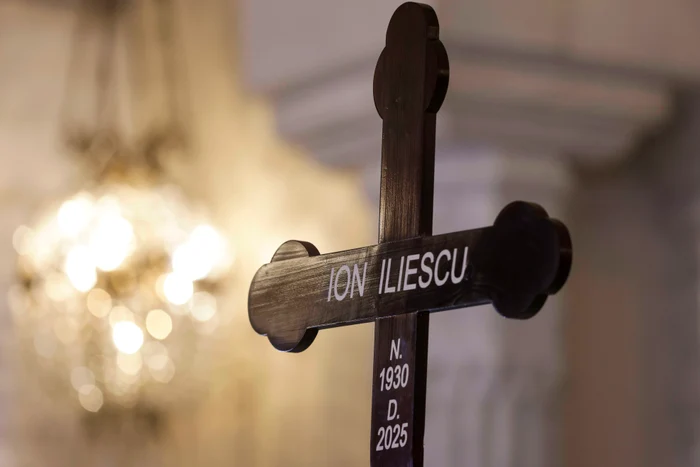
Photo Inquam/Octav Ganea
The screams are active especially in moments of public tension – crises, tragedies, deaths, political conflicts – and do not intervene to bring clarity, but to impose a verdict. Do not judge, but condemn. I do it with a seemingly moral passion, but with an aggression that betrays, in essence, a deep intolerance to pluralism, the legal framework and the right of others to have another opinion.
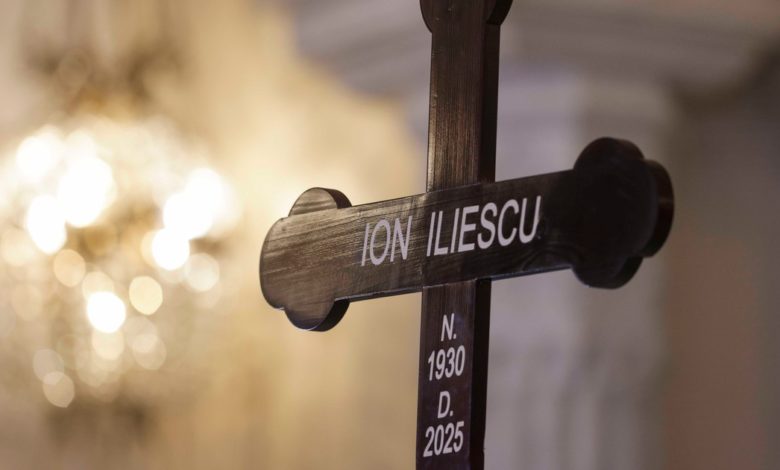
The death of Ion Iliescu is only the latest example. Before the family announces the details of the funeral or historians to formulate balanced evaluations, the screams have been activated: “National Funerals!”, “The criminal of the revolution!”, “Mining Assassin!” – statements that do not express an opinion, but formulas of symbolic exclusion. Whoever does not join the choir becomes suspicious. Whoever requires caution is complicit. Whoever is silent, is guilty.
The problem is not just about tone, but the structure of discourse. Walter Lippmann warned, a century ago (Public Opinion, 1921), that public opinion is rarely the result of an authentic information. It works through stereotypes, by simplified images of reality, and in the absence of a deliberative process, the society is fragmented between cry and reaction. The public space becomes a show, in which those who scream more seem to hold the truth, just because they occupy the center of the scene.
On the other hand, John Dewey, in The Public and Its Problems (1927), does not deny the existence of this drift, but hopes that the democratic citizen can be formed through dialogue, education and authentic participation. For Dewey, democracy is not only a form of government, but an ethics of coexistence, a practice of collective learning. That is why, those who shout without listening, who condemn without judging, who ask for no evidence – are, in Dewey's logic, the expression of a democratic failure.
The screams confuse the freedom of expression with the obligation of others to listen. Confuses activism with intolerance. In the name of justice, they commit injustices. In the name of memory, I rewrite the past brutally. In the name of morality, it denies the ethics of pluralism. That is why, their reactions are no longer related to democratic participation, but to a moral fundamentalism.
There is a thin line between the right to criticize and the tendency to purify symbolic. Between historical and vendete lucidity. Between the need for truth and the desire for revenge. To criticize Ion Iliescu's legacy is legitimate. To challenge his political decisions is democratic. But to ask for the cancellation of any symbolic gesture, the suspension of any form of official recognition, the refusal of the right to a worthy funeral – all of which are no longer of historical analysis, but of totalitarian reflex. On the merits, not Ion Iliescu is the subject that should swallow us, these days, but how much we have degraded, as a society, the notions of justice, respect and democracy.
Lippmann and Dewey – although different in vision – warns us together that without a public structured, deliberative and responsible space, democracy risks being suffocated by the voices of those who scream, but do not listen. By the voices of those who confuse indignation with the truth. By those who transform justice into an exclusion tool. By those who, instead of building, demolish by cry.
But instead of arguments, he propagates hatred. Or, hatred is never a legitimate instrument in a democracy. It can be exploited politically, it can be (even) popular, for some, but hatred is neither justifiable nor in a democratic society. Hate is the expression of the human little one and the refusal to tolerate the difference, a symptom of moral frustration and, worse, the preamble to abusive and totalitarian behaviors.
But beyond the ethical dimension, the cultivation of hatred also has a strategic price. Hate amplifies the cracks in the Foundation of any society and becomes a systemic vulnerability to the hybrid attacks – whether information, ideological or geopolitical. Instead of strengthening democratic cohesion, hatred fragile, divides and provides terrain of extremism and manipulation.
In a mature democratic society, not those who scream more should set the tone, but those who can listen, argue and maintain a measure of dignity even in disagreement. Perhaps the true democratic voice is not the one who screams, but the one who is silent, listens, asks and then speaks meaning.
In this atmosphere, the calm voice becomes an act of courage. To speak balanced, in a screaming world, is the proof of a living democracy. To refuse hatred, even when it is masked in the language of justice, is the sign of an authentic public consciousness and a society that defends itself intelligently.