How to build the Poiana tunnel, the longest tunnel on the A1 Sibiu – Pitești highway. Will have 1.7 kilometers galleries

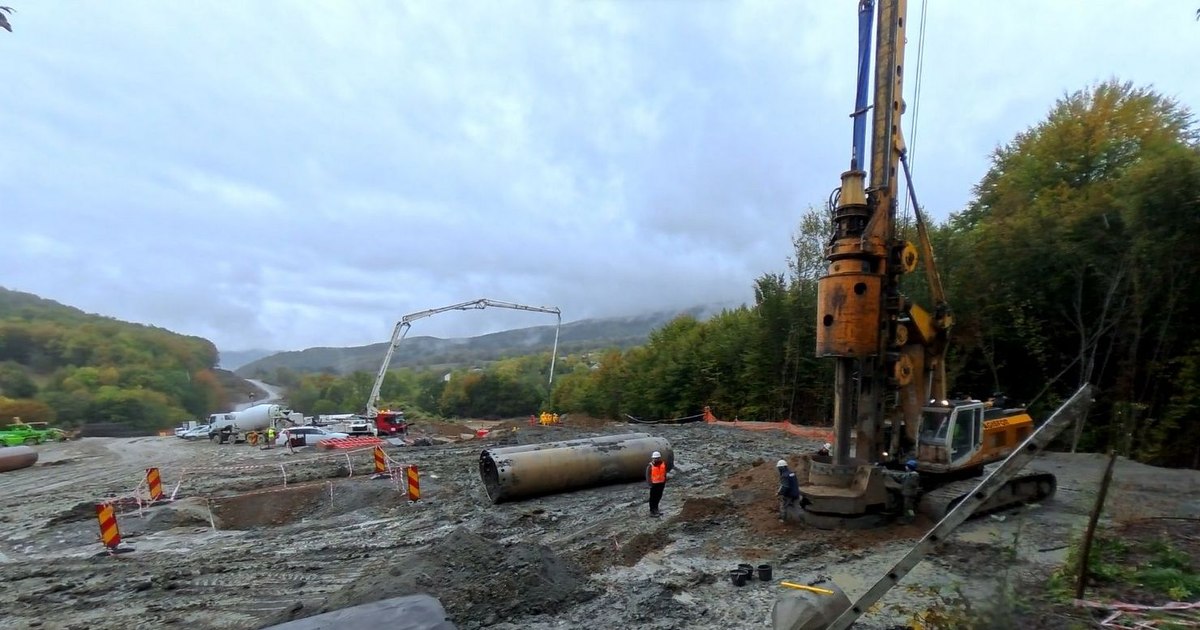
The yard of the longest tunnel on the A1 Sibiu – Pitești highway was animated while waiting for the drilling facility that will dig the galleries almost two kilometers. The builders mobilized their workers and equipment at the two portals of the Poiana tunnel, which connects Vâlcea and Argeș.
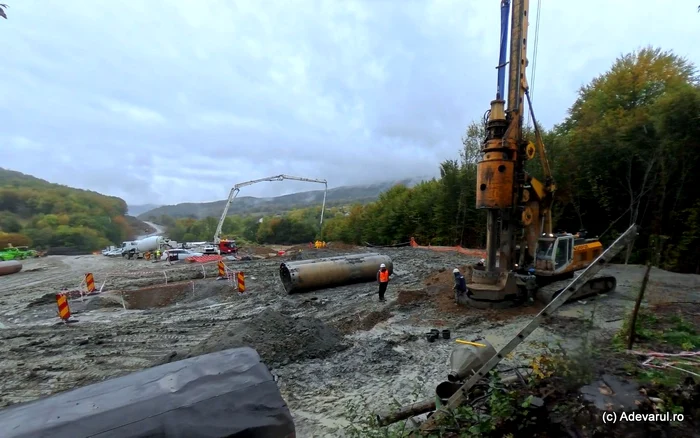
Works on the northern portal of the tunnel. Photo: Daniel Guță. TRUTH
Nine tunnels, with a total length of almost 8.5 kilometers, will be built on the sections of the A1 Sibiu – Pitești highway, located in the site, with completion term 2027 – 2028.
The length of the three highway segments that cross the Olt and Valea Băiașului Valley, passing through the Sibiu, Vâlcea and Argeș counties, is about 80 kilometers, so ten percent of its route is designed as passes under the mountains and hills.
Poiana tunnel ready for excavation
The Poiana tunnel, the longest underground segment of the A1 Sibiu – Pitești highway, will have 1.7 kilometers and is included in section 3 (Cornetu -Tigveni) of the future highway. The works on his two portals have begun, and the teams of workers and the machines prepare the land of the two entrances, waiting for the “mands” that will make the excavation itself.
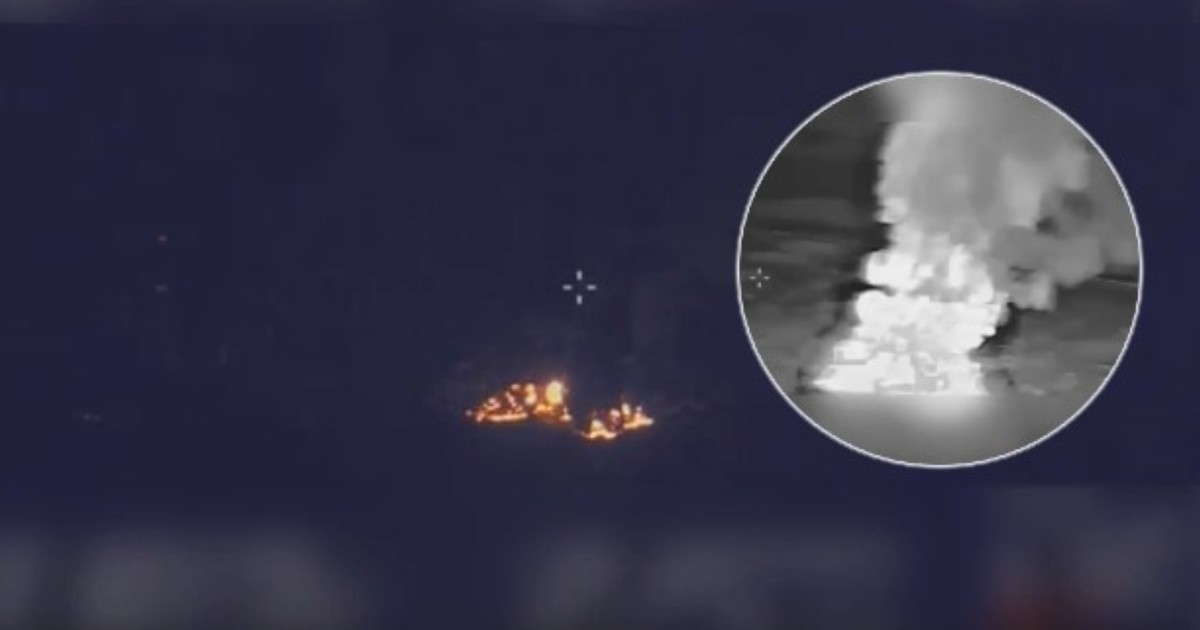
“The drilling system (TMB) has entered the manufacturer tests and is to be disassembled and transported to the country. It will arrive in Constanța port in October after which Agabaritic transports will be organized. About March of next year, we plan to start the tunnel.” Recently inform the Secretary of State Irinel Ionel Scrioșteanu.
The Poiana tunnel, with two galleries and two strips on walking was planned to cross the Brother Deal, between Vâlcea and Argeș counties, being necessary to avoid the area with active slipping from the Poieni Valley.
The Poiana tunnel has a length of 1,700 meters, with a gradient of 0.68 percent (ascendant from north to south) and will be excavated simultaneously on both sides. Access to works does not have special difficulties.

Drilling machine. Facebook source. Irinel Ionel Scrioșteanu
“The execution of the tunnel will involve predominant excavations in marls. In order to optimize the rate of advancement, the works will be divided into two phases. The first phase will include excavating the upper gallery, installation of the arcs (29/58) with anchor for completely injected rocks, the construction of a temporary radiator with the thickness of 20 centimeters Permanent.is shown in the project.
In the first phase will be excavated the upper gallery and the terrace, at a height of 7-8 meters, depending on the equipment. The support structures will be mounted, which will be strengthened with torcretated concrete and special anchors, to prevent the land from moving. It ends with the pouring of the temporary concrete radiator, with a thickness of 20 centimeters, which will stabilize the work until the final foundation was made.
The second phase takes place from the middle of the tunnel to the portals. It involves the excavation of the radiator, in sections of 10–15 meters, and the construction of the permanent concrete radiator, poured by sections of 10-30 meters. The works on the Poiana tunnel are expected to end between 2027 – 2028.
The longest section of the Sibiu – Pitești highway
The tunnel is the most complex art work on the Cornetu -Tigveni section, with a length of 37.5 kilometers, the largest of the three segments of the highway.
The section on Valea Băiașului will be built by the association of Astaldi/Webuild – Tancrad. The contract was signed in 2022, has an estimated value at 5.32 billion lei (excluding VAT) and provides 12 months for design and 45 months for execution. The first building permit was issued in December 2024, and the estimated opening deadline is the year 2028.
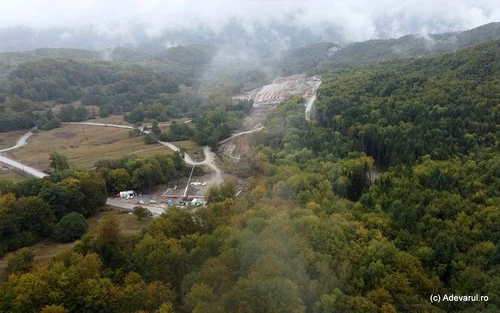
Image 1/18:
Sibiu Pitești highway area of the future tunnel Poiana Photo Daniel Guță Adevărul (52) JPG
“The project includes the construction of 37.40 kilometers of highway, as follows: 52 bridges and passages, an ecoduct, a tunnel, two road nodes, two service spaces and a maintenance and coordination center,” informed the National Road Infrastructure Management Company.
This motorway section will start on the left bank of the Olt, in the area of the Cornet Monastery, from where the route will enter the Băiaș Valley. A road knot will be built here. The highway will continue along the valley and the county road DJ 703m. A historical landmark of the area is Posada, the place of the battle of 1330, when the Voivod of Basarab I defeated the army of King Carol Robert de Anjou, moment that marks the beginning of the independence of the Romanian Country.
In Poiana, the route will cross the Brother Dealul through the tunnel of about 1.7 kilometers. From here, the highway will pass by the localities of Sălucu, Văleni, Șuici, Rudeni, the Earth, Bârsești, the Ceptarii Ungureni and Tigveni, where the road node is provided that will ensure the connection with DN 73C.
The tunnels on the Sibiu – Pitești highway: only three in the site
Along with the Poiana tunnel, eight other tunnels are designed on the A1 Sibiu -Pitesti highway. Seven of them will be built on section 2 (Boița -Cornetu), from the Olt Valley, with a length of about 31 kilometers. The eighth tunnel is at Curtea de Argeș, on section 4 (Tigveni-Curtea de Argeș), which has a length of about ten kilometers.
On the Boița -Cornetu segment, the first two tunnels, one 250 meters and the other 360 meters, will be built in the area of Boița, at the entrance to the Olt Gorge, on the right side of the valley. Two other tunnels, with a total length of about 1.39 kilometers (one of them exceeding 1,000 meters), will be made in the Lazaret area, on the left side of the valley. In the same area will be built an ecoduct over DN 7, the Olt river and the railway on the Olt Valley.
Another 1.6 -kilometer tunnel will be built west of Câinenii Mari, on the left slope of the gorge. In the area of the hydropower arrangement in Robești, the route will cross the slope through a tunnel of about 0.9 kilometers, followed by another tunnel of about 455 meters.
On the Olt Valley is currently working only at the Robești tunnel (video), while for the others the building permits are still expected. The works on this section are complicated by the presence of unstable faults and rocks, which increase the risk of collapse.
At Curtea de Argeș, in a more advanced stage of the execution, there is the 1,350 meter tunnel from Section 4. It crosses Momâia Hill and was completely drilled in the spring of this year.
The project provided the simultaneous excavation from both directions, from north to south and from south to north. Unlike the tunnels on the Olt Valley, which crosses the tougher rocks, the tunnel at Curtea de Argeș passes through sandy marls, sands and poorly consolidated clays.
Sibiu – Pitești highway, ready in 2028, according to estimates
The A1 Sibiu -Pitești highway has a total length of 122 kilometers (without the Sibiu Belt). The route was divided into five sections, for which the Romanian state and the builders signed design and execution contracts during 2019-2022.
So far, section 1 Sibiu – Taxa (14 km) have been opened to road traffic and, from June 2025, section 5 Curtea de Argeș -Pitesti (30 km). The other three sections, which will largely cross the Olt Gorge, between Boița and Curtea de Argeș, are in the site and have a deadline between 2027-2028, totaling about 79 kilometers.
The Sibiu -Pitești highway, part of the A1 Nădlac -Bucharest highway (580 km), is the first to cross the Carpathian Mountains and will ensure, on the territory of Romania, the East -West connection between Constanța and Nădlac.