German cities go to war with pigeons. “They even entered the bakery”

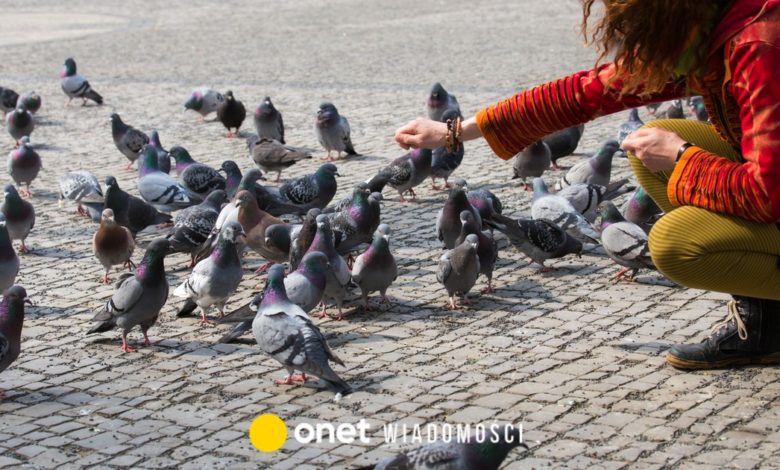
They jump under their feet. They run there and return. They nod their heads. Asphalt crumbs are pending. They fly away scared to land again under your feet again. And then someone appears with paper bags and scatters the food around a small tree by the road. In the blink of an eye they are full. This is a scene that is currently everyday life.
There is no city in Germany, where pigeons do not work on nerves. They live in promenades and stations, sit at the tops of the roofs and wall performances. They run, rustle with feathers. They get dirty window sills and facades. They brazenly nest on balconies. And they are getting closer to people. They certainly don't gain sympathy in this way. Rather, rejection and even real hatred.
Along with the number of pigeons, the number of people is also growing demand actions against birds.
In Limburg, most voters were in favor of capturing and killing a part of the population. At the last moment, the competent nature protection body refused to issue the necessary permit. Nobody knows exactly how many pigeons live in German cities. Estimates talk about several million, and their number can reach hundreds of millions around the world.
But what to do when there are just too many of them? Discuss them and drive them out of the city? It is a hopeless undertaking – assures the president of the Animal Protection Association Thomas Schroder: – The recognition that cities can become free from pigeons is utopia – says the expert. The solution can only be “peaceful coexistence of pigeons and people”. Animal defenders and biologists agree on their goal. In one key issue, however, are uncompromising: feed or not feed?
Symbol of love, hated bird
The pigeon was one of the first pets of man. For millennia, he supplied delicate meat, warm feathers and valuable fertilizer. His unique ability to return home safely made him become a reliable messenger. Today, breeders depend primarily on decorative pigeons or durable sports pigeons. The pigeon as a pet is no longer needed and left alone.
Municipal pigeons are descendants of feral house pigeons. They are durable and checked in the fight for survival. However, they all have a common feature – in the genes they retained properties that once distinguished them as friendly usable animals: lack of fear of people and a strong need to reproduce. Today it makes them problem animals.
Continued article under video material
Despite such a fatal image of city pigeons, there are people who defend them. People like Karin Schneider who wrote a book about pigeons. He describes in it, among others How a symbol of gentleness, love and loyalty has become a hated bird, slandered as an alleged transmitter of diseases. During her research, she herself became an avid pigeon lover.
Currently, he sits on the extended board of the Stadttaubenprojekt Berlin Association, one of the initiatives dealing with pigeons in the German capital. In the Kreuzberg district, he feeds about 200 birds every day: 8 kg of corn, millet, wheat, sunflower seeds and buckwheat. It spends about 160 euros (PLN 684) per month out of its own pocket. Schneider is convinced that good food keeps pigeons in health and pulls them away from streets and squares, thanks to which they disturb less. Can feeding help solve the pigeon problem?
Pattern for cities
In cities such as Hamburg, Cologne, Frankfurt and Munich No pigeon feeding in public places. Who does not comply with this right, risk a penalty of up to several thousand euros. At the same time, controlled feeding is part of the concept of managing the population of urban pigeons. The pioneer in this field was the Bavarian city of Augsburg. In the mid -1990s, pigeons were shot there to reduce the number of birds.
In cooperation with animal rights defenders, the city has developed a concept that today is a model for the whole country: Augustburg model. The idea is that in professionally maintained lofts, birds regularly find food and nesting spaces. Eggs are regularly removed from the nests and they are replaced with dummies to reduce the number of hatching chicks. These funds are usually implemented with the help of volunteers dealing with animal protection.
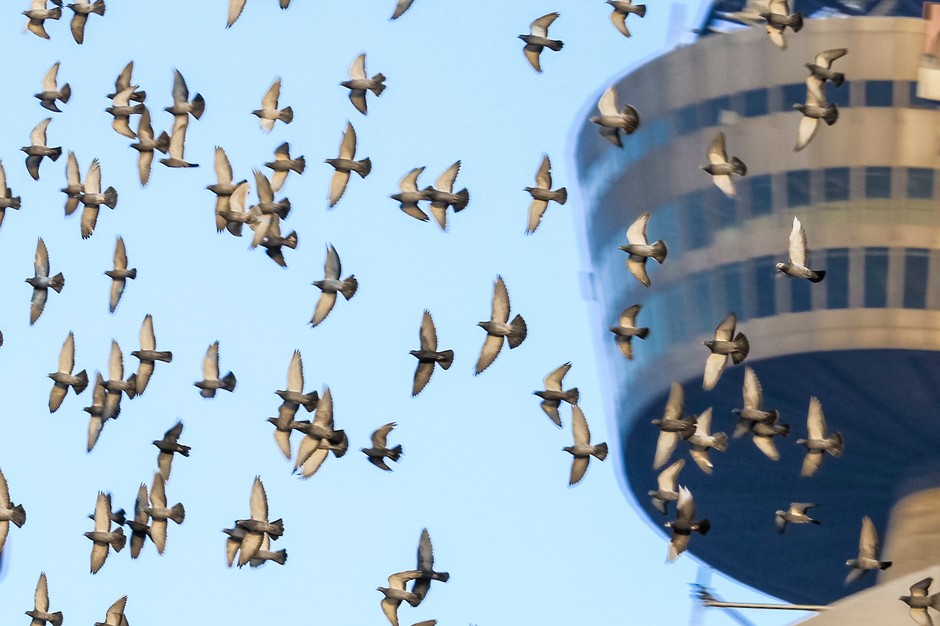
Pigeons in Berlin (illustrative photo)Thoolb / Getty Images
For example, in Braunschwik. The Stadttiere Association has been looking after several in the open air and its own dovehouse since 2019. In 2024, a pigeon belonging to the city was also launched, and three more are to be built in the future. The head of the association, Beate Gries, sees the first successes. – Earlier, pigeons in a desperate search for food even entered the premises and bakeries. Today, according to the Public Order Office, there are almost no complaints – he says. Exchange over 3,000 Eggs allow you to keep the population a constant level.
– this concept concerns population control, not its reduction – explains the gries. Thanks to the right food and treatment against parasites and bacteria, animals in loft are in much better health. Has the problem been solved? The city of Brunszwik speaks more carefully. “At this stage, the effectiveness of the concept cannot be assessed,” we read in a statement. An objective assessment of population development is currently not possible.
“Pigeerade”
As long as the city pigeons nest in wild places, Bjorn Kleinlogel still has a lot to do. Kleinlogel is a qualified biologist and for 25 years he has been running a certified company in Darmstadt dealing with pest control, including “pigeon deterrence”. His knowledge is needed when people have enough pigeons on their balconies. The most effective means is thin mesh with small eyesstretched from balcony balcony balustrade. It is important that it is well tense, because otherwise the birds can get tangled in it.
In places where pigeons should not land on buildings, Kleinlogel mounting scares. The spikes are blunt so that the animals cannot hurt. In contrast, plastic dummy birds are useless in the long run. Pigeons are clever and quickly discover that plastic predators do not pose any threat.
Kleinlogel explains that city pigeons like to nest in empty spaceswhich is related to their origin from the rock pigeon, which nests in the coastal zone of the Mediterranean. Where the sea washes the rocky coast, wild pigeons build their nests.
According to Kleinlogel, this preference is coded in the genes of city pigeons. That is why they are most likely to nest on the crossbars under the railway bridges, in tunnels, and recently also under sun panels on the roofs and on the attics of churches.
If Kleinlogel is designed to clean the attic of pigeons, he first collects eggs from the nests. Waiting for young birds hatching, and only then protects access with bars, preventing pigeons from entering.
A dispute over feeding
Depending on how long the pigeons occupied the attic, the layer of droppings may be thick. Valculars become a problem only in combination with water, e.g. on facades. Then, thanks to the nutrients they contain, they become an ideal environment for the development of algae, lichen and mushroomswhich can destroy the wall. In the attic, however, they are usually dry as dust. When they are removed, it is mandatory to use protective clothing and respiratory masks.
Kleinlogel only drives pigeons to another balcony or attic. He claims that this has no influence on “unnaturally large populations”. Feeding would only worsen the situation. And this is where it starts Dispute with animal defenders and pigeon loverssuch as Karin Schneider.
Daniel Haag-Wackernagel basically rejects bird feeding. A retired professor at the University of Basel obtained a doctor's title based on a work devoted to “ecology of the city pigeon”, and did habilitation thanks to research on pigeon biology. At the end of the 1980s, at the request of the city of Bazylea, he created a project aimed at reducing the number of city pigeons in a manner consistent with the principles of animal protection.
– The number of pigeons decides The availability of food. Where there is a lot of food, there are also a lot of pigeons. If there is not enough food, animals must look for it longer and have less time to reproduce-says Haag-Wacernagel. It is in reducing the population that he sees a necessary condition that the pigeons are tolerated and seen as they deserve – as wonderful animals.