Read also at Business Insider
Narrator: Squeezing each drop, mixing hours and swinging all night. Here is Korean rice syrup. And this is what its production looks like. Young-Goon and his daughter Soo-jin extract the main ingredient of rice syrup: Sikhye, a mixture of steamed rice, hot water and barley malt.
What does rice syrup production look like?
Yoo Young-Goon, manufacturer of rice syrup, Hojeongga: The most difficult is the separation of rice and water. Two people must get up in the morning and squeeze water together. Then mix the water for over three hours until it reaches 8 am.
Narrator: The delicate production process of Sikhye gives rice syrup an incomparable sweetness, but also raises its price. A kilo bottle of rice syrup can reach a price of $ 140. How long does Sikhyye production take? And is it that is why rice syrup is so expensive?
Young-Goon runs a studio with his daughter Soo-jin in Changpyeong in the province of South Jeolla in South Korea. In 2000, the Ministry of Agriculture, Food and Wieś gave him the title of 21. The Grand Master because of the experience in the production of rice syrup and rice strings.
Young-Goon: To make Korean dishes we need soy sauce, soy paste, red pepper and rice syrup. These are the basic ingredients. Rice syrup gives the dishes a deep taste as well as sweetness. The taste is unique and rich. Rice syrup is my whole life. I devoted my youth to him. I have been doing it for 60 years.
Manufacturer: What is your favorite stage of rice syrup production?
Young-Goon: The one in which I earn money. I wouldn't say that I was born with these skills, I just got used to it over time. I learned this naturally from an early age.
Narrator: The key step in the production of high -quality rice syrup is the fermentation of cooked rice with barley malt. Rice ferment for 10 hours under cover, to minimize temperature changes. This sweet solution is called Sikhyye.
Young-Goon: Sikhye is ready. We check it by assessing rice grains. Rice grains should be crushed and rolled up. If they can't be easily crushed, Sikhye's sweet rice drink is not ready yet.
Narrator: There are faster fermentation methods using artificial enzymes, but rich, complex flavors obtained by Young-Goon are what distinguishes its rice syrup from mass-produced alternatives.
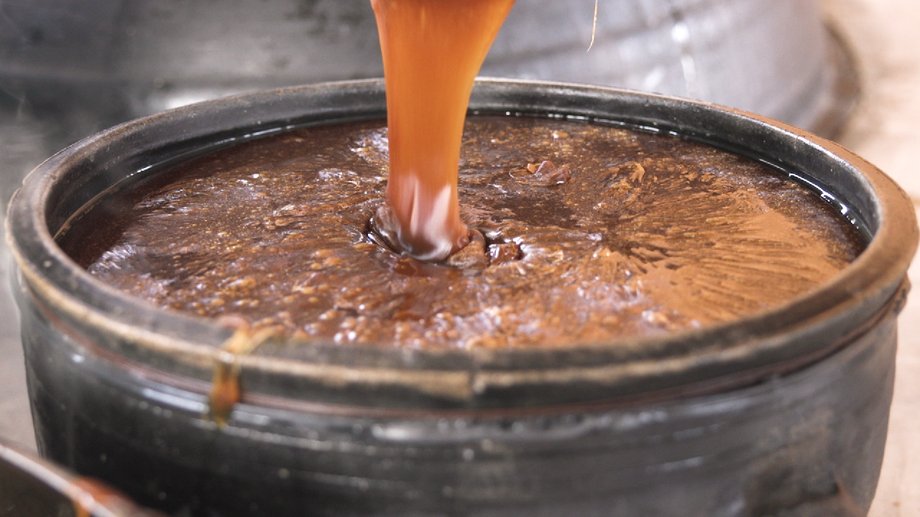
A ritual that lasts all night. The Korean Master shows how the Warta Fortune rice syrup is formed
|
Business Iniser
Rice syrup of rice syrup uneven
In South Korea, there is a big difference between the craft rice syrup produced using Sikhye and those produced using artificial enzymes. Craft syrup can be up to three times more expensivewhile the premium craft syrup, like this Young-Goon, costs up to six times more. To separate Sikhye from rice, Young-Goon and Soo-Jin put rice into the hemp bag, and then strain the liquid through a bamboo board.
Young-Goon: Apart from bamboo, there are not many trees that quickly drain water through their holes. I did it myself. I cut bamboo myself to make this tool. I'm cold in my hands.
Sikhye formation. “We swing in the middle of the night”
Narrator: To bring out the last drops of Sikhye, Young-Goon and Soo-Jin sit on the board and swing on it. They have to work at night if they want to make rice syrup in the morning.
Young-Goon: It's hard work. We wake up at 2 am and begin to squeeze rice syrup from the fermented Sikhye. We swing in the middle of the night in this way. Sometimes one of us falls asleep and falls during. If one falls, the other too. It's fun then. Let's shake the sack.
Narrator: Making Sikhyye is much more than swinging. It can only be done if the rice is properly cooked.
Young-Goon: Rice should not split in your hand. It should be glued together. This type of rice is the most suitable.
Yoo Soo-Jin, headmaster, Hojeongga: Dad, please, open the lid.
Narrator: Young-Goon and Soo-jin cook steamed rice in an iron pot. Drag to the end before pouring.
Soo-jin: If this gap is not well closed, the rice will be undercooked.
Young-Goon: Please, cover the pot completely.
Narrator: Rice is cooked for one and a half to two hours. Young-Goon and Soo-jin constantly check the fire to make sure that the rice is cooked evenly. To prepare a kilo of syrup, Young-Goon needs five times more rice.
Young-Goon: It is well cooked.
Rice is more
Narrator: There are different types of traditional syrup in other parts of South Korea from corn or sweet potatoes. Here, in the province of southern Jeolla, rice is, however, an important raw material and the preferred choice for the production of syrup.
Young-Goon: I have a rice field in front of the house. I work on it in the morning and evening. Consumers often perceive rice as something ordinary, but that's something more.
Narrator: Compared to other cereals, rice is much more difficult to process. To ferment and become Sikhye, he needs barley sprouts. Young-Goon cultivates it here with rice.
Young-Goon: Barley sprouts grown for the production of drawers or rice syrup are called malt. To produce syrup, you need rice, but Correct malt cultivation is key. Here are barley sang. The quality of malt is determined after how much barley sprouts grew. It determines the sweets, taste and quality of Sikhye and rice syrup.
Narrator: Young-Goon is looking for sprouts from 1 cm to 1.5 cm long. Achieving such a length can take up to 10 days, and barley must be rinsed and checked every day. This is what distinguishes his rice syrup. Less exclusive versions of rice syrup are made of shorter sprouts, Thanks to this, barley scales can be reused after malt extraction.
Young-Goon: Nutrients inside barley are used during germination.
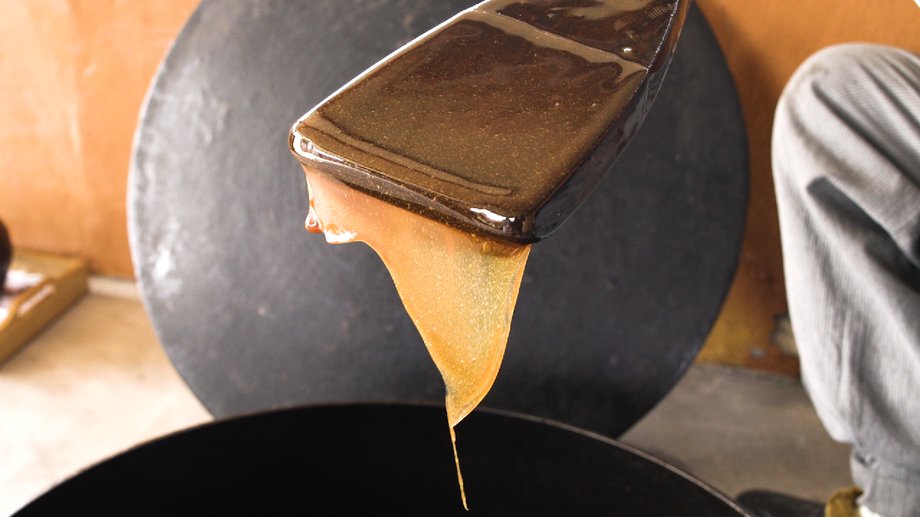
They cook him in an iron pot, they swing at two o'clock in the morning. Here is the secret to the most expensive Korea syrup
|
Business Iniser
The production of rice syrup is a long process. Gamasot is crucial
Narrator: Young-Goon mixes barley sprouts with water and with the help So-jin squeezes malt out of them. After 10 hours of fermentation and a long night, the Sikhye swing is finally ready to cook in the syrup. Young-Goon uses a traditional iron pot called gamasot, which gives the syrup depth.
Young-Goon: After a long cooking time in the gamasota, the syrup acquires red, because the flame from the fire directly affects the pot. If we used indirect heat, the color would be brighter. So if we want to cook the syrup directly, Gamasot is the best choice.
Narrator: Such a pot can cost up to a million won (approx. PLN 2,900).
Young-Goon: This gamasot is passed on in my family from generation to generation. We have been using it for three generations, and the fourth will soon take over. We all cooked syrup in the same gamasot. He is priceless for me.
Narrator: The pot stops a lot of heat, so Young-Goon must monitor the fire all the time, and also constantly mix the syrup. If something goes wrong and the temperature is too high, the syrup may burn. If the syrup is mixed for too long, its consistency will harden.
Young-Goon: We have to mix it for 2.5 hours. Otherwise it will stick to the bottom of the pot. Then its taste will change. The fire is too strong.
Soo-jin: We must reduce it.
Narrator: Achieving the right consistency can take up to three hours.
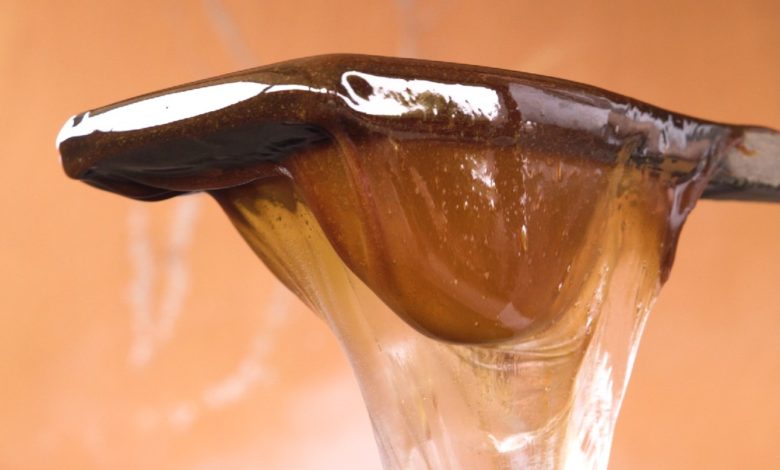
Young-Goon: I check the consistency after the syrup is dripping. Such consistency is perfect. If it were more dense, you could make a rice string out of it. The best color for syrup is red. If this is not there, it will not taste good.
Narrator: Like Gamasot, the container in which the syrup is stored is important. It is called onggi, and as big as this can cost 750 thousand. won (approx. PLN 2,200).
Young-Goon: Onggi has many advantages, and among them are: air circulation, moisture evaporation and air absorption.
Korean rice syrup is valued all over the world
Narrator: This process is long, but customers appreciate the value of rice syrup, and demand is growing. Companies from outside South Korea began to produce rice syrup. It is expected that the value of global industry will exceed $ 1 billion in 2032. The consumption of processed sugar on a large scale harms rice syrup on the Korean market, but this syrup gained popularity abroad. In the USA, premium syrups can reach $ 140. per kilo. However, rice syrup differs from other sweeteners.
Soo-jin: Sugar and starchy syrup are artificial sweeteners that maximize temporary sweetness. On the other hand, rice syrup arises to improve our health and enrich the taste.
Narrator: Rice syrup tastes less sweet than table sugar, so when cooking you need to use more to match sugar sweets. Rice syrup also has a higher glycemic indexSo using it as a direct sugar substitute can actually cause more harm than good.
Young-Goon: Today's syrup tastes very good.
Narrator: However, the production of rice syrup is not enough, however, that the workshops such as Ta Young-Goon survive. Rice syrup is the main component of hangwa. This term means the overall name of Korean sweets.
Young-Goon: Hangwa bore in this syrup really enriches the taste.
Narrator: First of all, the syrup is the base for Yeot – Rice string, which is locally very desirable. The strings can be stored longer than raw syrup, but their production is difficult.
Soo-jin: You took everything. I told you to take only a little.
Narrator: The strip cooks for six hours, is much sticky than syrup and must be stretched in this way more than 30 times. Young-Goon and Soo-Jin always work together. You living in Damiang Young-Goon is determined to keep tradition alive.
Young-Goon: I gave my skills to others. I helped 13 families in the production of rice syrup, and now this number has increased to 50. I am currently serving three factories. Another is under construction. Business still blooms. This feeling indescribable. I feel very proud. Tradition was passed on from my grandmother's generation to mine. Now my daughter continues her. I am very proud that we managed to keep her.
SO-Jin: To be honest, it's very difficult to learn from parents. This is because only my parents know all the answers. For this reason, I will strictly follow their instructions. I will do everything in my power to support tradition and support them.
Crowd. Piotr Nazek